Jeans Gap at the Waist? Choose a Fix Without Losing Hip Comfort
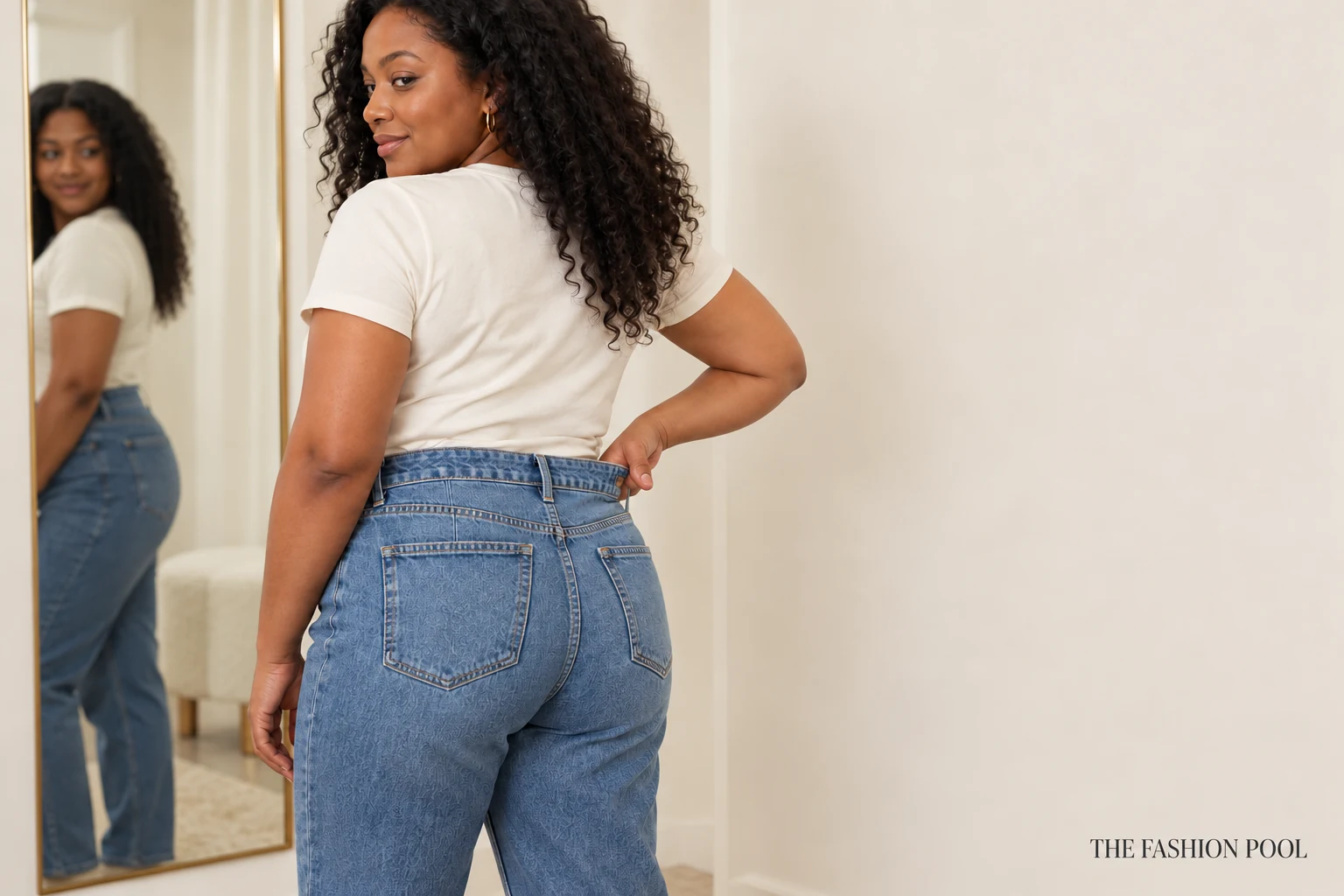
Jeans can fit your hips and thighs yet leave space behind the waistband. Pulling them tighter may replace that gap with a squeezed seat, a strained fly or constant readjustment.
If your jeans gap at the waist, this guide helps you decide whether to try another size, choose a different cut, use a belt or ask about alterations.
What to do when jeans gap at the waist
Check the whole fit before sizing down. If the hips, seat and thighs also feel loose, compare a smaller size. If those areas already fit comfortably, try a cut with a smaller waistband relative to the hips, a different rise or a professional waist alteration. A belt can manage a minor gap when it does not bunch the denim or restrict sitting.
Key Takeaways
- A waistband gap alone does not prove the jeans are too large everywhere.
- Check standing, sitting and walking before choosing a fix.
- Rise and waistband shape matter alongside the size label.
- A useful adjustment preserves hip room, pocket position and comfort.
Why the waistband can stand away from your back
Jeans are made to a pattern with an assumed relationship between waist, hip and seat measurements. Your proportions may not match that pattern. A pair can therefore have enough room through the hips but too much waistband circumference, even when the leg shape is exactly what you wanted.
Rise also changes where the waistband lands. Rise is the distance from the crotch seam toward the waistband; changing it shifts the garment’s position on your torso. A higher rise is not automatically better. Compare where different pairs actually sit rather than assuming a high-rise label guarantees a closer waist.
Cut differences are real design choices. For example, Levi’s describes its 501 Curve fit as having a smaller waist with fuller hips and thighs. That is an example of changing proportions, not proof that this specific pair will suit everyone. Check the style’s measurements and try it on where possible.
If the waistband loosens during wear, note when it happens. Fabric and construction affect the result; fiber percentages alone cannot predict shape retention.
Make a standing-and-sitting fit check
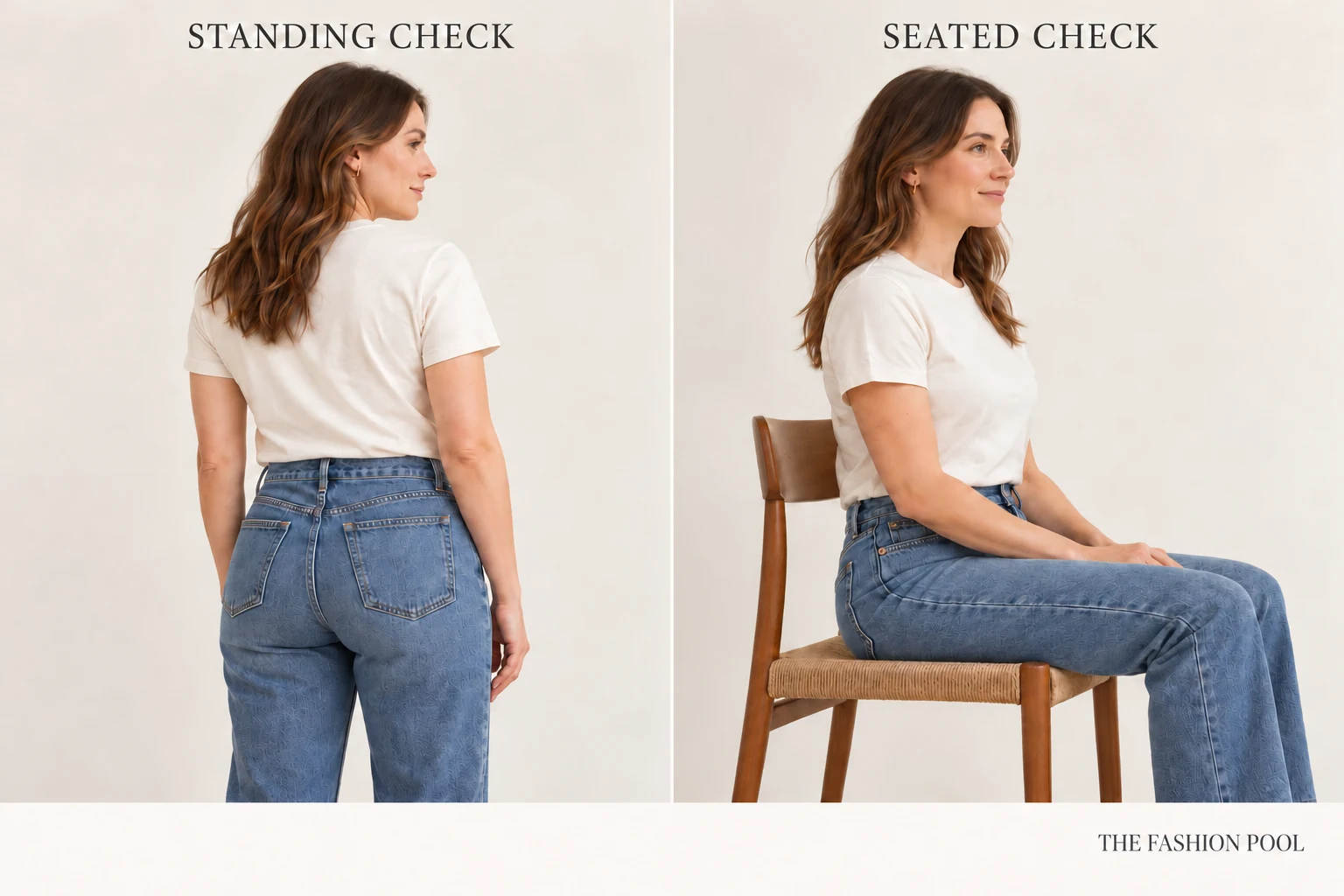
- Fasten the jeans normally, without a belt. Let them settle where their rise naturally places them instead of pulling them higher to close the gap.
- Look at the back waistband, seat and front fly. Notice whether the gap is localized or the whole pair slides downward.
- Sit in a chair, bend your knees and walk. Check for digging, pulling at the crotch, a strained closure or pockets that pull open.
- Try your usual tucked top. Repeat with a lighter layer if a thick tuck changes the fit noticeably.
A waistband that looks flush while standing may become uncomfortable at a desk. Rather than following a universal two-finger rule, check that the jeans stay secure without restricting breathing or requiring constant adjustment.
Choose a size, cut or belt based on the symptoms
| What you notice | What to compare | Reason to stop |
|---|---|---|
| Waist, seat and thighs all feel loose | Another size in the same cut | Smaller pair pinches or strains when seated |
| Comfortable hips with a back waist gap | Different waistband proportions or rise | Closing the waist removes needed hip room |
| Minor gap; otherwise secure fit | A comfortable belt through existing loops | Denim gathers into bulky folds or belt digs |
| Favorite pair fits except at the waist | A tailor’s assessment | Alteration would distort pockets, seat or closure |
Try a smaller size only as a comparison, not a commitment. Sit in both pairs and assess the entire garment. If the smaller one closes the gap but pulls across your hips, return to the comfortable size and investigate a different pattern.
When shopping, terms such as curvy fit, contoured waistband or adjustable waist are useful leads, not standardized guarantees. Compare the actual waist and hip measurements in that brand’s chart. Petite sizing may adjust length and rise, but it does not automatically solve a waist-to-hip mismatch.
For a small gap, thread a belt through all the intended loops and fasten it gently. Check the back for bunching and sit again. If you need to cinch hard enough to fold the waistband into pleats, the belt is managing too much excess fabric for the result you want.
When a waist alteration is worth considering
Consider tailoring when you like the rise, seat, leg and fabric but need a lasting waist adjustment. At the fitting, explain seated discomfort and ask how the work affects the back seam, loops and pockets. Construction changes what is feasible.
A substantial reduction can affect the seat and pockets: ask for a fitting, not an arbitrary amount removed. Compare the quote with expected wear. If several areas need correcting, another cut may be simpler.
Safety pins, extra buttons and improvised folds can create pressure points or distort the fly. Adjustable accessories still need comfort and garment-compatibility checks; they cannot repair every pattern mismatch.
Style the fix without hiding an uncomfortable fit
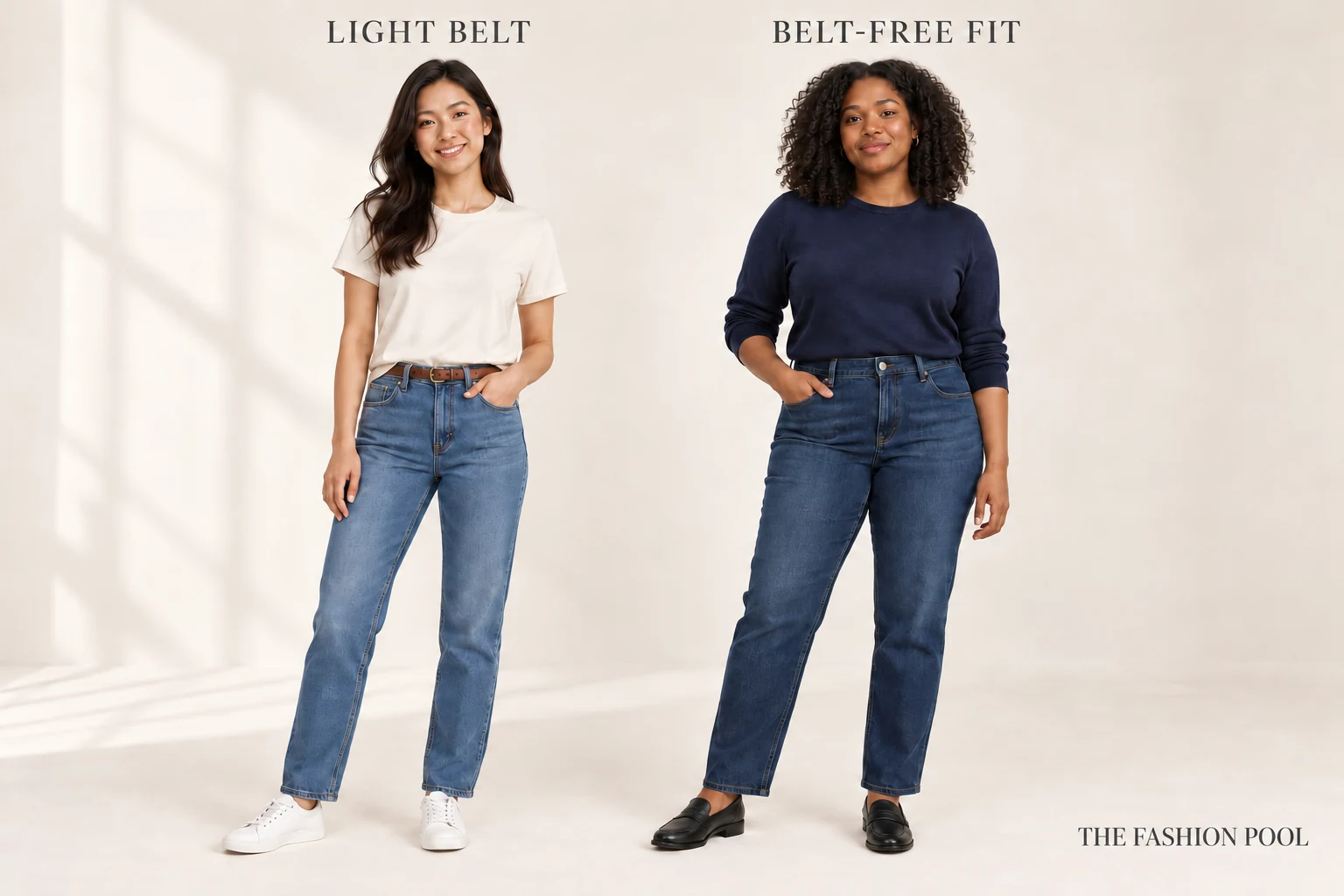
For a casual small-gap solution, try medium-blue straight jeans, a smooth brown belt, a lightly tucked cream T-shirt and white sneakers. The tuck makes the belt intentional, while a light top avoids packing extra fabric inside the waistband. Keep the belt comfortable rather than using it to pull the entire pair upward.
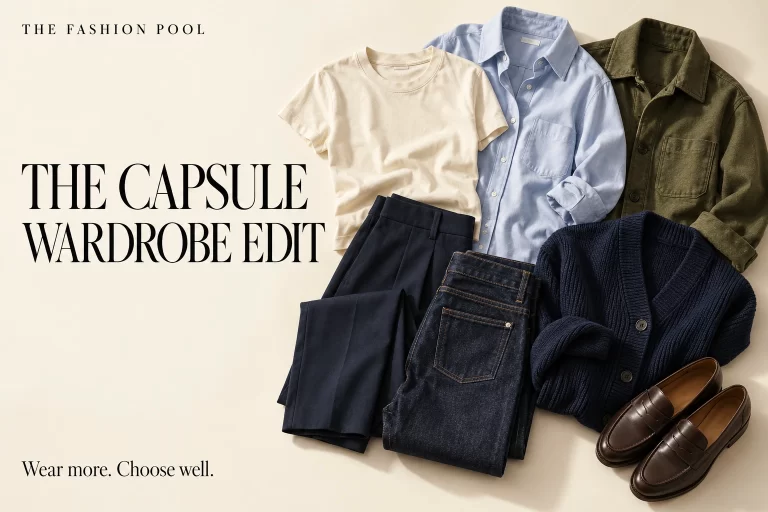
For jeans that fit without a belt, combine dark denim with a navy fine-gauge knit and black loafers. A neat front tuck can show the waist, but leaving the knit untucked is equally valid. Choose the top length you prefer; it should not be responsible for concealing a closure that hurts.
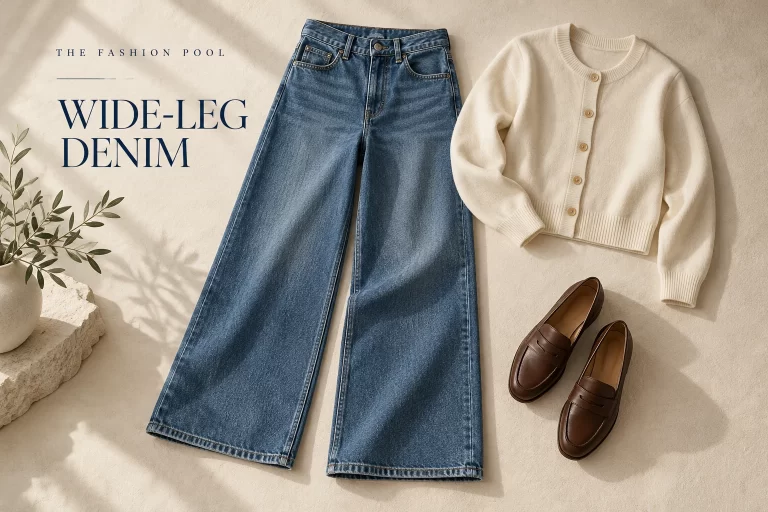
The same checks apply to wider legs. Our wide-leg jeans outfit guide explains tops and proportions, and the winter footwear guide helps with hem-and-shoe combinations. These styling decisions are separate from fit.
Do not use heat as a targeted waistband fix
Hot washing is not a precise way to remove only waistband excess. Follow your jeans’ care label rather than gambling with the hips, leg length and finish. Levi’s distinguishes preshrunk denim from its Shrink-to-Fit jeans and recommends cold washing and air drying to minimize shrinkage.
Frequently Asked Questions
Is a small gap when I bend necessarily a problem?
No. Movement changes the relationship between your torso and waistband. Judge coverage, security and comfort across your normal activities, not one bent-over pose. If the jeans stay in place and feel good, a brief gap may not need correcting. A persistent gap that makes them slide merits another fit comparison.
Will changing from wide-leg to skinny jeans fix the waist?
Not necessarily. Leg width and waistband proportions are separate design decisions. A wide-leg pair can fit securely at the waist, while a skinny pair can still gap. Look at rise, hip room and waistband construction before changing a leg silhouette you enjoy just to solve the top of the garment.
Should I buy a belt before trying another cut?
If you already own a comfortable belt, use it to assess a minor gap before spending. For a new pair that needs heavy cinching immediately, compare other cuts while returns remain possible. You may prefer a belt aesthetically, but it should not be the only thing preventing unsuitable jeans from slipping.
How should I measure for a different pair online?
Follow the retailer’s measurement locations and compare both waist and hips with the specific style’s chart. Keep the tape level without pulling it tight. Do not assume a flat garment measurement equals a body measurement. Check rise, inseam and the return policy too; numbers cannot fully predict seated comfort.
Can stretch denim still have a waist gap?
Yes. Stretch does not guarantee that the waistband’s shape matches your proportions. Compare the fit when first worn and after normal movement, and note whether it stays secure. Do not buy a painfully tight pair on the assumption that every stretch fabric will eventually relax by the amount you need.
What should I wear to a tailoring fitting?
Bring the jeans and wear the type of underwear and base layer you normally use with them. Explain whether you tuck tops in and how long you sit during the day. Ask to check sitting and movement during the fitting, so the proposed adjustment addresses your routine rather than only a standing silhouette.
Conclusion
Diagnose the whole fit before closing a jeans waist gap. Compare another size if there is spare room elsewhere; otherwise try another cut, rise, a gentle belt or tailoring. Preserve comfortable hips and everyday movement.