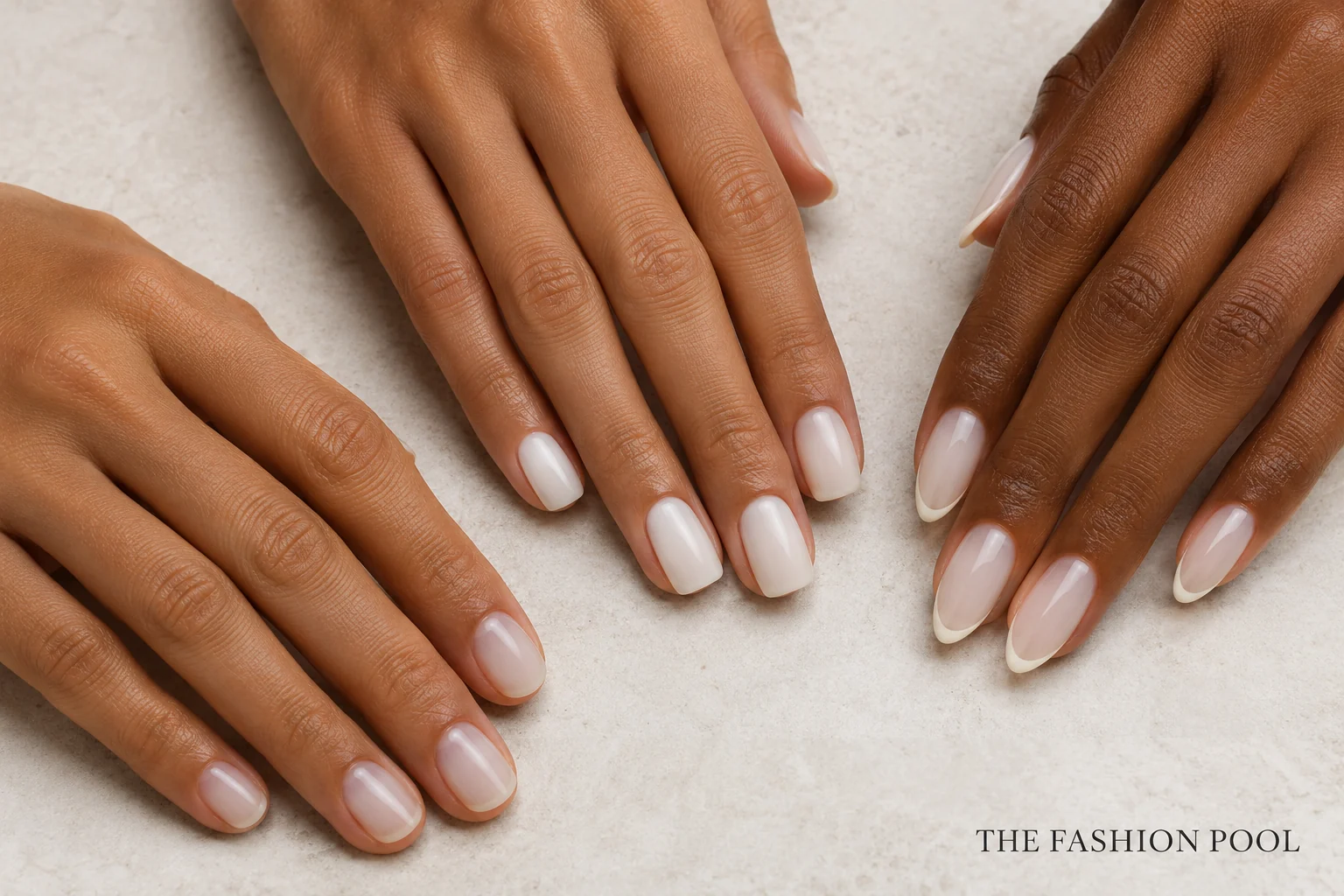
Milky white nails can look barely there, softly creamy, or neatly defined at the tips. Coverage changes the result more than the name on a salon menu. If you save a translucent manicure and ask only for “white nails,” you may receive an opaque finish that looks quite different from your reference.
This guide compares three wearable directions and explains how to choose coverage, shape, and detail. The aim is a manicure you can describe clearly, whether you prefer short everyday nails or a longer almond silhouette.
Choose Milky White Nails by Coverage First
For a soft milky effect, choose a translucent white or ivory finish that lets some natural nail color show through. Ask for creamier coverage when you want less visible nail underneath, or add a fine ivory French tip when you prefer a defined edge. Opaque bright white creates a different effect. Extra coats do not turn every white formula into the milky finish in your reference.
Key Takeaways
- Separate the color, coverage, and shape when describing your reference.
- Compare a finished swatch in ordinary daylight before committing to the whole set.
- Use a narrow soft French tip when you want definition without a broad white band.
- Keep the length comfortable for your work, clothing fastenings, and daily routine.
Compare a Sheer Wash With Creamier Coverage
A sheer wash leaves the nail bed and natural free edge faintly visible. It works well on short rounded nails when you want the manicure to feel subtle rather than graphic. A creamier version filters more of the natural color beneath it, creating a clearer ivory surface while retaining some softness.
“Milky” is a visual description, not a standardized opacity level. For example, Essie describes Marshmallow as a cloudy sheer white. That description helps distinguish the finish from opaque white, but it does not establish that every sheer polish will look identical or need the same number of coats.
| Direction | What remains visible | Useful starting point |
|---|---|---|
| Sheer milky wash | Natural nail color and a faint tip | Short rounded nails with quiet detail |
| Creamier milky white | Less underlying color | Short oval or softly squared nails |
| Soft French | Translucent base with a defined ivory edge | Oval or almond nails with room for a narrow tip |
Neither finish belongs to one skin tone. On deeper skin, pale white can create more visible contrast; on lighter skin, the same shade may read quieter. Decide whether you enjoy that contrast rather than trying to erase it. Compare a neutral white with a warmer ivory if the first sample looks too stark beside your hand.
Keep Short Nails Simple and Consistent
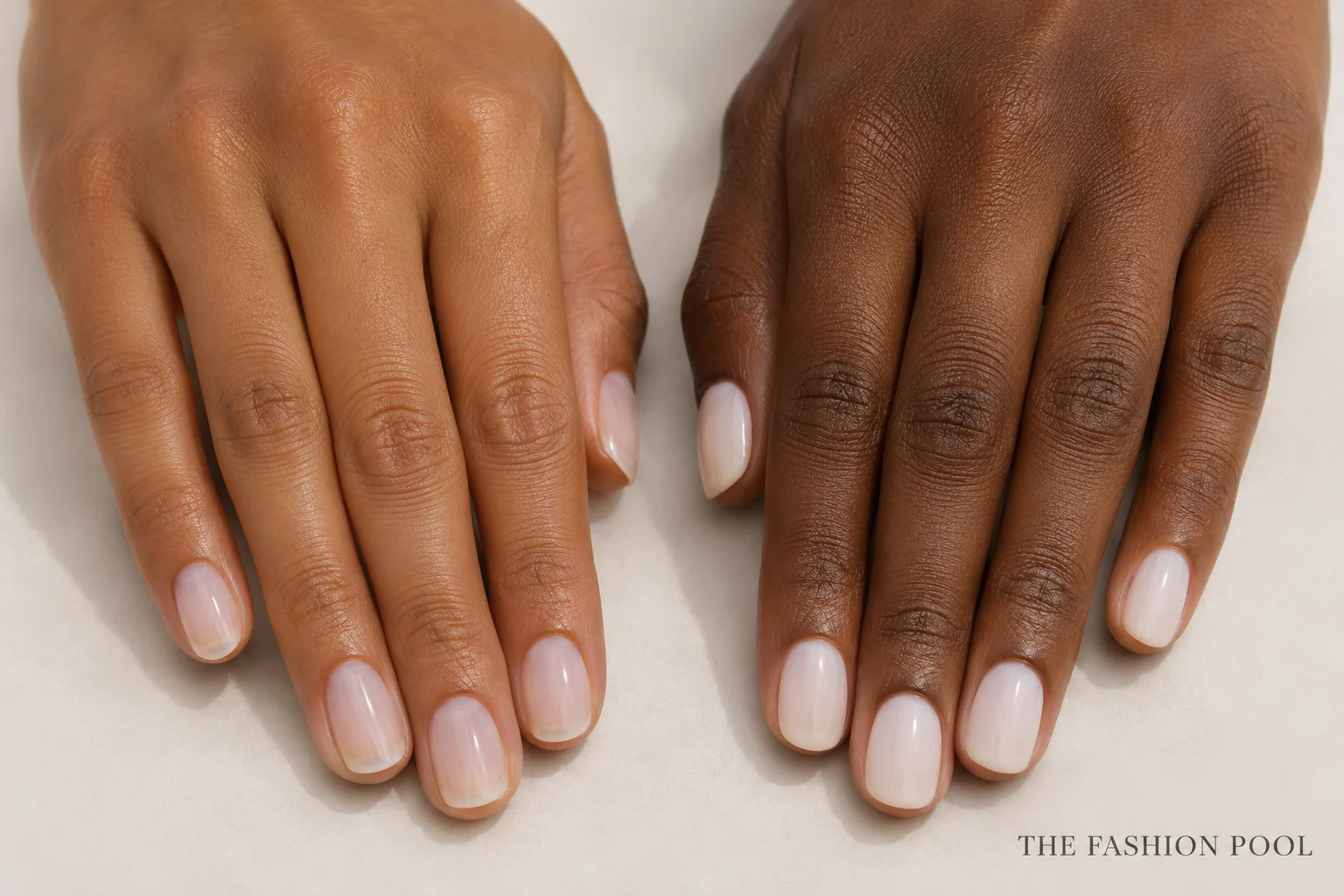
For a short everyday set, start with either the sheer wash or creamier coverage and keep the shape consistent. Rounded corners follow the fingertip softly. A soft-square shape keeps a straighter edge, but the corners should still suit how you use your hands. Shape is a preference, not a rule about which fingers are acceptable.
Look at the set with your fingers relaxed rather than spread rigidly for a photograph. Check whether one nail has a much longer free edge or a noticeably different outline. Small differences are normal. Aim for a coherent set that feels comfortable rather than perfectly identical fingers.
If your nails are very short, solid color is easier to describe than a tip design with little space to show it. You can still choose a fine French edge, but ask to see its width on one nail first. A broad band may dominate the small surface and change the soft effect you wanted.
Try a Soft French Edge on Almond Nails
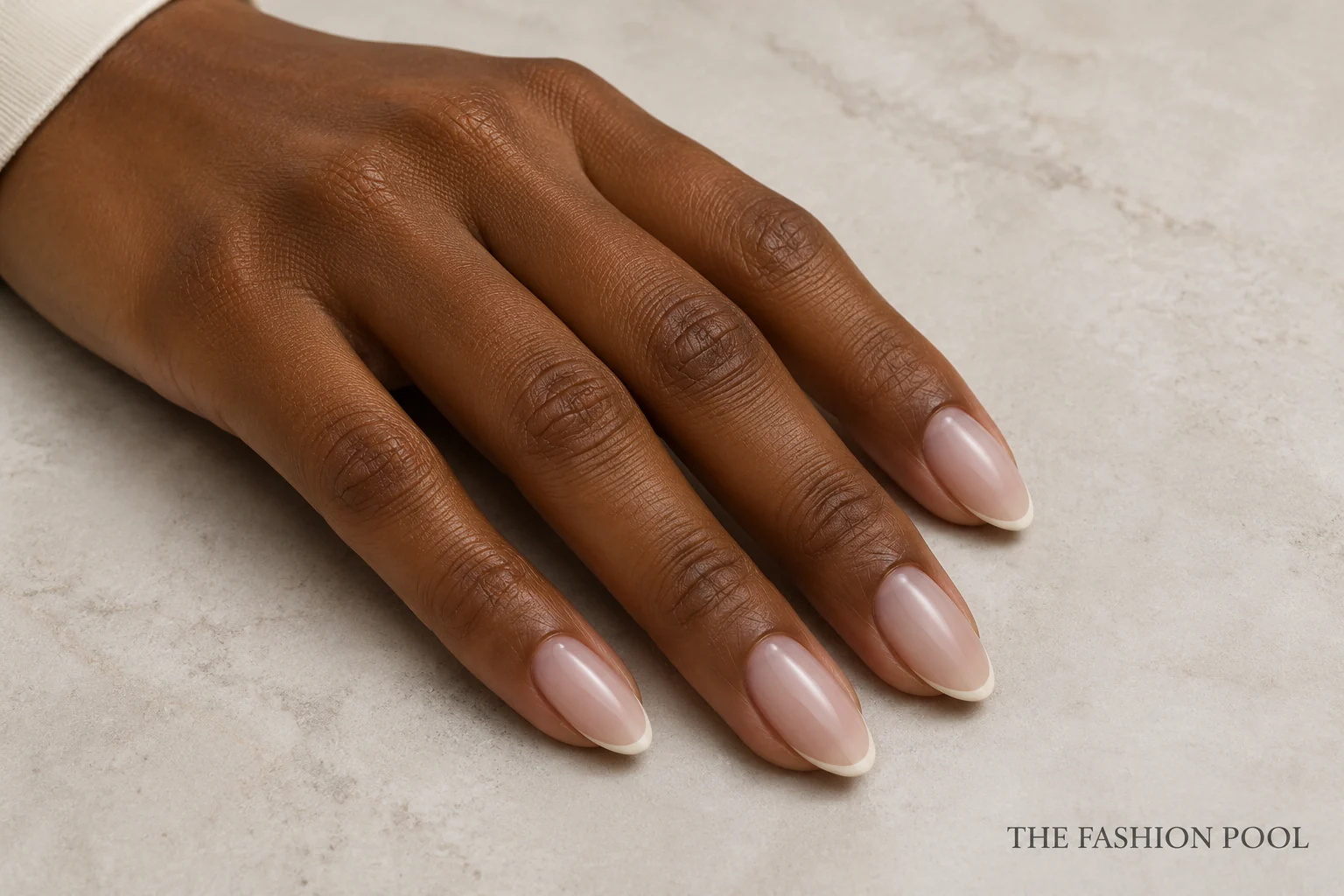
A soft French manicure combines a translucent milky base with a narrow ivory tip. Unlike a fully blended gradient, it retains a visible curved edge. The contrast is gentler than a bright-white tip over a strongly pink base, especially when both colors stay close in intensity.
Medium almond nails give the curve room to follow the tapered outline. Keep the point rounded enough for your routine, and choose the shortest length that still produces the silhouette you enjoy. A short oval can carry the same color idea if a longer almond feels inconvenient.
Describe the tip as “fine and softly defined,” then show a reference. Ask whether it follows the natural free edge or creates a slightly different curve. That decision changes how much white appears at the sides. Check the result head-on and from the side; a design that looks narrow from above can still read heavy at the edge.
Build a Clear Salon Brief
Instead of collecting ten loosely related photographs, choose one for coverage, one for shape, and one for the tip detail if needed. Explain which feature you want from each. Otherwise, the technician has to guess whether the important part is the color, length, or nail art.
- Name the base: neutral milky white, warmer ivory, or a sheer nude beneath ivory tips.
- Specify coverage: natural nail visible, softly filtered, or mostly concealed.
- Set the length: at the fingertip, a small free edge, or a comfortable medium length.
- Confirm the detail: solid finish or a narrow soft French tip, with no chrome unless separately requested.
Ask to compare one finished sample before the design is repeated. At home, use the application and removal instructions for your specific product system. Judge the appearance after the recommended drying or curing process rather than while the surface is still changing.
Coordinate the Manicure With Clothes and Jewelry
Milky white gives dark clothes a light detail: try a charcoal knit, navy dress, or chocolate jacket. Cream clothing creates a softer combination, but the manicure does not need to match the garment exactly. Different textures and lighting can make two whites appear farther apart than expected.
Gold jewelry adds warmth; silver keeps the palette cooler. Neither requires changing your manicure. For a holiday dinner, choose one detail you want to emphasize—earrings, a textured top, or a metallic bag—rather than coordinating everything to your nails. These holiday party outfit formulas without dresses offer clothing ideas to build around.
Frequently Asked Questions
Are milky white nails the same as opaque white nails?
No. Milky white usually describes a softer, translucent or semi-sheer effect, while opaque white conceals the natural nail more completely. Salon names vary, so show the coverage you want rather than relying on the label. A finished swatch makes the distinction easier to discuss than a bottle photograph.
Can my natural nail tips show through the color?
Yes, that can be part of a sheer milky manicure rather than a mistake. If you dislike the contrast between your nail bed and free edge, ask for creamier coverage or a softly defined French tip. The finished result depends on both the formula and your underlying nail color.
Why does the same white look different in photographs?
Lighting, camera exposure, surrounding colors, and screen settings can shift how white appears. A warm indoor photograph may look ivory, while a bright photograph can make a translucent finish seem more opaque. Use references to communicate the idea, then confirm the actual swatch in ordinary light.
Do I need gel to get a milky manicure?
The appearance is not exclusive to gel. Regular lacquer can also have a cloudy sheer-white finish. Choose a product system according to its actual directions and your preferred maintenance routine, then compare coverage. The words “milky white” describe the look and do not identify a specific application method.
How do I keep the result from looking too stark?
Try a more translucent finish, a warmer ivory, or a finer French tip before changing the whole design. Compare the sample beside your skin and usual jewelry. If you enjoy stronger contrast, there is no need to soften it; the choice should reflect your taste rather than a universal matching rule.
Conclusion
Choose milky white nails by deciding how much natural nail you want visible, then select a comfortable shape. A sheer short set feels quiet, creamier coverage makes white more noticeable, and a soft French edge adds definition. Bring a precise reference and confirm one sample before repeating the design.