How to Tuck a Sweater Into Jeans Without Waistband Bulk
Learning how to tuck a sweater into jeans is mostly about deciding how much knit the waistband can comfortably hold. A tuck that looks smooth while standing may bunch when you sit, especially if the sweater has a thick ribbed hem.
Start with one sweater and jeans you already own. These methods help you compare a full tuck, a small front tuck and an off-center tuck, with an untucked alternative when the fabric simply does not cooperate.
How to tuck a sweater into jeans: match the knit to the space
Use a full tuck for a thin, flexible sweater when the jeans have comfortable room. For a medium-weight knit, tuck a small section at the front or near one front pocket, leaving the rest outside. If a chunky hem creates pressure or a hard lump, leave it untucked rather than tightening the waistband to contain it.
Key Takeaways
- Jeans should feel comfortable before you add tucked fabric.
- Start with less knit inside the waistband, then adjust the drape above it.
- A visible waist is optional; an untucked sweater is a complete styling choice.
Choose the method before arranging the hem
Feel the sweater’s lower edge, not just its body. A fine knit with a thick ribbed band may be harder to tuck than a softly draping sweater of similar weight. Notice side slits, a curved hem or extra length at the back; those details affect where the fabric can fall naturally.
Then button the jeans and sit down without the sweater tucked in. If they already press uncomfortably, adding fabric is unlikely to help. Do not change an otherwise comfortable jeans fit simply to pack in a thick sweater. For an existing waistband mismatch, our jeans waist-gap guide separates fit changes from styling fixes.
| Sweater construction | First option | Check before leaving |
|---|---|---|
| Thin, flexible knit with a light hem | Full tuck | No ridges beneath pockets or pressure while seated |
| Soft medium-weight knit | Small front or off-center tuck | Loose sides and an easy transition into the tucked section |
| Thick cables, stiff ribbing or substantial hem | Untucked | Hem lands where you like it and moves freely |
Try two partial tucks with a medium-weight sweater
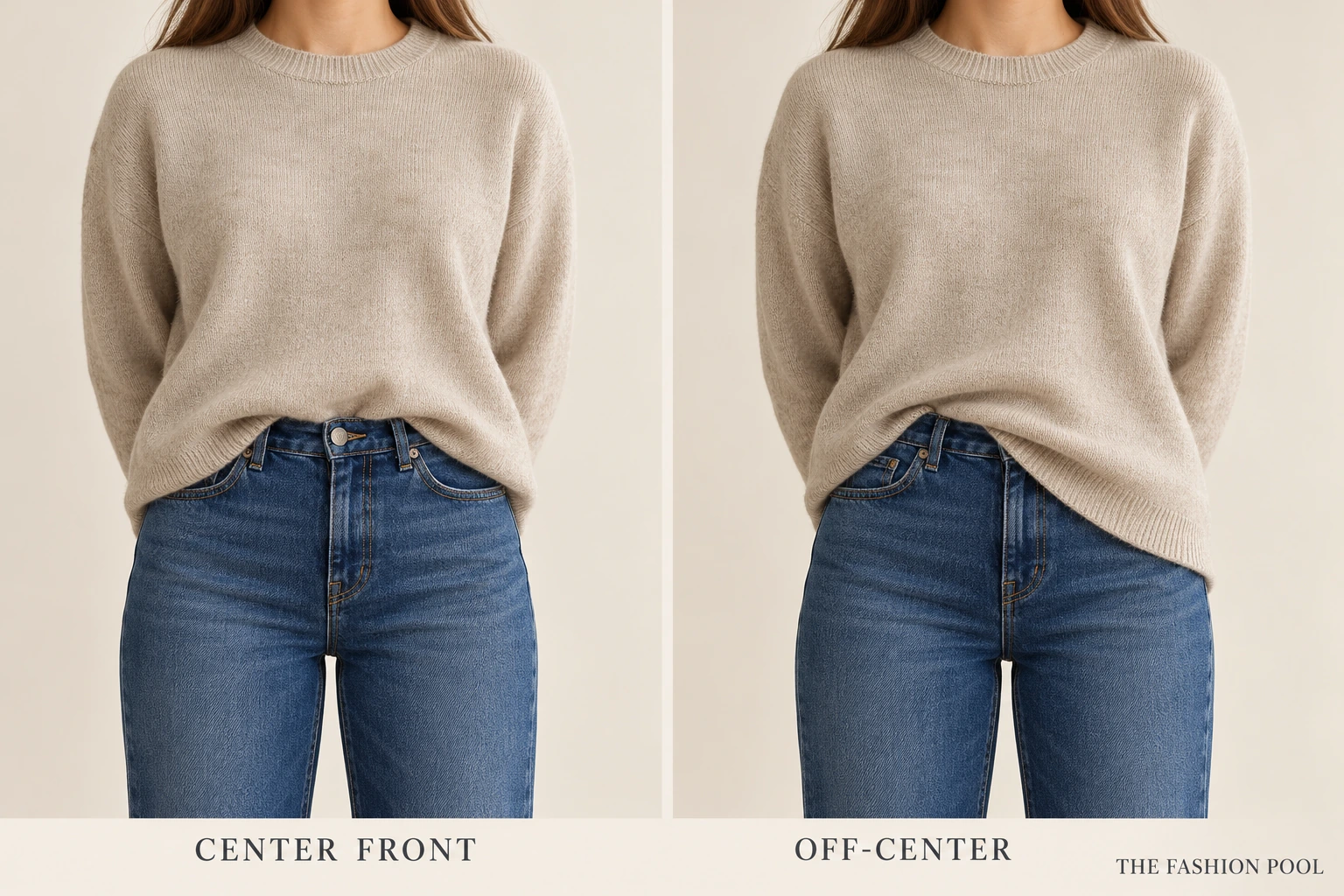
A small center-front tuck
- Let the sweater hang naturally over the closed waistband.
- Lift a narrow section directly above the fly and guide only its lower edge inside. Leave the sides and back outside.
- Gently release a little fabric above the waistband so the front is not stretched tight.
- Smooth the hanging sides downward, then check the transition from tucked center to loose hem.
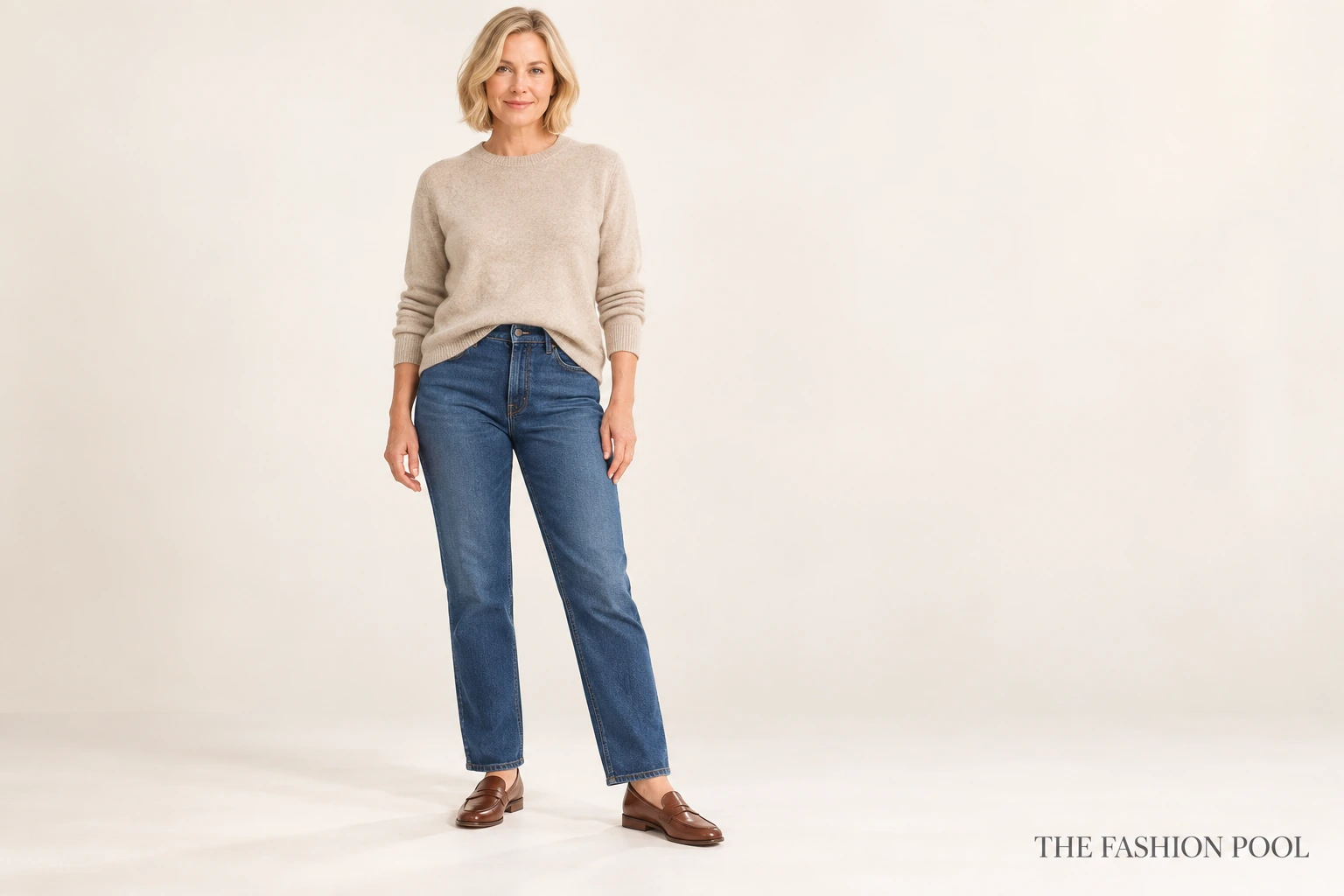
Try an oatmeal crewneck, indigo straight-leg jeans and brown loafers. The small tuck reveals part of the waistband without packing the entire sweater inside. If the front forms a bulky roll, remove it and start with a narrower section. Avoid stacking several folded layers into the same spot.
An off-center tuck
Move the small tucked section toward one front pocket instead of the fly. Let the opposite side hang loose, creating a diagonal hem. This can be useful when a center tuck gathers directly over a button or when you prefer asymmetry. Keep the tucked fabric clear of the pocket opening so it does not interfere with your hand.
Compare both methods in the same sweater and jeans before changing anything else. Look from the side as well as the front: a tidy mirror view can conceal a dense bundle at the hip. Neither tuck needs an exact width; the amount depends on your garment and comfort.
Use a full tuck only when the fabric lies comfortably
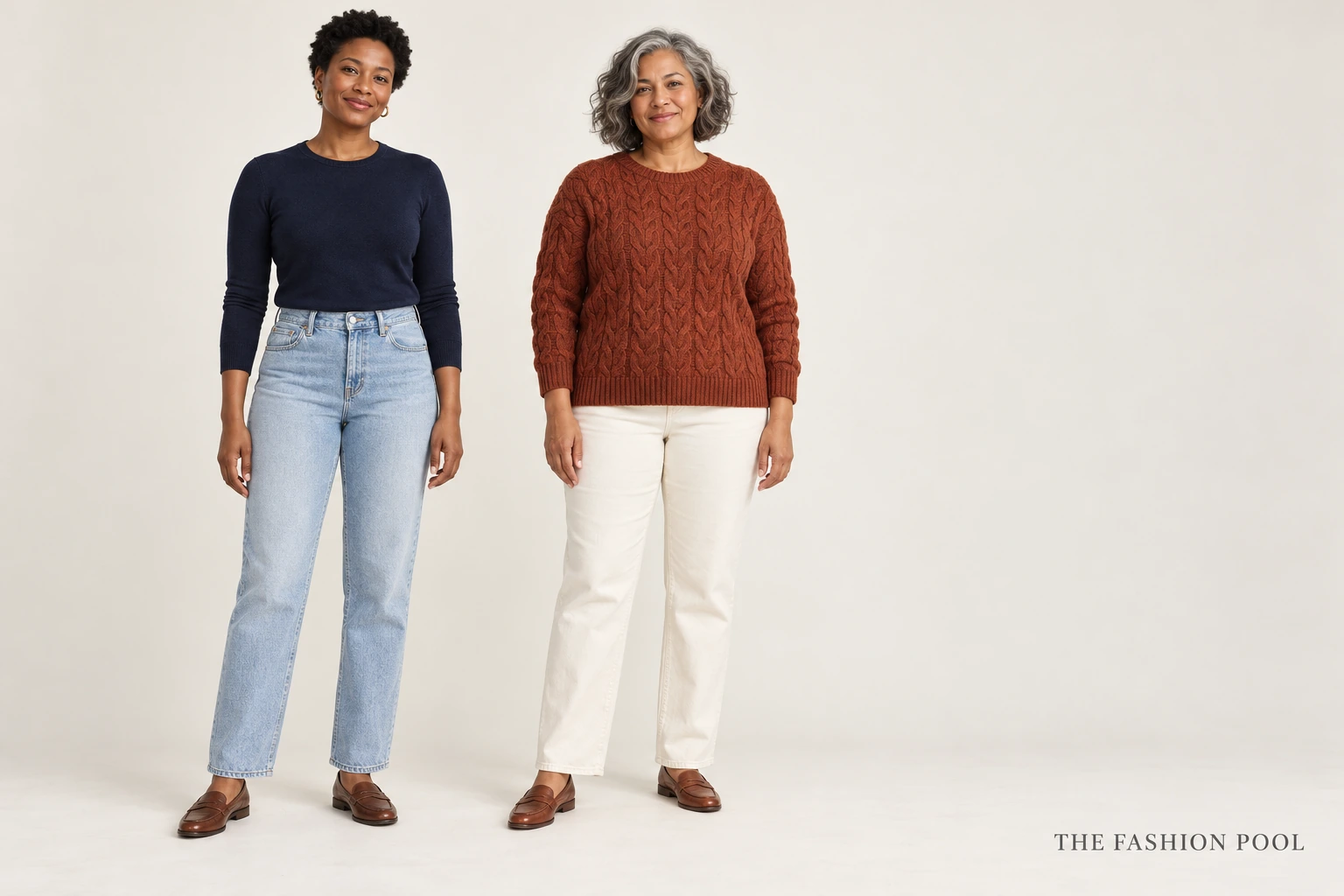
Try a thin navy crewneck with light-wash straight-leg jeans and brown loafers. Unbutton the jeans, then guide the hem inside in small sections, distributing the fabric around the waistband rather than pushing everything down at the front. Close them without forcing the button, then gently release enough sweater above the waist to bend and reach.
Check the pockets and side seams for ridges. A full tuck can make the sweater-to-denim boundary clear, but it is not automatically neater than a partial tuck. If the hem is long enough to bunch underneath the jeans, choose another method instead of stuffing it deeper. An optional belt is a finishing detail, not a clamp.
Let a chunky sweater stay untucked
Pair a rust cable-knit crewneck ending around the upper hip with ecru straight-leg jeans and brown loafers. Let the hem hang freely. The knit texture and warm color already give the outfit a focal point; exposing the waistband is unnecessary. Check the jeans’ opacity and hem with the actual shoes you choose.
If you want a shorter outline, compare a sweater that naturally ends closer to the waistband. Do not assume a cropped label tells you where it will land on your torso. Lift your arms to check coverage. For broader denim combinations, our wide-leg jeans styling guide includes both tucked and loose options.
Check movement, layers and garment care
Sit, reach forward and walk in the complete outfit. A little shifting is normal; constant pressure or repeated adjustment is a reason to use less fabric or go untucked. If a coat compresses the tuck, try a roomier outer layer rather than pulling the sweater taut. Add a smooth underlayer for warmth only when it remains comfortable.
Do not use heat or deliberate shrinkage to make a sweater easier to tuck. Follow its care label. Woolmark’s drying guidance recommends flat drying wool sweaters unless the care claim allows tumble drying, and explains that hanging wet knitwear can stretch it. Garment care is separate from a temporary styling adjustment.
Frequently Asked Questions
Can I tuck a sweater into low-rise jeans?
You can try, but test the particular combination rather than following a rise rule. A lower waistband may require more sweater length to reach it, leaving a different amount of fabric inside. Check coverage while seated and reaching. If the tuck repeatedly releases, wear the sweater loose or choose another length.
Do I need a belt to keep the tuck in place?
No. Begin without a belt so you can judge how the jeans and sweater fit together. Add one if you like the visible detail, but avoid tightening it to compress a bulky hem. If the jeans slide or the waistband gaps, address that fit problem separately from the tuck.
What if I prefer coverage over my stomach?
Leave the sweater untucked, or try a small off-center tuck only if you enjoy its drape. You do not have to reveal the waistband or create a particular body outline. Compare how the sweater hangs while sitting as well as standing, and keep the version that provides your preferred coverage.
Will a hair tie make every chunky sweater tuckable?
No. Gathering a thick hem into a bundle moves the fabric elsewhere rather than removing it. It may create pressure, visible bulk or tension in a delicate knit. A naturally shorter sweater or an untucked hem is an alternative when you do not want extra fasteners or a gathered knot.
Can I use the same methods with wide-leg jeans?
Yes, provided the waistband is comfortable with the added fabric. The leg shape does not determine how much knit the waist can hold. Try the tuck with your chosen shoes and check the whole silhouette. You can also wear both garments loose if you prefer that outline and they move comfortably.
Why does the tuck look different after I sit down?
Sitting changes how the sweater and waistband overlap, so a tuck may loosen or gather. Leave a little ease above the waist from the start and avoid packing in a large amount of knit. If it needs constant repair, treat that as useful feedback and try a smaller tuck or none.
Conclusion
Choose the tuck around the sweater’s hem and the jeans’ available room, not a rule about body shape. Start small, check the sides and sit down before deciding. A thin full tuck, a relaxed partial tuck and a freely hanging chunky sweater are all valid finishes.