How to Wear a Sweater Over a Collared Shirt: 3 Looks
A collar looks crisp until the sweater goes on: then the shirt gathers at the waist, a cuff disappears or the neckline pushes the collar upward. Learning how to wear a sweater over a collared shirt starts with checking the garments together. These men’s examples show three ways.
How to wear a sweater over a collared shirt comfortably
Begin with a shirt that fits on its own, then add a sweater with enough room for that specific layer. Smooth the shirt through the torso and sleeves, arrange the collar around the neckline and check the result while sitting and reaching. Crewnecks, V-necks and cardigans expose different amounts of shirt.
Key Takeaways
- Try the actual shirt underneath before choosing a sweater size.
- Change a crowded neckline rather than repeatedly forcing the collar flat.
- Tuck a long shirt when you want a clean lower edge; leave the sweater outside.
- Set cuff exposure after moving your arms, not only while standing still.
Build the pair before adding the rest of the outfit
Fasten the shirt as you intend to wear it, including the cuffs. Reach forward and sit before adding the sweater. If the shirt already pulls across the chest or bunches heavily at the waistband, a knit layer will not correct its fit. Choose a shirt cut that allows comfortable movement.
Next, pull on the sweater and smooth the sleeves from shoulder toward wrist. The shirt should not be twisted inside them. A thin, flexible shirt may sit more easily beneath a close-fitting knit than a heavy, stiff overshirt. Keep chunky knits for combinations with enough room.
Paul Fredrick’s knitwear guidance recommends leaving room for the shirt underneath and distinguishes the more open neckline of a V-neck. Check your own garments: fiber names alone do not establish thickness, stretch or fit.
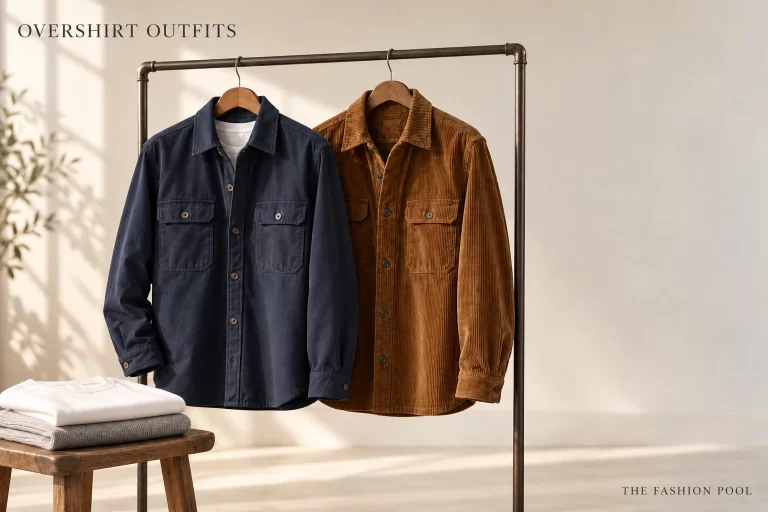
If you want a shirt-shaped outer layer instead of knitwear, our overshirt fit and outfit guide covers that separate choice.
1. Navy crewneck, pale-blue shirt and stone chinos
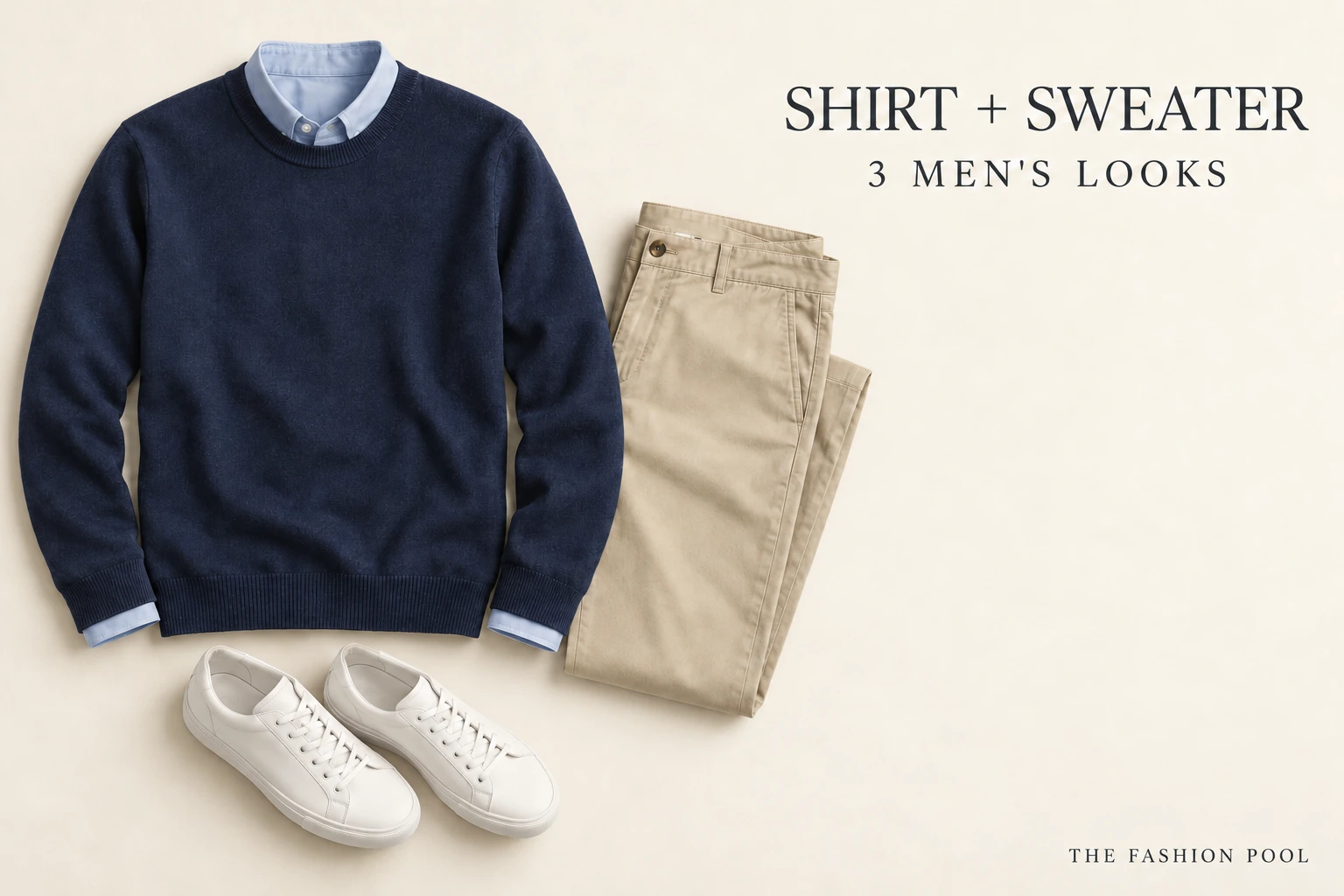
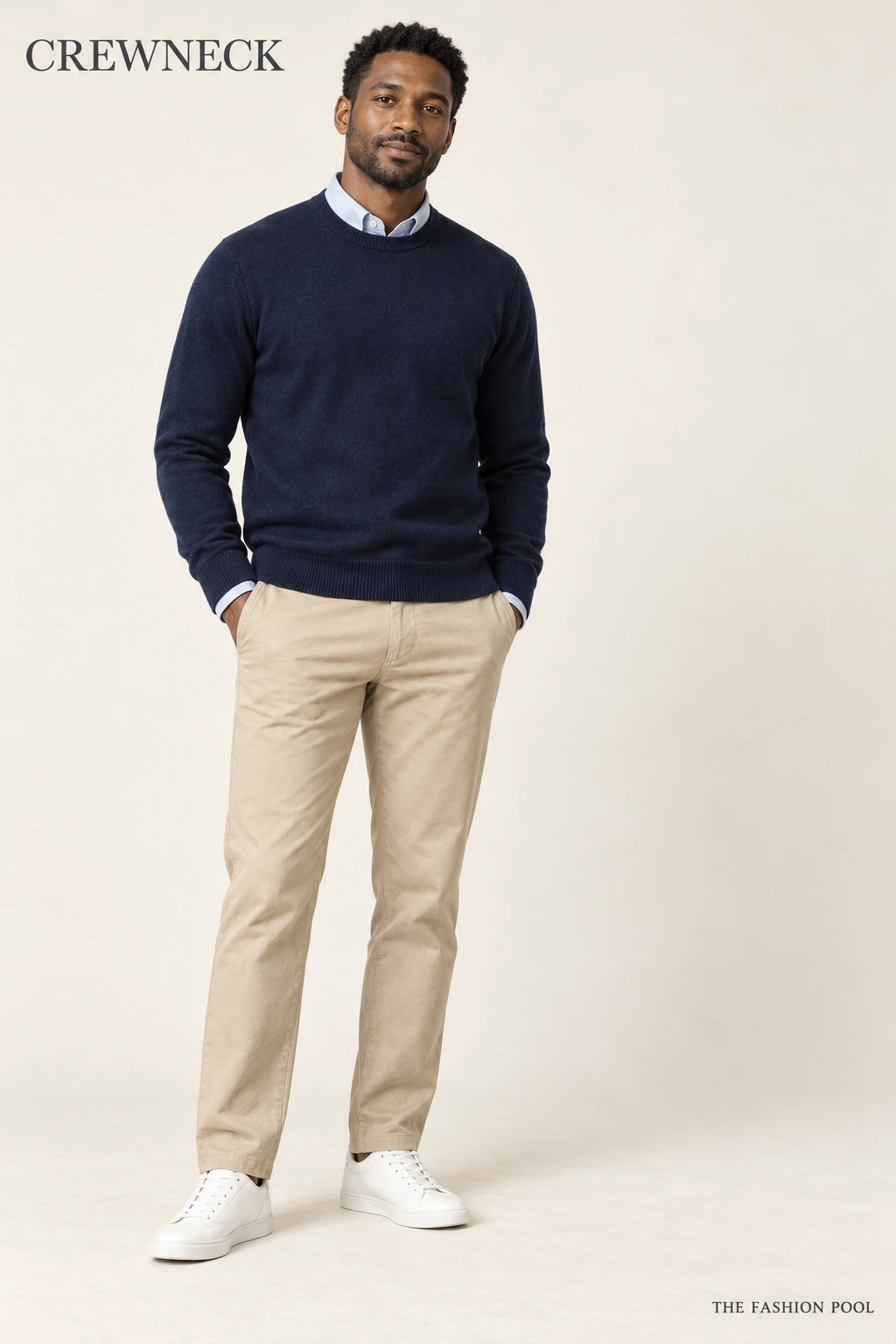
The combination: a navy fine-knit crewneck over a pale-blue button-down-collar Oxford shirt, stone straight-leg chinos and simple white sneakers. The light shirt separates the dark knit from the face, while the stone pants keep the outfit from becoming a block of navy.
For this version, leave the shirt’s top button open and settle the collar points beneath the crewneck edge. Keep a little collar visible above it. If the neckline pushes against the collar or your neck, try a more open crewneck or another sweater style.
A button-down collar has small buttons fastening its points to the shirt, as shown in Charles Tyrwhitt’s collar guide. Fasten those buttons if you want the points held in place; these differ from the central button placket.
Tuck the shirt, leave the navy sweater untucked and check that its hem settles comfortably around the waistband area. For an office that does not allow sneakers, substitute suitable leather shoes. Follow the actual workplace dress code rather than assuming a shirt collar makes every combination business casual.
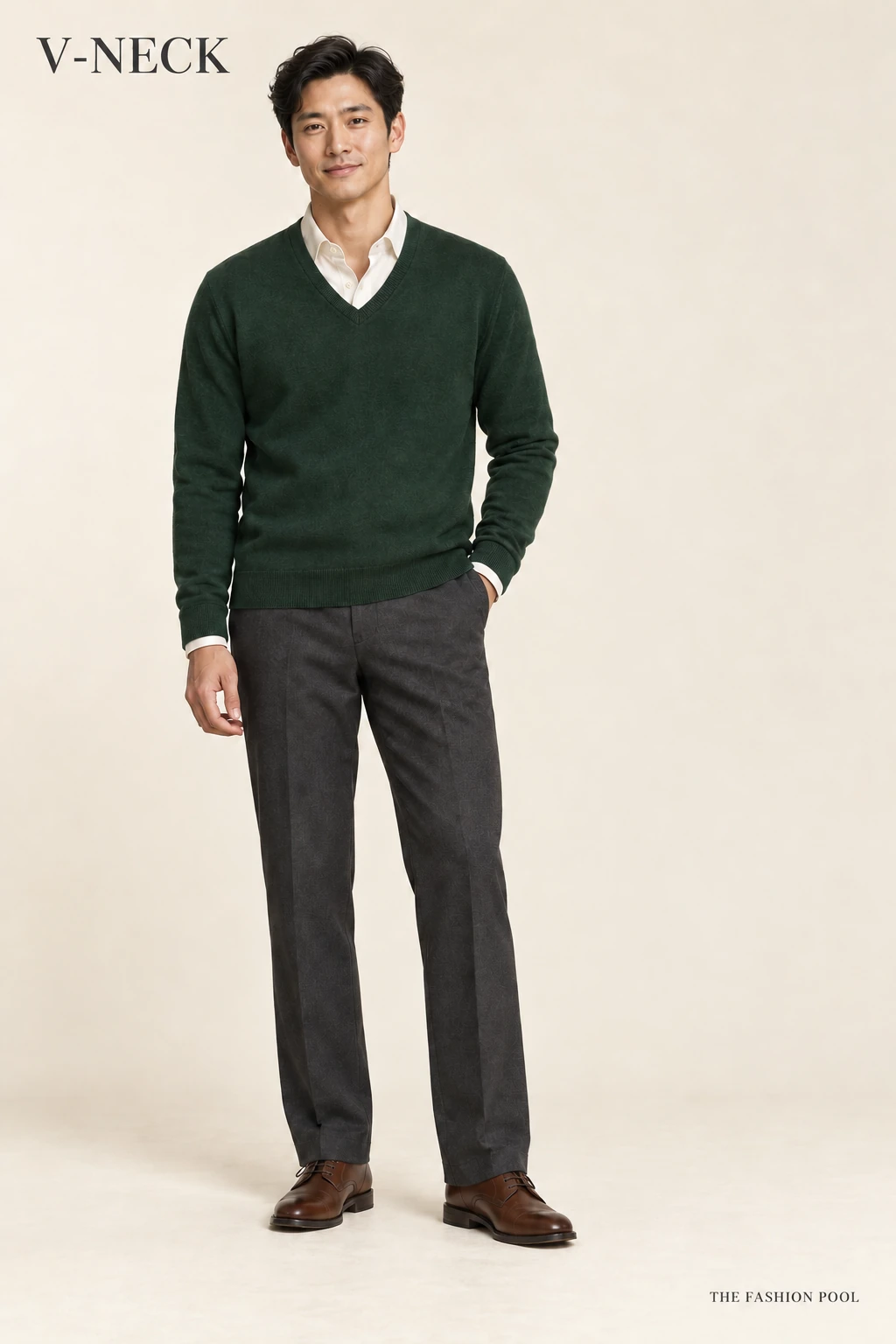
2. Forest V-neck, ivory shirt and charcoal trousers
Choose a forest-green fine-knit V-neck, ivory collared shirt, charcoal straight-leg trousers and brown Derby shoes with a brown belt if needed. The V opening shows more of the ivory shirt front than the crewneck does; the dark trousers keep attention on that neckline.
Button the shirt below the collar opening and tuck it into the trousers. Arrange both collar points so they lie flat within the V opening, on the shirt front rather than curling over the knit edge. Collar spread and V depth change the effect. If the opening feels too revealing or shows an awkward stretch of placket, choose a shallower V.
Check the shoulder and upper-arm area with your elbows bent. Horizontal tension through the knit or a compressed shirt sleeve suggests that the pair needs more room, not a more aggressive tuck. Compare a roomier sweater or a lighter shirt rather than assuming that sizing up every garment will solve it.
This can be a useful work or dinner outfit where the dress code permits. Keep the shirt presentable on its own in case you remove the sweater in a warm room.
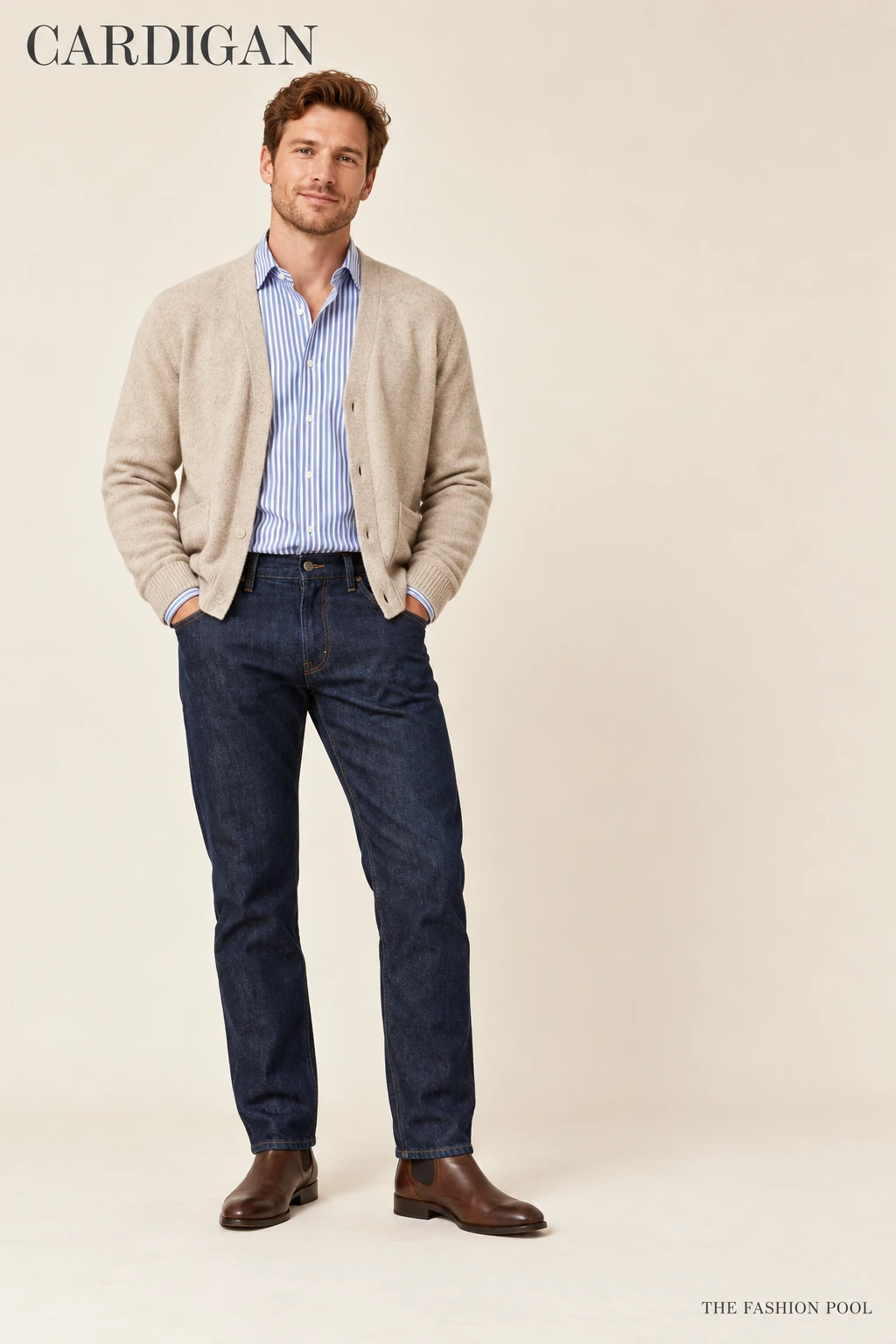
3. Oatmeal cardigan, striped shirt and dark jeans
For a more adjustable layer, wear an oatmeal V-neck cardigan open over a blue-and-white narrow-striped collared shirt, dark straight-leg jeans and brown Chelsea boots. The plain knit lets the stripe supply the pattern. Tuck the shirt here to give the cardigan opening a clean lower edge.
An open cardigan lets the collar sit naturally above its neckline and shows more shirt than either pullover. If you button it, watch the placket: a straight, relaxed line is a useful starting point. Gaps or pulled buttons can mean insufficient room, although the cardigan’s cut and your preferred silhouette also matter.
Try it seated as well as standing. Unfasten the lower button if that makes sitting more comfortable and suits the design; there is no need to keep every button closed. If you prefer an untucked shirt, choose one with a hem you like below the cardigan rather than hiding a long dress-shirt tail in a bulky fold.
Add suitable outerwear for the forecast and check the combined sleeve room.
Finish with cuffs, hems and a movement check
Let a little shirt cuff show if you like that layered detail, then bend and straighten both arms. Persistent excess cuff may indicate a shirt sleeve that is too long, while no visible cuff is also a valid choice. Avoid repeatedly folding a thick shirt cuff inside a narrow sweater sleeve to imitate a fixed measurement.
Finally, sit, reach across a table and lift your arms. Smooth any shirt fabric that has gathered, and check whether it returns immediately. If the layers keep fighting each other, change one garment. For a lighter untucked outfit, a shorter shirt or a roomier cardigan may be more practical than forcing the same pieces together.
Frequently Asked Questions
Should the shirt collar be inside or outside the sweater?
Both can be deliberate styling choices. Begin with collar points lying flat and a neckline that feels comfortable, then compare the visible effect. A crewneck, V-neck and open cardigan frame the collar differently. If a collar repeatedly curls or feels trapped, change the pairing rather than treating inside or outside as a rule.
Can I leave the shirt untucked underneath?
Yes, particularly with a casual shirt whose hem you like. Check the front, sides and back after sitting, because a long curved tail may show more than expected. For a clean edge beneath a pullover, tucking the shirt is often simpler. Keep the sweater untucked unless you intentionally want a different silhouette.
Do I need to buy the sweater one size larger?
Not automatically. Sweater cuts and fabrics vary, so try the intended shirt underneath and assess the chest, shoulders, upper arms and hem. Look for comfortable movement without unwanted pulling. Compare the next size or a different cut if needed, but do not assume a number on the label guarantees suitable layering room.
Can I add a tie under these sweaters?
A V-neck or cardigan gives the knot more visible space than a high crewneck. Start with a shirt collar and tie combination that sits comfortably on its own, then add the knit. Check that the opening does not crowd the knot. The tie changes the appearance, but the event’s actual dress code still applies.
What if the shirt seams show through a fine sweater?
Try a smoother shirt, a less close-fitting sweater or a slightly more substantial knit. Pockets, seams and folded fabric can show through thin layers, especially when they are compressed together. Check in ordinary daylight before deciding. Aim for a result you enjoy rather than hiding every trace of the shirt.
How should I adjust this for a warmer day?
Choose a lighter shirt and knit, or use an open cardigan that you can remove easily. Make sure the shirt is an outfit you are comfortable wearing alone. Follow the actual temperature and your activity rather than a season label; a fine sweater can still feel too warm in a heated room.
Conclusion
To wear a sweater over a collared shirt, choose the pair together and let the neckline guide the collar arrangement. Try one of the three combinations, then check sleeves, shirt tails and movement. Changing one crowded layer is usually more useful than repeatedly smoothing an uncomfortable outfit.