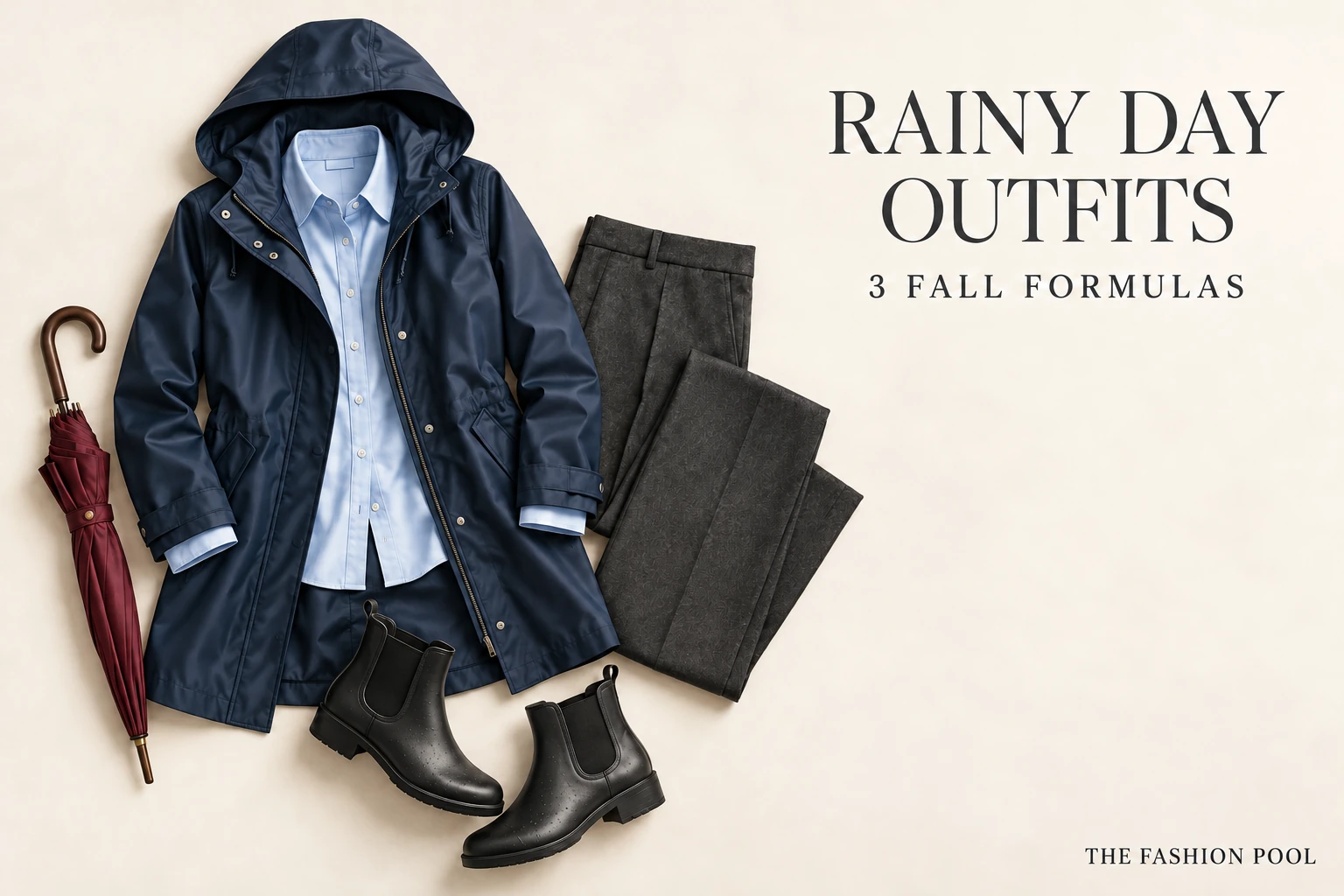
Rainy Day Outfits for Fall: 3 Practical Formulas
Rainy day outfits for fall need to work beyond the mirror: on a wet sidewalk, while reaching for an umbrella and after you take your coat off indoors. These three combinations cover everyday cool-weather outings, rather than severe-weather travel.
Build rainy day outfits for fall from the hem upward
Choose shoes intended for the conditions, keep clothing hems off the pavement and add outerwear with appropriate rain protection. Then select an indoor layer you can wear on its own. A short covered commute needs a different setup from a long walk in persistent rain; use the forecast and your route to choose between them.
Key Takeaways
- Check rain protection in the garment description; a trench shape alone proves nothing.
- Try trouser and skirt hems with the actual boots you will wear.
- Leave room for socks, movement and a removable warm layer.
- Plan where the wet coat, umbrella and shoes will go indoors.
Choose the outer layer before the color palette
Treat the visible raincoat’s color and length as design choices. Navy works with blue and charcoal; olive gives cream and black a softer backdrop; taupe lets a berry sweater provide the color. Matching rainwear accessories are optional.
Function comes first. REI’s rainwear guide distinguishes water-resistant jackets for brief light rain from waterproof options for more demanding rain. Read the item’s intended use, construction and care information rather than assuming a shiny surface or a few beading droplets prove lasting protection. Add suitable warmth beneath an uninsulated shell.
Put the coat on over your chosen sweater. Fasten it, reach forward and lift your arms as though opening an umbrella. If the shoulders bind, simplify the underneath layers or try a roomier coat. Don’t solve restricted movement by leaving the coat permanently open in the rain.
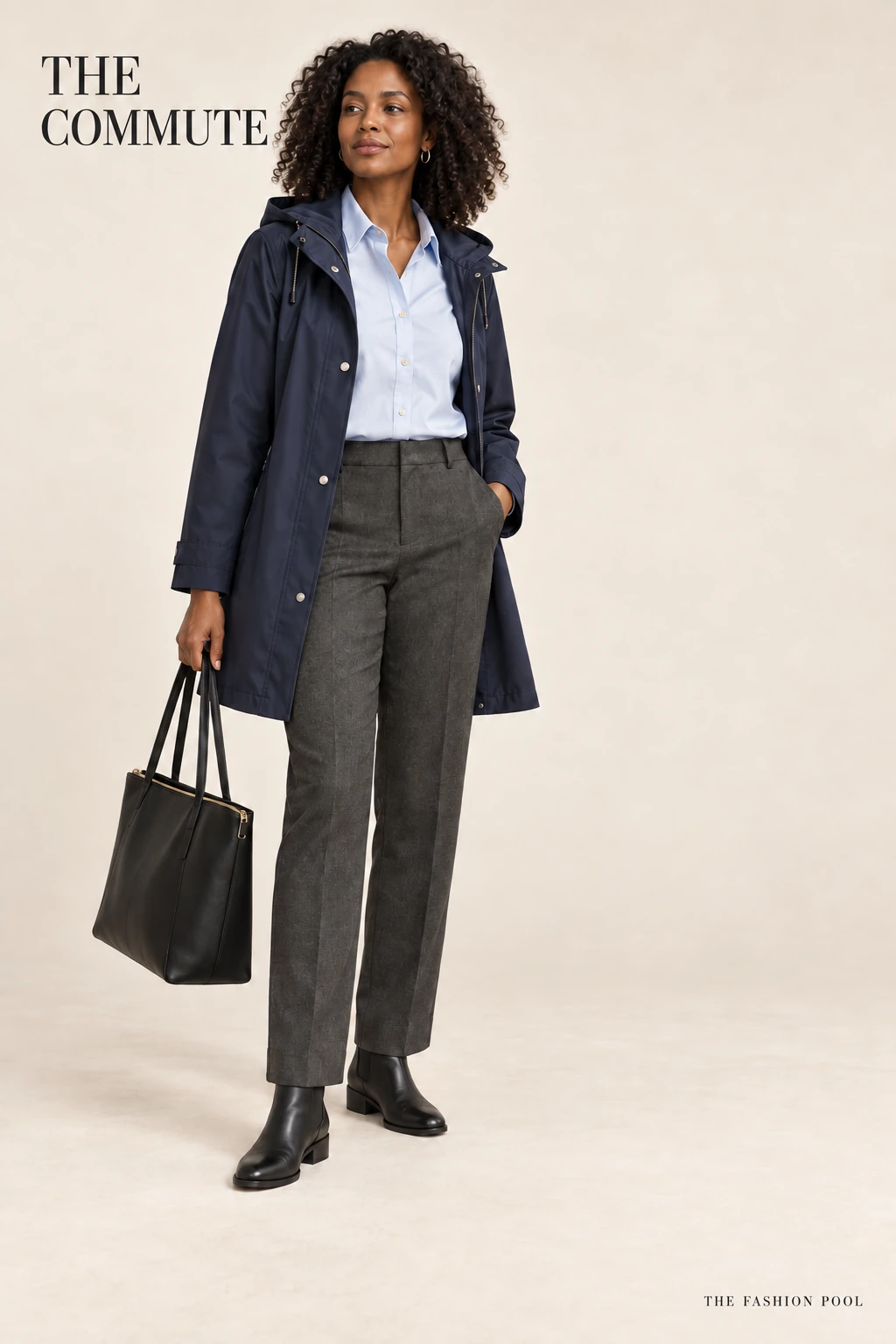
1. Navy raincoat and charcoal trousers for the commute
The formula: a thigh-length navy hooded raincoat, pale-blue button-down shirt, charcoal cropped straight-leg trousers, black waterproof ankle boots and a plain black zip-top tote. Keep the shirt comfortably tucked or within the coat hem.
Choose trouser length with the boots on. The hem should clear the ground while overlapping the boot opening enough for your comfort when you step or sit. “Cropped” is relative to the shoes and your preferred coverage, not a requirement to expose an ankle. Avoid a deep cuff that hangs close to splash level.
The blue shirt makes a complete indoor outfit once the navy coat comes off. If your office needs dressier shoes, carry a dry pair in a separate bag and change after arriving. This gives you a commute outfit and an indoor version without expecting one delicate shoe to do both jobs.
A tote’s zipper does not make the bag waterproof. Use a suitable protective pouch for anything that must stay dry. For the wider wardrobe rather than a single rainy morning, the cold-weather business-casual capsule guide develops related work combinations.
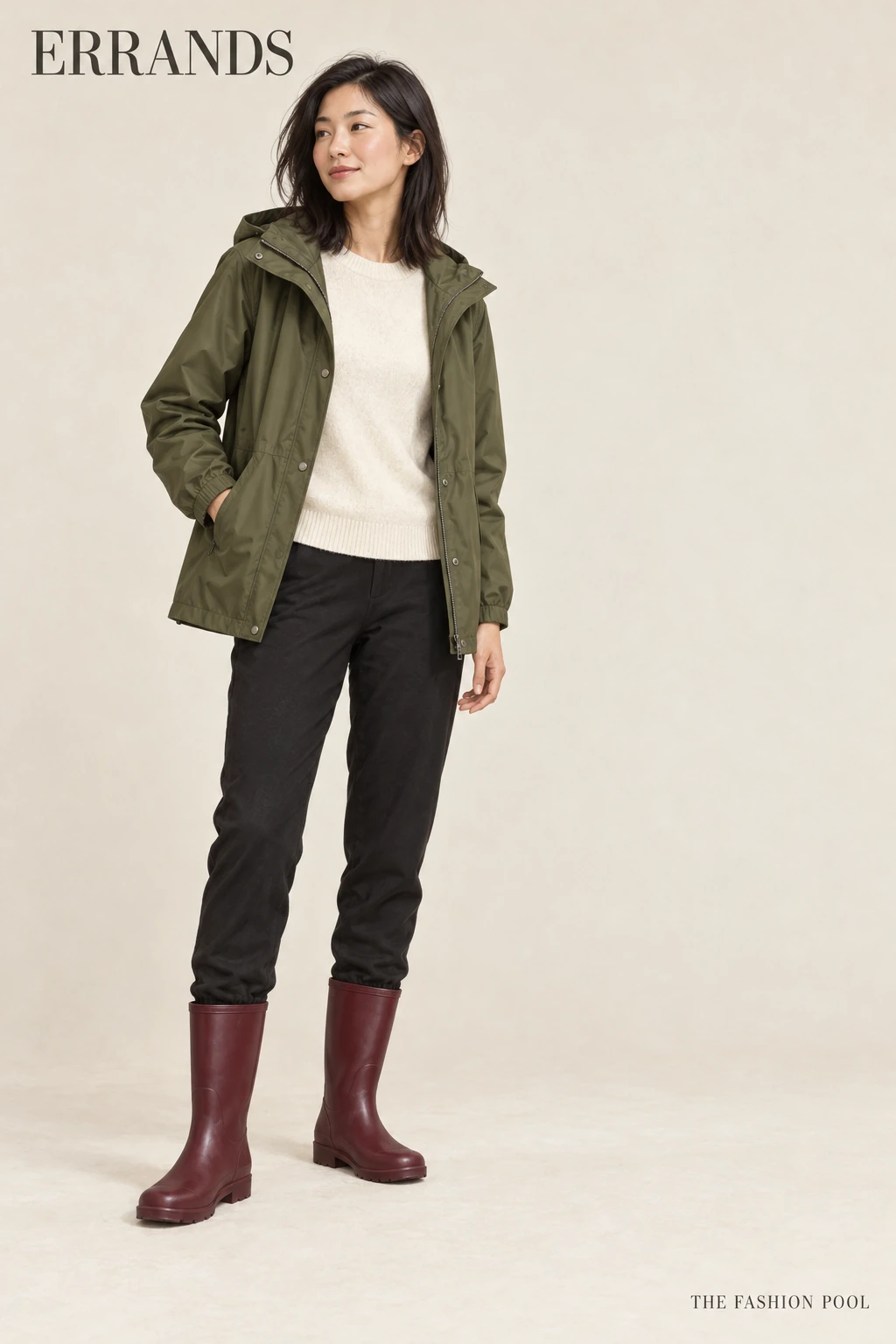
2. Olive jacket and burgundy rain boots for errands
Try a hip-length olive hooded rain jacket, cream fine-knit crew-neck sweater, black tapered joggers and burgundy mid-calf rubber rain boots, worn with comfortable socks. The burgundy boots supply the accent. Choose a jacket long enough to cover the sweater hem.
Tuck slim jogger cuffs smoothly inside the boots, then bend your knees and walk. Thick gathered cuffs can feel crowded in a narrow shaft. If yours bunch, switch to a roomier boot or a narrower pant cuff; do not force fabric into a tight opening or sacrifice calf comfort.
The shorter jacket is convenient for reaching into a bag and moving between shops, but it leaves more of the pants exposed. Use this formula for shorter everyday trips, not as a promise of dry legs through sustained rain. Longer outdoor exposure may call for rain pants or a longer protective layer.
Assess boot fit with your intended sock thickness. Walk in the complete combination and check for uncomfortable pressure or excessive heel movement; an oversized rubber boot is not automatically a comfortable walking shoe.
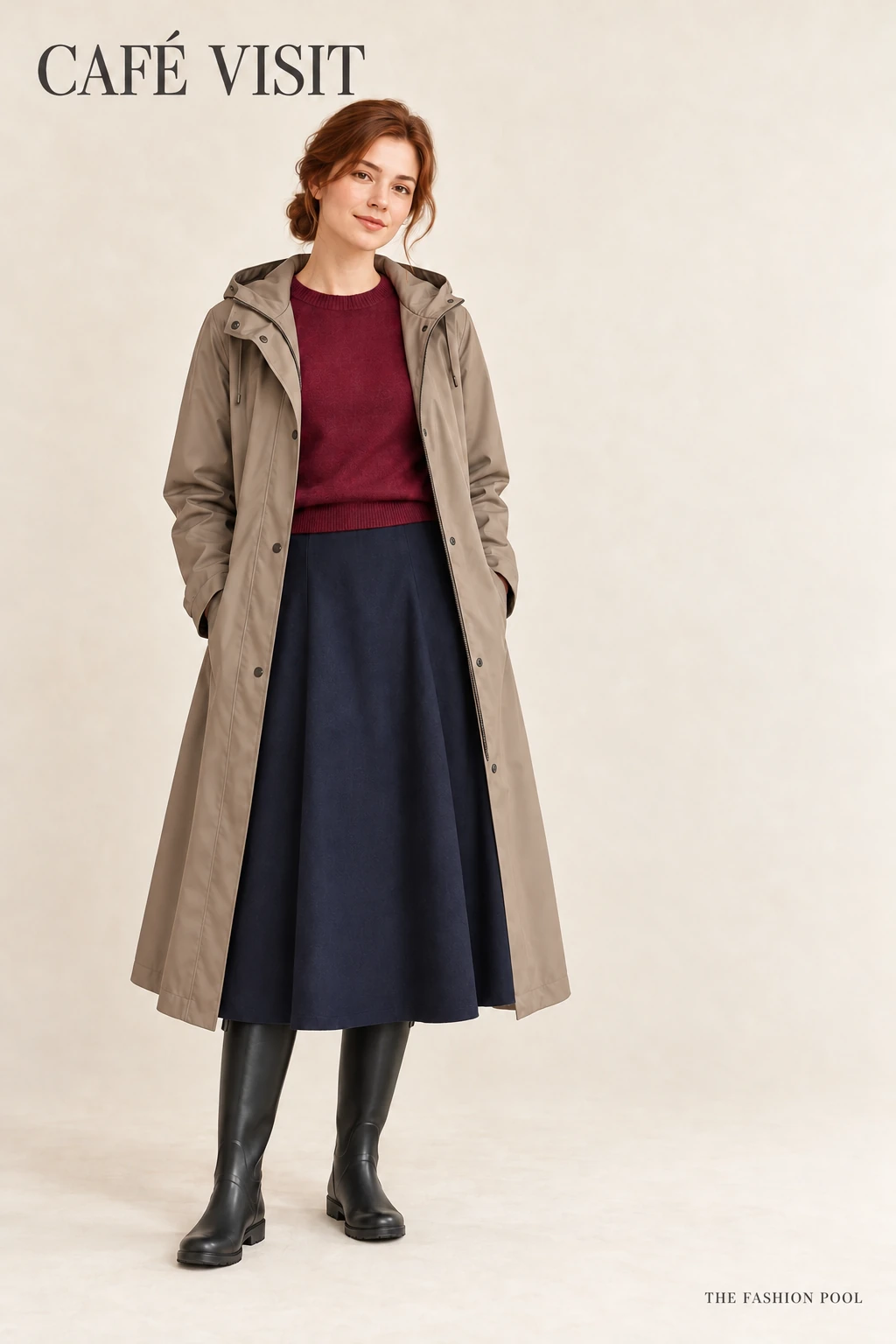
3. Long taupe raincoat and a midi skirt for a café visit
For a skirt option, combine a long taupe hooded raincoat, berry fine-knit sweater, navy A-line midi skirt, opaque black tights and black knee-high rain boots. Choose a coat that reaches just below the skirt hem for more coverage when closed.
Keep the skirt and coat hems clear of the pavement during a full stride and on stairs. Check that the skirt’s width and construction allow easy movement. Check the coat’s walking opening too: enough room to step should not depend on pulling a tight hem upward.
A swinging skirt can still catch wind or splashes, and a long coat does not seal out rain from every direction. Choose pants and more protective rainwear instead when your route or forecast makes the skirt impractical.
With the coat open indoors, check that the skirt falls cleanly over the boot tops rather than catching on them. If the sweater adds unwanted waistband bulk, leave it untucked or try a lighter knit. Use the sweater-tucking guide’s fabric checks for context, adapting the method to your skirt waistband.
Do a departure check, then plan the indoor reset
Walk several steps, sit and reach down for your bag. Look for trouser hems sliding under a heel, coat cuffs obstructing your hands or a bag strap pulling the hood sideways. Adjust the fit before adding another accessory. Choose a sole intended for your conditions; grip varies with the surface.
Pack only the changes your day needs: spare socks, an indoor shoe pair or a pouch for a damp umbrella. At the destination, keep wet outerwear separate from dry clothing and follow the item’s drying instructions. In warmer fall weather, lighten the midlayer; in colder conditions, add suitable warmth without crowding the coat.
Frequently Asked Questions
Can I wear a normal trench coat in the rain?
Check the specific coat’s description and care label. A trench is a silhouette, not a waterproof rating, and materials and construction differ. Some are suited to brief light showers, while others have more substantial protection. Choose for your expected exposure rather than relying on the coat’s traditional rainwear appearance.
Are jeans a good choice for a rainy day?
They can work for a short, mostly covered trip, but avoid hems that drag or brush puddles. Consider how much of your legs will be exposed and whether you can change if clothing gets wet. For a longer rainy walk, choose more protective clothing rather than assuming dark denim solves the problem.
What if I dislike tall rain boots?
Choose a suitable waterproof ankle boot or shoe you can walk in comfortably, then reassess the trouser hem. A lower opening changes your coverage when you step, and water can still enter from above. The boot does not need to look outdoorsy, but its actual construction must suit the planned conditions.
Do rain outfits have to be dark?
No. A navy or olive outer layer can anchor a cream knit or pale-blue shirt, while a berry sweater or burgundy boot adds color. Consider which pieces will be exposed to splashes and how you will care for them. Dark fabric can show marks too; color alone is not protection.
How can I wear these outfits in a warmer climate?
Use a lighter shirt or tee under the rain layer and skip the insulating sweater when it is unnecessary. Keep the hem, shoe and bag checks. The fall label reflects US-first timing, not a universal temperature: a warm wet day calls for different underneath layers from a cold rainy morning.
Should I buy rain boots a size bigger for socks?
Do not size up automatically. Try the intended socks with the specific boot and follow its sizing guidance. Check toe room, calf comfort and heel movement while walking. If a thicker sock creates pressure, compare another size or boot shape instead of assuming that either extra space or a tighter fit is always better.
Conclusion
Plan rainy day outfits for fall around the route, the exposed hems and the indoor destination. Pick one formula, wear the actual socks and boots, then fasten the coat and move. Aim for day-long comfort and protection suited to the weather.