Glasses already sit close to your earrings, so choosing the two separately can change the effect once everything is on. A pair that looks small in your hand may be quite noticeable beside a dark frame. This guide to earrings with glasses helps you compare the visible effect, check practical clearance and finish the decision with your real hairstyle and clothes.
Choose earrings with glasses already on
Start with frames that sit comfortably, then compare earrings you already own: a small stud, a compact hoop or a slim drop. Keep your glasses, hairstyle and top unchanged while you compare. Choose how much detail you want around the face, then turn your head and check that the earring, fastening and glasses arm do not catch or press against one another. No earring shape is compulsory for a frame shape.
Key Takeaways
- Judge the combination while wearing both pieces, rather than matching them on a table.
- Separate visual preference from physical contact behind and below the ear.
- Change one detail at a time to understand what makes a pairing feel different.
- Repeat the check with your actual collar, scarf and hairstyle.
Compare studs, small hoops and slim drops
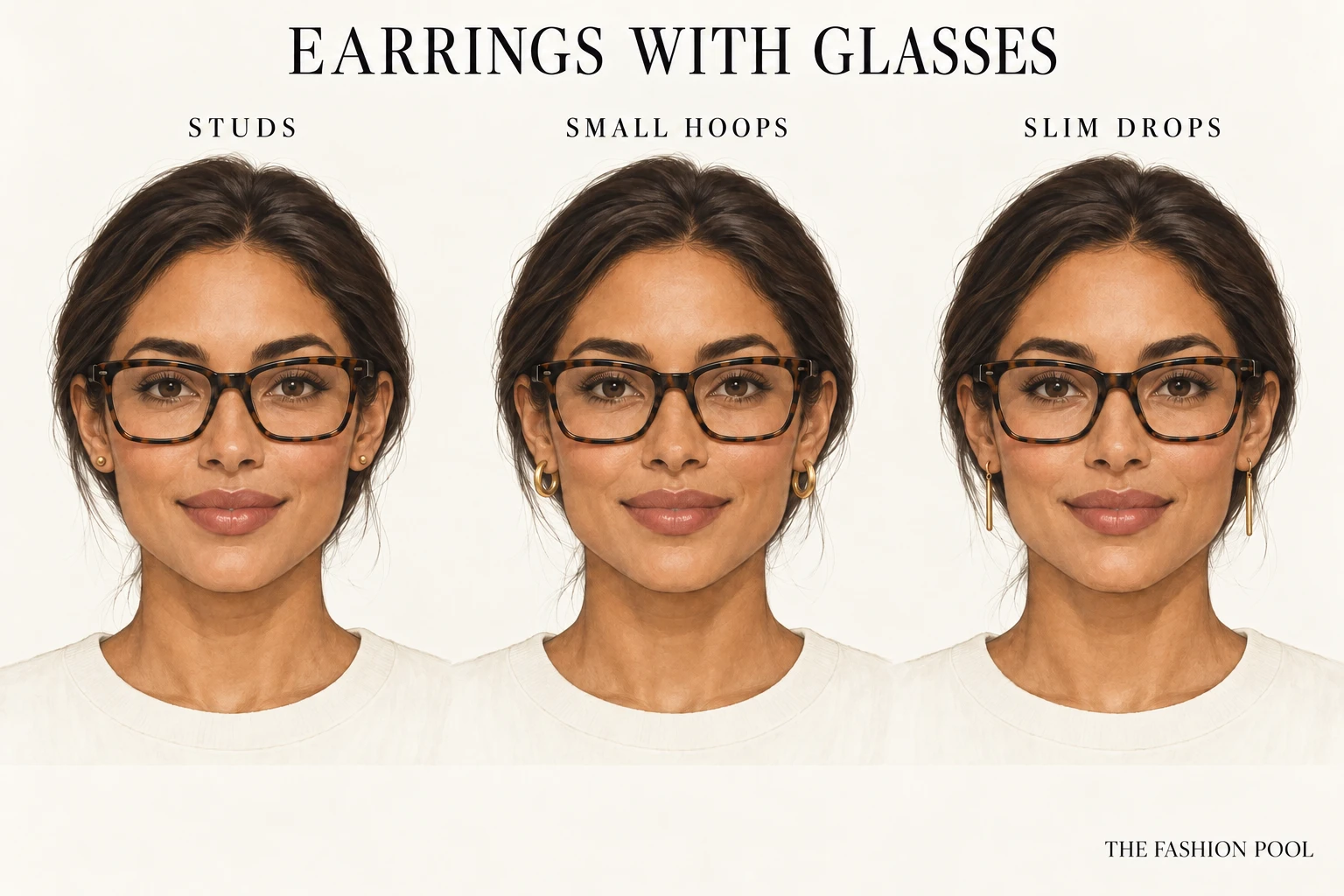
The cover keeps the same dark tortoiseshell rectangular frames, ivory crewneck and tucked-back hair across three earring options. That makes the earring change easier to see. The illustrations are styling examples, not photographs of tested products or evidence that these dimensions will fit every ear. Your own frame position, piercing placement and jewelry construction may differ.
A small gold ball stud creates a compact point of light near the lobe. Try this when you want a quieter detail beside a strong frame, or when your outfit already has a patterned collar. A small appearance does not establish comfort: the post and backing still need checking behind the ear. Choose it because you enjoy the combination, not because bold glasses forbid larger earrings.
A compact gold hoop adds a curved outline below the lobe. Notice how much of it is visible from the front and side, especially if your hair usually falls forward. Compare the actual hoop diameter and thickness rather than relying only on the word small. A hoop that sits close to one person’s lobe may hang differently on another.
A slim gold bar drop creates a longer line beside the cheek and below the frame. It can make the earrings more noticeable without adding a broad shape. Check movement as well as length; a swinging drop behaves differently from a relatively fixed design. If it touches a collar or catches in hair, compare another length or construction rather than abandoning drops altogether.
| Option | Visible effect to compare | Practical check |
|---|---|---|
| Small stud | Compact detail at the lobe | Post and backing behind the ear |
| Compact hoop | Curved outline below the lobe | Actual diameter, fastening and hair contact |
| Slim drop | Longer line beside the cheek | Movement near the collar and frame |
Check contact around the glasses arm
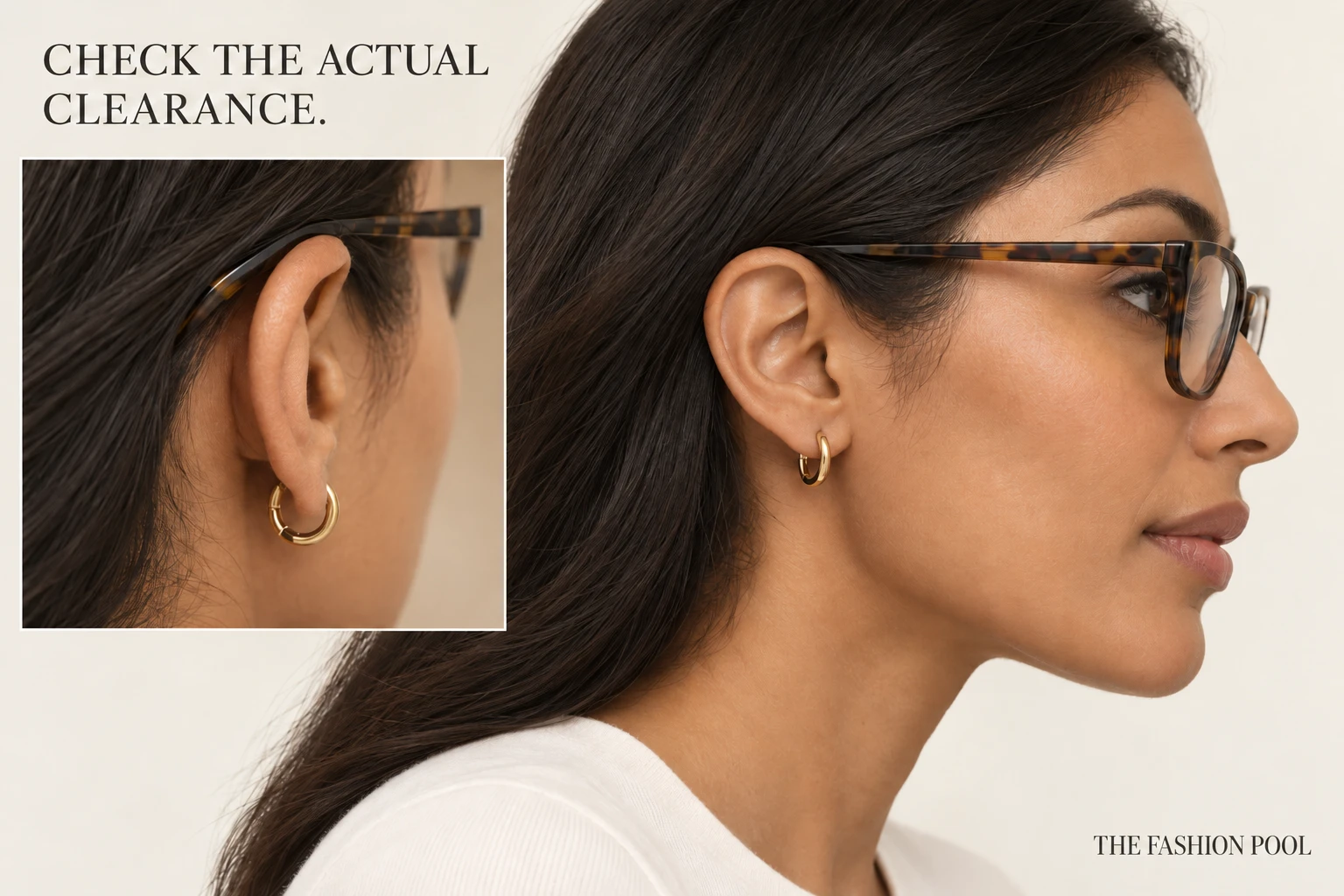
Look from the side as well as the front, using a second mirror if helpful. The supporting illustration shows a glasses arm above the ear and a compact hoop at the lower lobe. It clarifies the different positions, but does not establish a universal clearance measurement. Check the actual arrangement on both ears, including the earring closure or backing that a front-facing mirror can hide.
Turn your head normally, look down and gently remove and replace your glasses as you usually would. Notice whether the earring moves with the frame, the fastening catches or the glasses arm presses against jewelry. If the two interfere, remove the earrings and compare a different pair. Do not bend your frames or force a fastening to make an accessory combination work.
Also consider what happens during your day. A telephone, over-ear headphones, a scarf or a high collar may change the available space. Try the item you actually use rather than assuming a pairing that works in the mirror will behave identically with it. Discomfort is a reason to change the arrangement, not something to accept for the sake of a particular look.
Decide whether to repeat or contrast finishes
Gold earrings can echo warm tortoiseshell tones, while silver can provide a cooler contrast. Neither choice needs to match the frame hardware exactly. Try the finishes in similar lighting and compare from ordinary viewing distance. If you change size, shape and finish together, you may not know which change created the effect you prefer.
Boots Opticians’ jewelry-pairing guide presents different styling possibilities for frames and jewelry. Treat such combinations as inspiration rather than a face-shape rule. You can enjoy strong frames and noticeable earrings together. If the result feels too busy for your taste, first simplify one detail, such as a necklace or patterned neckline, before replacing the earrings.
Finish with the hairstyle and outfit you will wear
For an everyday example, try tortoiseshell frames, small gold studs, an ivory crewneck, dark straight-leg jeans and brown loafers. The plain neckline makes the face-level details easy to assess. Put your hair where you normally wear it, then check how visible the earrings remain. You do not need to tuck your hair back simply to copy the cover.
For another direction, pair the same frames with slim gold drops, a plain navy blouse, charcoal trousers and black flat ankle boots. Check the blouse collar against the moving earrings before adding a jacket. If you want a necklace too, the neckline and necklace guide helps with that separate placement decision. Leave it off if you prefer the earrings to provide the main jewelry detail.
In colder weather, put on your real scarf and coat before deciding. A wrap can rise toward a drop earring when you turn your head. The scarf-and-coat guide provides wrapping options; repeat the jewelry check with whichever arrangement you choose. A final movement check is more useful than purchasing a new pair solely because its description mentions glasses.
Frequently Asked Questions
Do round glasses need angular earrings?
No. Contrasting shapes are one styling option, but repeating curves can also be deliberate. Try the earrings with your actual frame width, hairstyle and neckline. Keep comfort and personal preference separate from shape labels. A round frame does not establish that a particular angular earring will fit, feel comfortable or suit your outfit.
Can I wear statement earrings with thick frames?
Yes, if you like the combined effect and the pieces work comfortably together. Try a plain top first so you can judge the frames and earrings clearly. Then add other details one at a time. Strong frames do not create a universal size limit for earrings; the actual arrangement matters more than a category name.
Should my earrings match my glasses hardware?
Exact matching is optional. Repeating a metal finish can create a connection, while a different finish can add contrast. Compare the whole outfit rather than replacing comfortable jewelry to match a small hinge detail. If you dislike the result, change one element at a time so you can identify what you prefer.
Are studs always the most comfortable choice?
No earring category guarantees comfort. A stud’s post or backing can interfere with something behind the ear, while another design may sit differently. Check your actual pair with the glasses and accessories you use. Remove jewelry that feels uncomfortable rather than assuming a small front-facing design cannot be the cause.
What if my hair hides the earrings?
Decide whether that bothers you before changing anything. Partly visible earrings may be exactly the effect you want. If you want more visibility, compare another shape or your preferred hairstyle, then check for catching. You do not need larger or longer earrings merely because your hair covers a small pair.
Conclusion
Compare earrings with your glasses already on, then check the side view and everyday movement. Finish with your hairstyle, neckline and outer layers. The most useful pairing is one whose appearance you enjoy and whose pieces work comfortably together, without relying on rigid frame-shape rules.