How to Wear a Scarf With a Coat: 3 Easy Wraps
A scarf can look balanced while your coat is open, then bunch under the collar the moment you button up. The useful question is how to wear a scarf with a coat that still closes comfortably and lets you move. Start with the collar, then choose a wrap that fits the space around it.
How to wear a scarf with a coat without crowding the collar
Use a straight drape for an open, lapelled coat; a loose once-around wrap when you want more neck coverage; or a folded pull-through with a thin rectangular scarf when you want the ends gathered together. Try the scarf with your actual sweater and fastened coat before deciding.
Key Takeaways
- A bigger scarf does not always need a more elaborate knot.
- Choose the arrangement after checking the coat’s closed neckline.
- Keep the scarf ends clear of zippers and bag hardware.
- Use one repeated color to connect a patterned scarf with your outfit.
Check the scarf and coat together first
Lay your rectangular scarf flat. A fine, flexible fabric usually folds into a smaller bundle than a thick cable knit. Width, length and stiffness also matter: two wool scarves can behave differently. A blanket-sized wrap may work draped over a roomy coat but become cumbersome when doubled through a loop.
Put on the layer you will actually wear underneath. Fasten the coat, turn your head and reach forward. A funnel collar, hood or padded neckline already occupies space; start with a narrower scarf or a simple drape inside the opening. With broad lapels, check whether the scarf lies neatly between them or sits more comfortably outside.
You should not need to strain the fastening or hold your chin up to make the combination work. If the coat feels crowded without any scarf, revisit the underlying layers first. Our winter layering guide explains how separate garment lengths and weights affect the whole outfit.
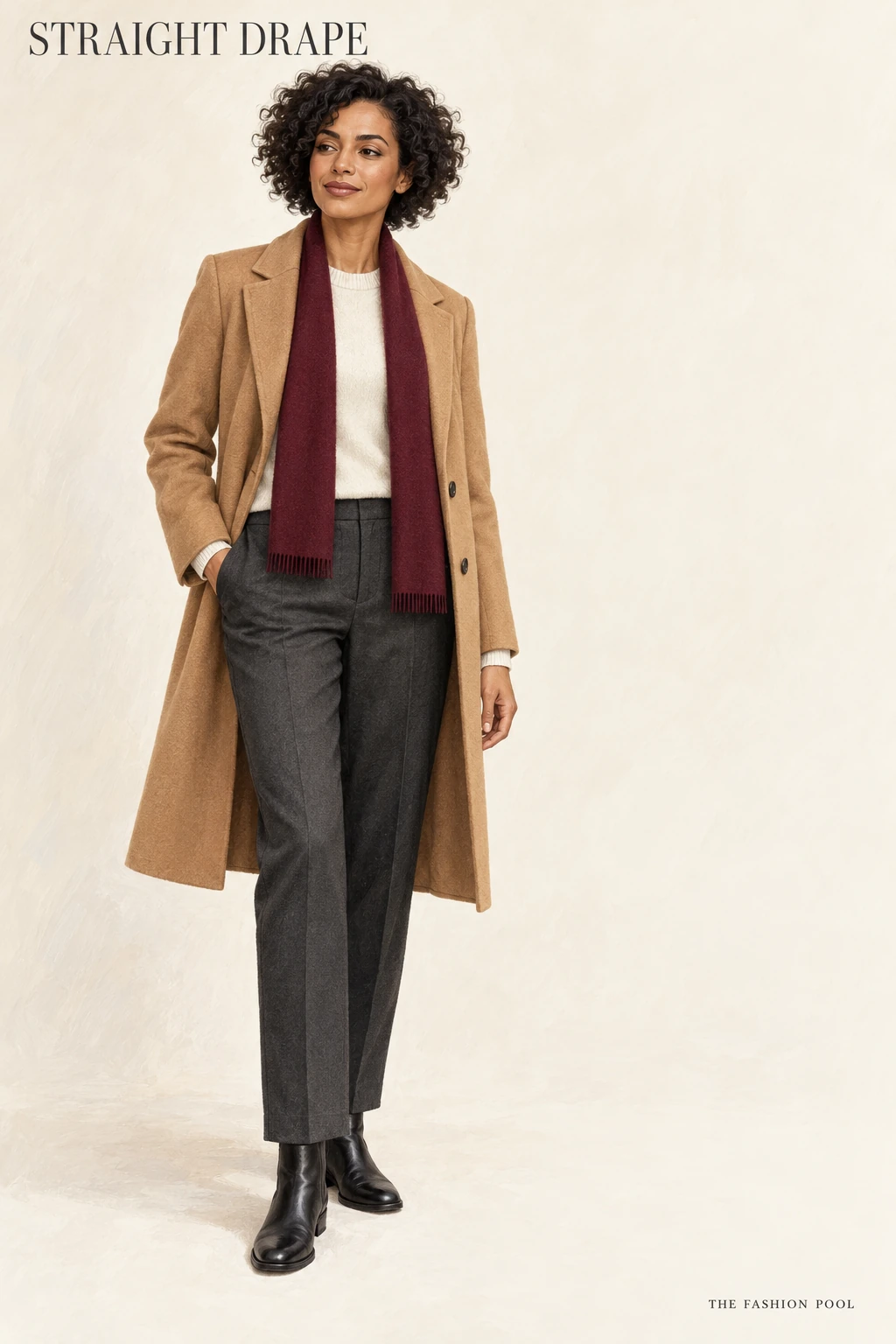
1. Straight drape with a camel lapel coat
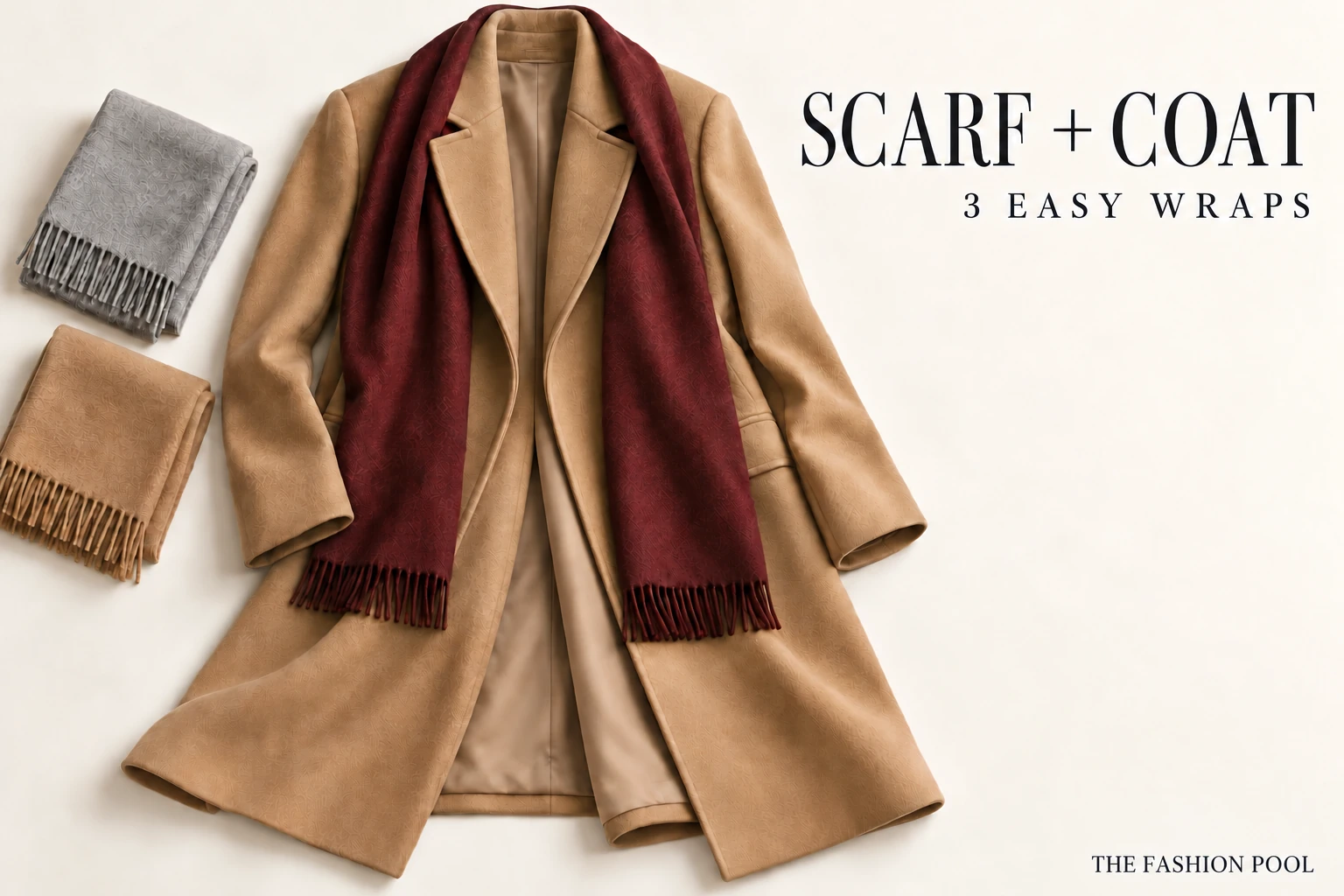
Try this combination: a camel single-breasted coat, fine ivory crew-neck sweater, charcoal straight-leg trousers, black ankle boots and a burgundy rectangular scarf. The scarf adds color while the open coat shows the sweater.
- Place the scarf’s midpoint behind your neck, letting both ends fall forward.
- Smooth the two lengths into relaxed vertical strips rather than rolling them into cords.
- Arrange them just inside the lapels, leaving the coat’s edges visible.
This untied arrangement leaves the front of the neck relatively open. It suits mild, dry weather or a short walk better than an exposed, windy wait. When you button the coat, flatten each end against your chest before closing it; avoid folding both ends into one thick stack.
If the scarf keeps slipping, choose another wrap rather than tightening the coat to trap it. For a quieter palette, replace burgundy with taupe. The scarf maker Black’s tying guide also demonstrates a drape beneath lapels and a folded loop.
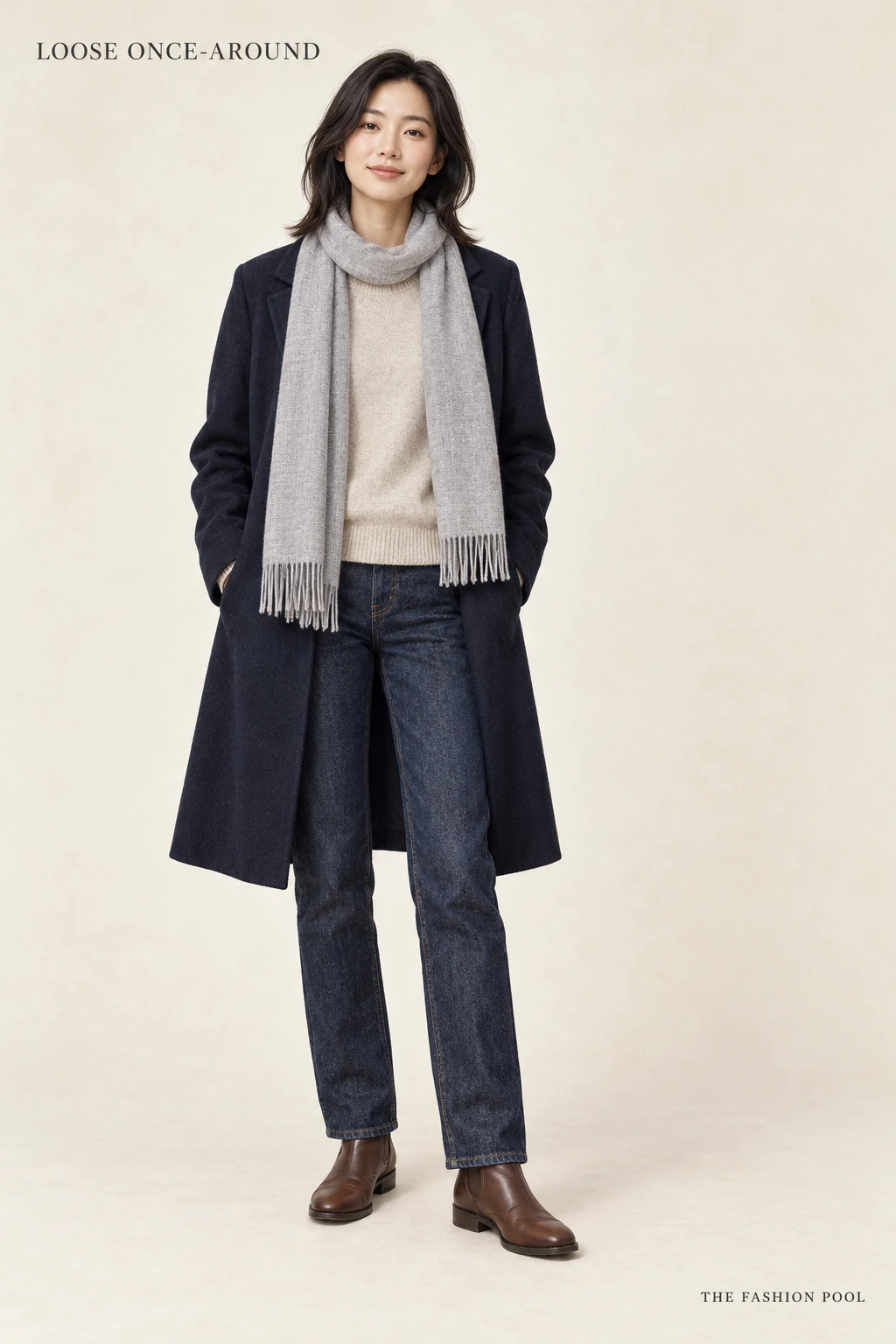
2. Loose once-around with a navy coat
Pair a navy relaxed lapel coat with an oatmeal fine-knit sweater, dark straight jeans, brown flat ankle boots and a light-gray scarf. Here the pale scarf separates the navy coat from the darker denim without introducing another strong color.
- Drape the scarf behind your neck with one end longer than the other.
- Bring the longer end across the front, around the back of your neck and forward again.
- Loosen the resulting neck loop, then adjust the two hanging ends until they sit comfortably.
The Met Store’s scarf guide illustrates the once-around method. For this coat outfit, keep the loop relaxed above the lapels, with both ends outside. If you cannot complete the turn without a tiny tail or uncomfortable tension, use the drape instead.
Check the view from the side. If the scarf pushes your collar outward, loosen and flatten it, or choose a thinner scarf. A short puffer with a tall collar may have less room for this arrangement than the relaxed coat shown here.
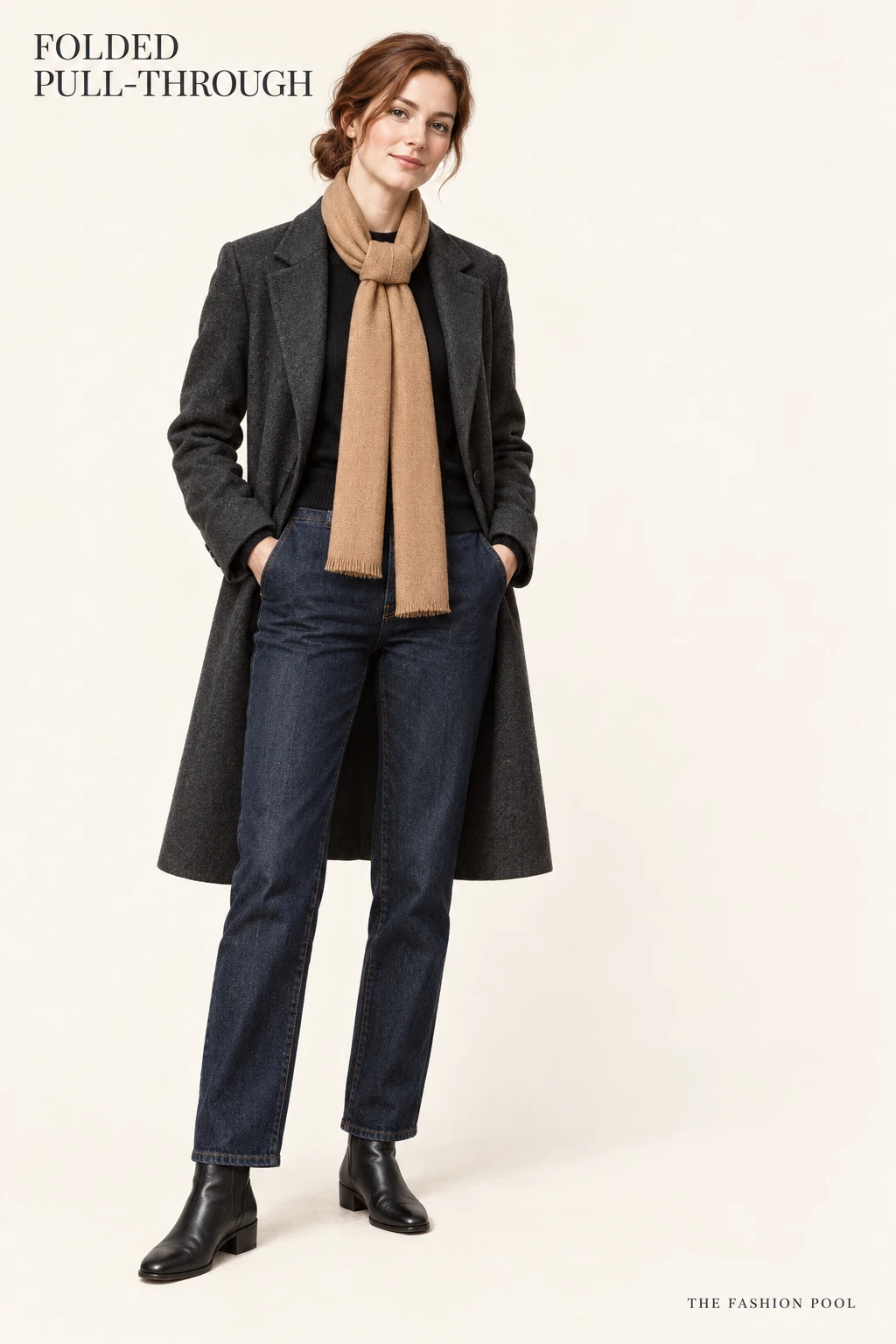
3. Folded pull-through with a charcoal coat
Try a charcoal notch-lapel coat, black fine-knit sweater, dark jeans, black ankle boots and a narrow camel scarf. The warm scarf color breaks up the dark outfit; a thin woven fabric keeps the doubled section manageable.
- Bring the two short ends together so the scarf is half its original length.
- Set the folded scarf behind your neck, with the folded loop on one side and both loose ends on the other.
- Pass both ends through that loop once. Ease the fabric into place without pulling it tight.
Keep the joined ends outside the coat for a visible, compact finish. If you prefer them inside, flatten them separately and fasten the coat again to check the fit. A small-looking knot can still feel bulky beneath a closed neckline.
This uses more layers of scarf at the front than a straight drape. Skip it with a very thick, stiff or short scarf. If the ends barely clear the loop, switch methods rather than repeatedly tightening the fold.
Finish with color, straps and a closure check
For a patterned scarf, choose one color already present in the coat, sweater or shoes. A camel-and-navy check can connect a camel coat to dark jeans without requiring matching accessories. If you enjoy mixing patterns, vary their scale and check the result in daylight.
Put your bag on after arranging the scarf, then reach for the strap and open the bag. Move the scarf if a buckle catches its fringe or a crossbody strap pulls the neck loop sideways. Leave smooth space around the zipper path before fastening a puffer.
For colder outdoor time, choose suitable outerwear first; an attractive scarf does not make an inadequate coat weatherproof. If the underlying outfit also needs planning, use the cold-weather business-casual capsule guide.
Frequently Asked Questions
Should the scarf go inside or outside the coat?
Either can work. A thin drape can sit inside broad lapels, while a loose loop may feel better outside. Put the scarf in place, fasten the coat and move your shoulders. If the front bulges or the neckline feels restrictive, move the scarf outside or choose a thinner one.
What if my scarf is too short for a once-around?
Use a straight drape rather than forcing a full turn. A short scarf may leave very little fabric hanging after wrapping, especially over a substantial collar. You can also wear it as a small neck accent if its shape allows, but that is a different arrangement from the three rectangular-scarf methods here.
Can I wear a chunky scarf with a puffer?
You can if the combined neckline remains comfortable, but start with fewer folds. A padded collar and hood already add volume, so a doubled pull-through may feel crowded. Try draping the scarf inside the open neckline or wearing a loose arrangement outside, keeping fabric clear when you close the zipper.
How do I stop a smooth scarf from sliding?
Try the pull-through if the scarf is long and thin enough, then check that it stays comfortable as you move. Smooth fabric may still shift. Avoid relying on a tight neck loop or adding pins through delicate material; a different scarf texture or a simpler arrangement may be more practical.
Does my scarf need to match my hat and gloves?
No. Matching accessories create a coordinated effect, but one shared color is enough to connect separate pieces. For example, a burgundy scarf can accompany black gloves and a charcoal hat when the coat is camel. Consider the whole outfit and your preferred amount of contrast rather than buying a matching set.
Do these methods work with a square silk scarf?
A square scarf needs a different starting fold and may not have enough usable length for these wraps. This guide is built around rectangular scarves. Try a narrow folded band or a small loose tie with a square instead, following its care instructions and avoiding forceful pulling on delicate edges.
Conclusion
Choose the scarf arrangement that fits your closed coat, not just the mirror view with it open. Start with the drape, add a once-around when length allows, or try a thin pull-through. Finish by checking your collar, bag strap and zipper before heading out.