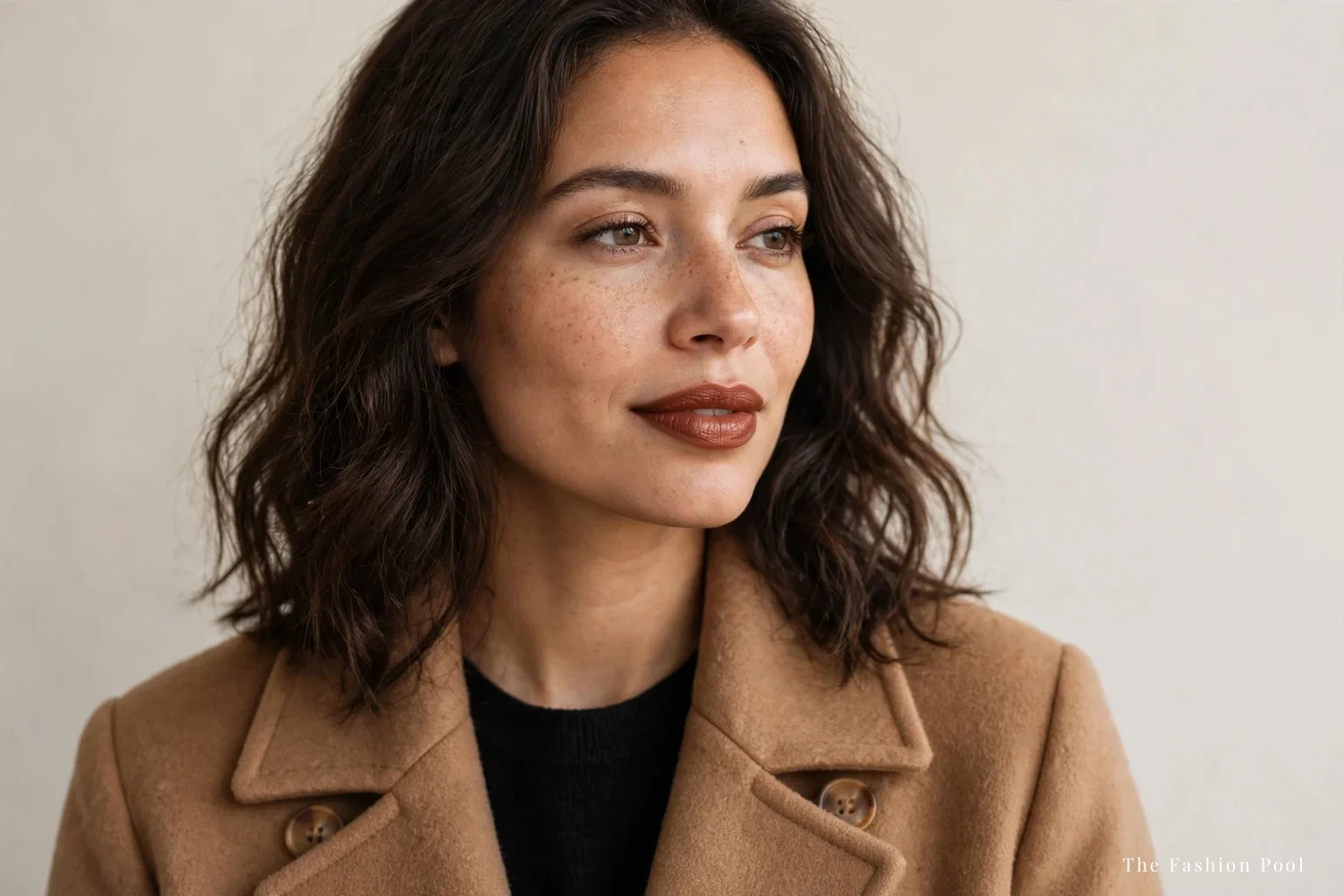
Brown lipstick shades are the easiest lip color to get wrong and the most flattering when you get them right. The difference is rarely the brand or the price — it is whether the brown in the tube matches the undertone in your skin. Pick the right one and brown looks rich, expensive, and effortless; pick the wrong one and the same color looks muddy, gray, or like it belongs to someone else. This guide works from the undertone out. First, a two-minute test to find whether your skin leans warm, cool, or neutral. Then a map of the brown spectrum — which browns are warm, which are cool, and which sit in the middle. Then the right brown for fair, medium, and deep skin, how finish changes the shade, and how to wear it with the rest of your face. No shade list to memorize: you will be able to walk into any beauty aisle and rule out the wrong browns in seconds.
Find your undertone first
Skin tone and undertone are not the same thing, and the difference is the whole trick. Skin tone is the surface color — fair, medium, deep — and it changes with the seasons. Undertone is the temperature underneath it, and it does not change: warm, cool, or neutral. Two people with the same fair skin can need opposite browns, because one is warm and the other is cool. That is why “brown lipstick for fair skin” is the wrong question on its own. The right question is “brown lipstick for fair, warm skin” — and the answer starts with three quick tests.
The first is the vein test. In natural daylight, look at the veins on the inside of your wrist. If they look blue or purple, your undertone leans cool. If they look green, it leans warm — green is what blue veins look like through warm, yellow-toned skin. If you genuinely cannot tell, or you see both, you are probably neutral.
The second is the jewelry test. Hold a gold piece and a silver piece against your skin, one at a time, in daylight. Gold flatters warm undertones; silver flatters cool ones. If both look equally good, that is another vote for neutral.
The third is the white test. Hold a piece of stark white fabric and a piece of cream or ivory near your face. Stark white brightens cool skin and can make warm skin look tired; cream flatters warm skin and can make cool skin look washed out. If neither is clearly better, neutral again.
These tests are guides, not laboratory results, and they can disagree — if two of the three point the same way, go with that. If all three disagree, treat yourself as neutral and start with the neutral browns in the map below; they are designed to be forgiving. Your undertone runs through your whole face. The same warm-or-cool answer that picks your brown lipstick also picks your blush and your foundation shade, which is why getting it right once pays off everywhere.
The brown spectrum: warm, cool, and neutral
Brown is not one color. It is a spectrum, and every brown leans somewhere — warm, cool, or in between. Learning to read the lean is the skill this whole article teaches, and the map below is the reference to keep.
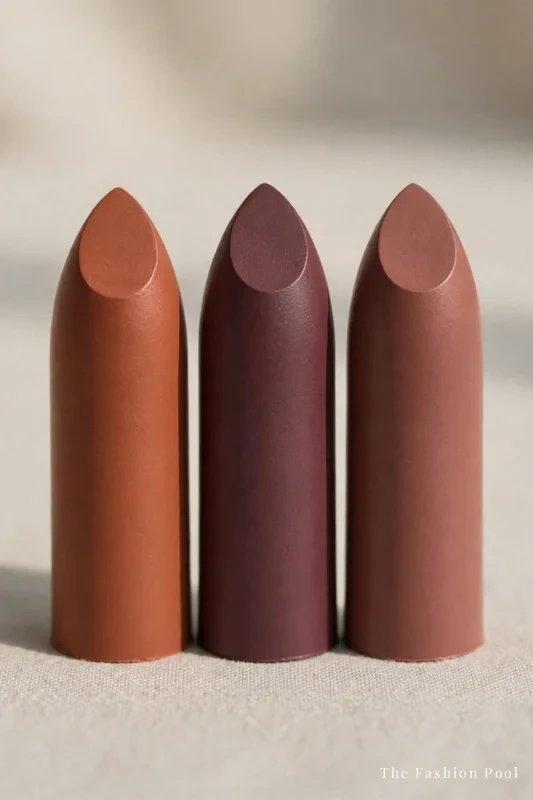
Warm browns have a golden, orange, or red base. The family is cinnamon, caramel, terracotta, brick, toffee, honey-brown, and burnt caramel. They look sunlit and spicy, and they suit warm undertones — the brown equivalent of gold jewelry. If a brown reminds you of autumn leaves or a spice jar, it is probably warm.
Cool browns have a blue, plum, or gray base. The family is plum-brown, espresso, taupe-brown, berry-brown, dark berry-brown, and dark chocolate with a blue base. They look smoky and deep, and they suit cool undertones — the brown equivalent of silver jewelry. If a brown reminds you of dark chocolate or dried plums, it is probably cool.
Neutral browns sit in the middle, with no strong lean either way. The family is rosewood, mauve-brown, milk chocolate, and cocoa. They suit neutral undertones best, and they are the safest first brown for anyone who is unsure — a neutral brown rarely looks wrong, even if it is not the most dramatic choice.
Reading a shade takes ten seconds once you know what to look for. Look at the bullet in daylight, not under the shop’s yellow lights, which warm everything up. Read the description words — brands usually say “warm” or “cool” — but verify with your eyes, because the words are sometimes aspirational. Swatch on the back of your hand to see the undertone, but test on your lip before you commit: your natural lip color shifts the shade, and a brown that looks perfect on your hand can look different on your mouth. And use the depth rule for your first brown: pick one or two shades deeper than your natural lip color. It will read as a brown without overwhelming your face, and you can go deeper once you know the undertone works.
Fair skin: the browns that work
Fair skin suits lighter-to-medium browns as everyday color. Milk chocolate, rosewood, soft taupe-brown, and cinnamon in a crème or sheer finish all read as natural — present, but not loud. The undertone rule decides which of these: warm fair skin takes caramel and cinnamon; cool fair skin takes rosewood and taupe-brown, and a plum-brown worn sheer. The depth rule matters here more than anywhere: a brown one or two shades deeper than your natural lip color flatters fair skin; a brown five shades deeper is a different look entirely.
That deeper look is not forbidden — a dark espresso or brick on fair skin can be striking — but it is a statement, not a neutral, and it needs the rest of the face to hold it up. Lip liner in the same brown, defined brows, and a little blush keep the lips from swallowing the face. Without that definition, a very dark matte brown on fair skin looks harsh, emphasizes the paleness around it, and can read muddy in photographs. The trap for fair skin is not the brown itself; it is wearing a deep brown with a bare face and wondering why it looks wrong. Keep the rest of the face soft and the eyes simple, and even the deep browns behave.
Medium skin: the widest range
Medium skin has the widest range of all — nearly every brown works, and the question stops being “which brown can I wear” and becomes “what effect do I want.” Warm medium skin takes terracotta, brick, caramel, and toffee, and golden browns look sunlit rather than heavy. Cool medium skin takes espresso, plum-brown, and berry-brown, and the deeper cool browns read as polished rather than severe. Neutral medium skin takes milk chocolate, cocoa, and rosewood, and can borrow from either side.
Medium skin is also where a deep brown becomes an everyday color, not just an evening one — an espresso or a dark chocolate in a crème finish is as wearable at lunch as it is at dinner. But medium skin is where the wrong undertone shows up most clearly as “muddy,” and the reason is depth: the lip color sits close to the skin’s own depth, so a mismatch reads as dullness rather than contrast. A warm brown on cool medium skin looks flat and grayish; a cool brown on warm medium skin looks dull and ashy. When a brown looks flat on you, check the undertone first, not the depth — going darker or lighter will not fix a temperature mismatch, and the right temperature at the same depth usually will.
Deep skin: go rich, not pale
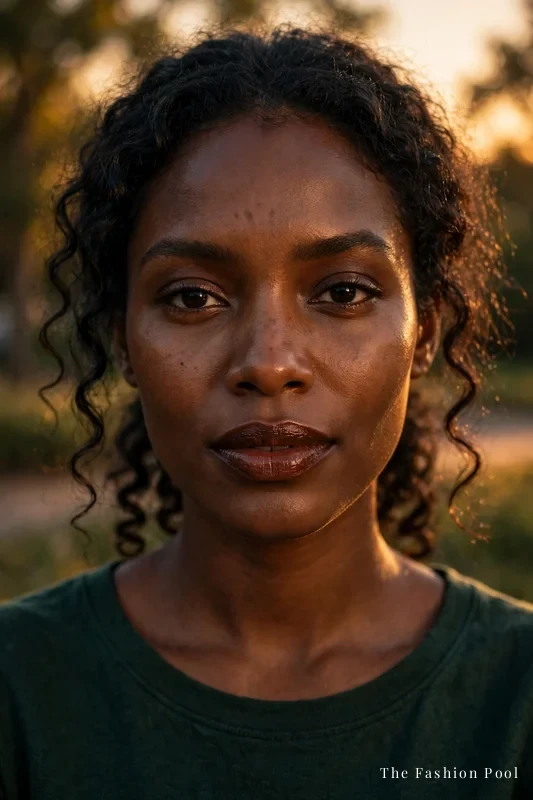
Deep skin needs browns with enough pigment to show up. Espresso, dark chocolate, plum-brown, brick, and burnt caramel are the family — rich, deep browns that look lush rather than heavy. Warm deep skin takes brick, burnt caramel, and toffee; cool deep skin takes espresso, plum-brown, and dark berry-brown. A gloss or crème finish makes these browns look especially rich, and matte works too, provided the lips are prepped: matte on dry lips can look ashy at the edges, and a layer of balm underneath, blotted before the lipstick goes on, fixes that.
The mistake to avoid is the pale brown. Light nude-browns, pale taupe, and anything marketed as a “universal nude” tend to look ashy or gray on deep skin, because there is not enough pigment to register against the lip’s own color. If a brown disappears on you or turns gray, it is too light, not too brown. Go one or two shades deeper than you think you need — deep skin carries deep browns the way fair skin carries light ones. Lip liner in a matching deep brown defines the shape and adds dimension; a liner one shade deeper than the lipstick, blended inward, makes the color look fuller without a hard edge.
Finish changes the shade
The same brown in four finishes is four different lipsticks, and finish is the easiest way to rescue a shade that feels almost right. Matte deepens the color, makes it look more intense and drier, and holds longest — best for deep browns and evening, and hardest on dry lips or fine lines. If a matte brown feels too severe, a thin layer of balm underneath, blotted first, softens it without changing the color.
Crème and satin finishes are the most forgiving: they stay closest to the bullet color, they do not emphasize dryness, and they are the best finish for a first brown in any undertone. Gloss lightens and softens everything it touches, which makes it the easiest way into a deep brown — an espresso in gloss is far more wearable than the same espresso in matte, and gloss is kind to fair skin, where a heavy matte can dominate. Sheer and balm finishes are the training wheels: any brown becomes wearable sheer, so a sheer version is the right way to test a new undertone before committing to the full-strength color.
The rule to remember: if a brown feels too dark, try it in gloss or sheer before giving up on the shade. If it feels too light, try it in matte. If it looks flat, check the undertone first. The undertone stays the same across finishes; only the intensity changes.
How to wear it: liner, blush, and the rest of the face
Brown lipstick fails most often at the edges, and lip liner is the fix. Choose a liner in the same brown, or one shade deeper, and fill the whole lip with it — not just the outline. A filled-in liner stops the color bleeding past the lip line, stops the ring effect where the liner outlasts the lipstick, and fixes the blurred edge that reads as muddy in photographs. It also means the color fades evenly instead of disappearing from the middle first.
Blush is the second decision, and it follows the same undertone rule as the lipstick. A warm brown lip wants a warm blush — peach, terracotta, warm rose. A cool brown lip wants a cool blush — rose, plum, cool pink. Mismatched blush is one of the most common reasons a brown lipstick looks off: the lip says warm and the cheek says cool, and the face never quite settles. Keep the eyes simple while the lip does the talking — soft brown or neutral shadow, mascara, and little else. Heavy black liner with a dark brown lip is an evening look, not a daytime one, and on most faces it is too much of two good things.
Brown lipstick also pairs naturally with the season’s brown wardrobe. A brown lip with a camel coat is the easiest version — the tones echo each other without matching exactly. A velvet blazer takes the same lip into the evening, and a cream faux fur coat with a brown lip is the whole cold-weather outfit in two pieces. Hair needs no rule, but warm browns sit happily with golden and copper hair, and cool browns with ash and dark hair — another place the same temperature logic quietly applies.
Mistakes that make brown lipstick look muddy
- The wrong undertone — the number one cause. A warm brown on cool skin looks flat and grayish; a cool brown on warm skin looks dull and ashy. No amount of liner fixes a temperature mismatch.
- Skipping liner. Without it the edges blur, the color bleeds past the lip line, and the whole thing reads as muddy in photographs.
- A brown lighter than your natural lip color with no definition. It washes the mouth out and can look gray rather than nude.
- Blush in the opposite undertone to the lipstick. Warm lip, cool blush — or the reverse — and the face never settles.
- Matte on dry, unprepped lips. The color catches on every dry patch and looks patchy instead of rich.
- Too much warmth everywhere. Warm lip, warm blush, warm bronzer — the face goes flat and muddy. Two warm elements are fine; three is too many.
- Testing only on the back of your hand. The hand shows the undertone, but it does not show how the shade looks against your face. Test on the lip before you decide.
Frequently asked questions
Can fair skin wear brown lipstick?
Yes. Lighter browns — milk chocolate, rosewood, soft taupe-brown — work as everyday color on fair skin. Deep browns work too, as a deliberate statement, but they need lip liner in the same brown, defined brows, and a little blush, or the lips overwhelm the face.
What brown lipstick suits warm undertones?
Warm browns with a golden, orange, or red base: cinnamon, caramel, terracotta, brick, toffee, and honey-brown. If your veins look green and gold jewelry flatters you, these are your browns.
What brown lipstick suits cool undertones?
Cool browns with a blue, plum, or gray base: plum-brown, espresso, taupe-brown, berry-brown, and dark chocolate with a blue base. If your veins look blue and silver jewelry flatters you, these are your browns.
Does brown lipstick make teeth look yellow?
Warm, orange-based browns can emphasize yellow tones in teeth by contrast. Blue-based cool browns do the opposite — they can make teeth look whiter. If yellow teeth worry you, choose a cool brown, especially a plum-brown or espresso.
How do I stop brown lipstick looking muddy?
Check the undertone first — a temperature mismatch is the most common cause. Then use lip liner in the same brown and fill the whole lip, match your blush undertone to the lipstick, and prep dry lips before a matte finish.
What lip liner should I wear with brown lipstick?
A liner in the same brown, or one shade deeper. Fill the whole lip with it, not just the outline — that stops the color bleeding, stops the ring effect as the lipstick wears off, and makes the color fade evenly.
Brown lipstick is not one color — it is a spectrum, and your undertone is the map. Warm skin, warm browns; cool skin, cool browns; neutral skin, start with rosewood or milk chocolate and borrow from either side. Get the temperature right and the finish and the liner do the rest — and the shade that looked muddy starts looking like it was made for you.