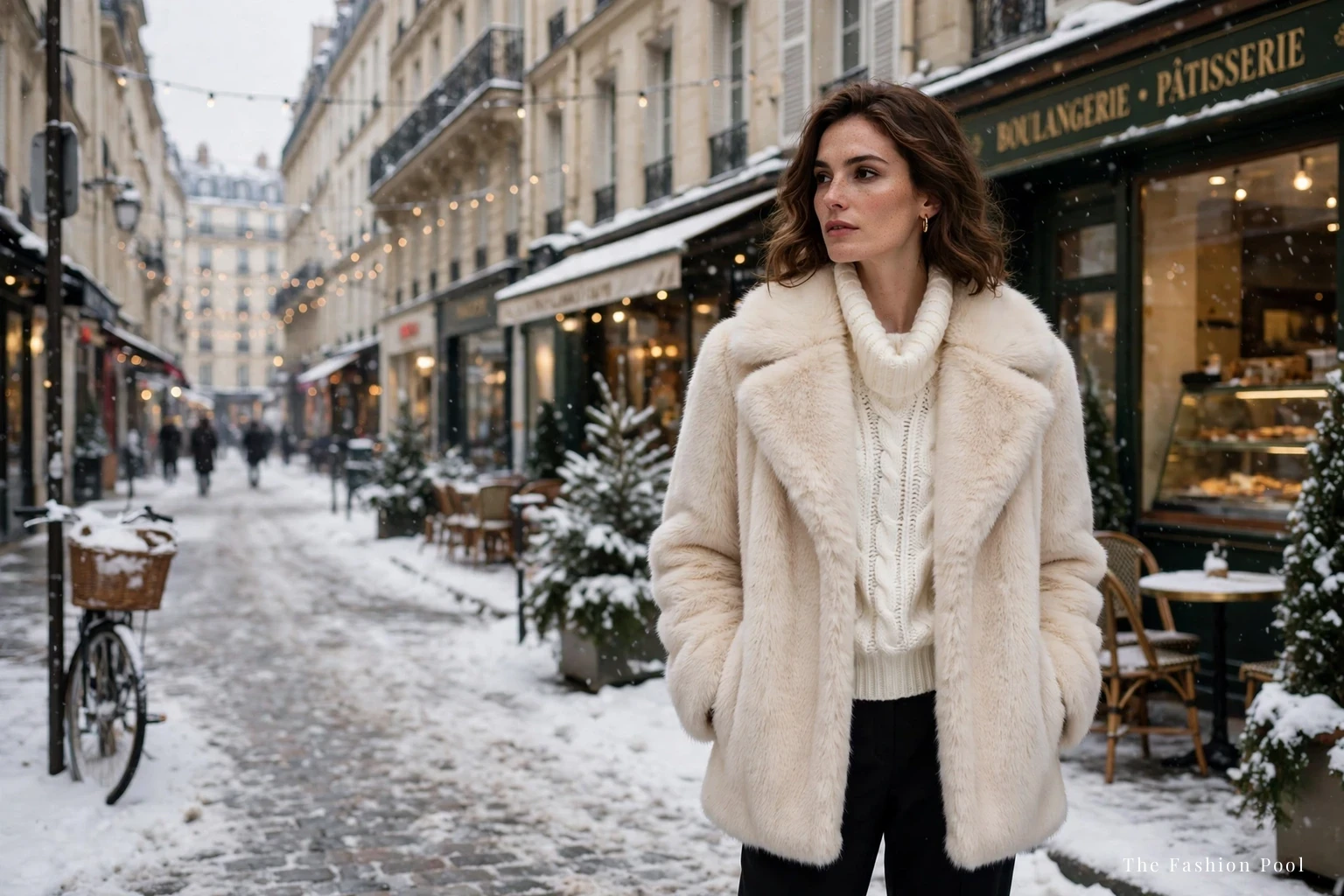
A winter white outfit is a texture problem, not a color problem. The color is the same on every piece — white — and the outfit works or fails on what the textures do: wool next to satin, faux fur next to knit, matte next to shine. One texture on its own looks flat. Four textures together look like winter.
This guide works from one rule: the texture ladder. Wool white, satin white, faux fur white, knit white — four whites, four textures, and the outfit is built from the coat down. Pantone named PANTONE 11-4201 Cloud Dancer its Color of the Year 2026 — the first white in the program’s history — and the timing is right: white is the color of this winter, and texture is how to wear it.
The texture ladder: wool, satin, faux fur, knit
The texture ladder is the whole guide in one sentence: choose one white per texture, and never wear two pieces of the same texture in white. Wool white is the coat — woven, structured, matte, warm. Satin white is the shine — the blouse, the skirt, the dress — the piece that keeps white from looking flat. Faux fur white is the warmest white — the coat, the collar, the trim — the piece that makes the outfit look like winter. Knit white is the everyday white — the sweater, the scarf, the hat — the piece that makes the outfit wearable.
The rule works because the camera reads texture before it reads anything else, and the eye reads texture before it reads color. A photograph of four white pieces in four textures reads as deliberate; a photograph of four white pieces in one texture reads as a uniform. Count the textures before the session, not after: lay every piece on the bed, count the textures, and if the count is one, something has to change.
The ladder is also the order of the outfit: the coat is the top rung, the knit is the bottom rung, and the satin and the faux fur are the middle. The coat decides the outfit, the knit decides the comfort, and the satin and the faux fur decide the interest. A winter white outfit is built from the coat down, not from the dress up.
The mistake is wearing white as a color: four white pieces in the same texture, bought because they are all white, worn because they all match. White does not match white — white needs texture to be an outfit, and texture is the ladder.
The ladder only works within one white family: all warm (cream, ivory, soft white) or all cool (bright white, optic white), never mixed. A warm white next to a cool white makes the warm one look dirty, and the ladder falls apart — the textures stop reading as textures and start reading as mistakes. Choose the family first, then climb the ladder inside it. The family is the ground the ladder stands on.
Wool white: the coat
Wool white is the structured white — the coat — and it is the rung that holds the outfit together. A wool coat in ivory or cream is the winter white coat: structured shoulder, clean lapel, long enough to cover the knit. Our camel coat guide covers the shape that works in camel, and the same shape — structured shoulder, clean lapel, no bulk — is what to look for in the white version.
The knit is the coat’s companion piece: a cream merino crew neck, fine and smooth, long enough to cover the waistband and the hip. The point is texture contrast — soft knit against smooth wool — not bulk. A chunky knit in white over white trousers is the mistake to avoid: the bulk on top and the slim leg below make the outfit top-heavy, and the proportions fight each other. A fine knit keeps the line clean.
The shoes are the quiet part of wool white: dark boots, brown or black, with the white trousers or the white skirt above them. A white boot is the wrong choice — white on white from the coat to the shoe is the uniform the ladder is trying to avoid. The dark boot is the anchor, and the anchor is what keeps the outfit from floating away.
The trousers are the everyday choice: white wool trousers, straight-leg, with the fine knit above them. The skirt is the evening choice: a white wool skirt, midi length, with the satin blouse. The trouser is the piece that gets worn every day; the skirt is the piece that gets worn once. A white trouser with a dark boot is the outfit that works on a Tuesday; a white skirt with a heeled pump is the outfit that works on a Friday night.
Wool white is the outfit’s frame. If the coat and the knit are right, the rest of the ladder is easy — and if they are wrong, no satin or faux fur will fix them.
Satin white: the shine that keeps white from looking flat
Satin white is the shine — the blouse, the skirt, the dress — and it is the rung that keeps white from looking flat. A satin blouse in ivory, worn under the wool coat, is the shine that the coat hides and the room reveals: hang the coat at the door and the satin carries the evening. A satin skirt in cream, worn with the fine knit, is the shine that the knit softens: the knit is matte, the skirt is shine, and the two textures do not compete because only one of them shines.
The rule for satin white: one satin piece per outfit. A satin blouse with a satin skirt is the mistake — two shines, and the outfit glitters. A satin blouse with wool trousers is the outfit — one shine, one matte, and the contrast is the point.
The shoes for satin white are the same dark boots as wool white, or a heeled pump in a dark color for the evening. A white pump is the wrong choice — the shine on the foot competes with the shine on the body, and the outfit loses. The dark shoe is the anchor, and the anchor is what keeps the shine from taking over.
Satin white is the outfit’s light. It is the rung that makes the photograph read as winter rather than as a whiteout — and it is the rung that most people skip, which is why most winter white outfits look flat.
The dress is the evening’s one shine: a white satin dress, midi length, worn with the wool coat over it. Inside, the coat is hung at the door and the dress takes over — the satin is the shine, the coat was the cover, and the room sees the dress, not the coat. A white satin dress with a dark pump is the evening outfit; a white satin dress with a white pump is the uniform.

Faux fur white: the warmest white
Faux fur white is the warmest white — the coat, the collar, the trim — and it is the rung that makes the outfit look like winter. A faux fur coat in cream is the hero piece for a winter white outfit: the warm layer that makes the outfit read as winter before anyone has looked twice. The coat is the texture that no other white can be — soft, deep, and unmistakably winter.
The rule for faux fur white: it is the coat or the trim, never both. A faux fur coat with a faux fur collar is the mistake — the texture doubles and the outfit becomes a costume. A faux fur coat with a wool knit is the outfit — the fur is the warmth, the knit is the quiet, and the two textures do not compete because only one of them is fur.
The shoes for faux fur white are dark boots, flat or with a low block heel, comfortable enough to walk in for an hour. Knee-high boots with jeans is the fit guide for the taller version, and the same rule applies here: the boot should meet the trouser cleanly, with no gap and no bunching.
Faux fur white is the outfit’s warmth. It is the rung that makes the outfit feel like winter, not just look like it — and it is the rung that turns a white outfit into a winter white outfit.
Knit white: the everyday white
Knit white is the everyday white — the sweater, the scarf, the hat — and it is the rung that makes the outfit wearable. A cream knit sweater, a white scarf, a cream hat — the pieces that get worn every day, in every weather, without a second thought. Knit white is the texture that does not need a reason: it is warm, it is soft, and it is the white that works on a Tuesday.
The rule for knit white: it is the base, not the statement. A knit sweater in cream under the wool coat is the outfit; a knit sweater in cream as the whole outfit is the mistake — the knit alone, without the coat, the satin, or the fur, is just a sweater. The knit needs the ladder: the coat above it, the satin beside it, the fur around it.
The scarf is the knit piece that does the most work: a cream scarf in a fine knit, worn with the wool coat, is the texture that ties the coat to the sweater. A scarf in a chunky knit is the wrong choice — the bulk fights the coat, and the proportions lose. A fine knit scarf is the fix — a cleaner line, and warm enough under a coat.
Knit white is the outfit’s comfort. It is the rung that makes the outfit livable — and the rung that most people already own, which is why the ladder starts there.
The hat is the knit piece that does the most work in the cold: a cream knit hat, fine and smooth, worn with the wool coat. A hat in a chunky knit is the wrong choice — the bulk fights the coat, and the proportions lose. A fine knit hat is the fix — a cleaner line, and warm enough under a coat.
What makes white look dirty (and how to avoid it)
White looks dirty for three reasons, and all three are avoidable: the wrong white, the wrong light, and the wrong care. The wrong white is the first: a stark, blue-white against a warm cream makes the cream look dirty, because the eye compares them. The fix is one white family — all warm (cream, ivory, soft white) or all cool (bright white, optic white) — never mixed. A warm white next to a cool white is the outfit’s own worst enemy.
The wrong light is the second: fluorescent light turns white yellow, and yellow white looks dirty. The fix is the mirror test — look at the outfit in daylight, not under a shop light, before buying. The shop light lies; the daylight tells the truth.
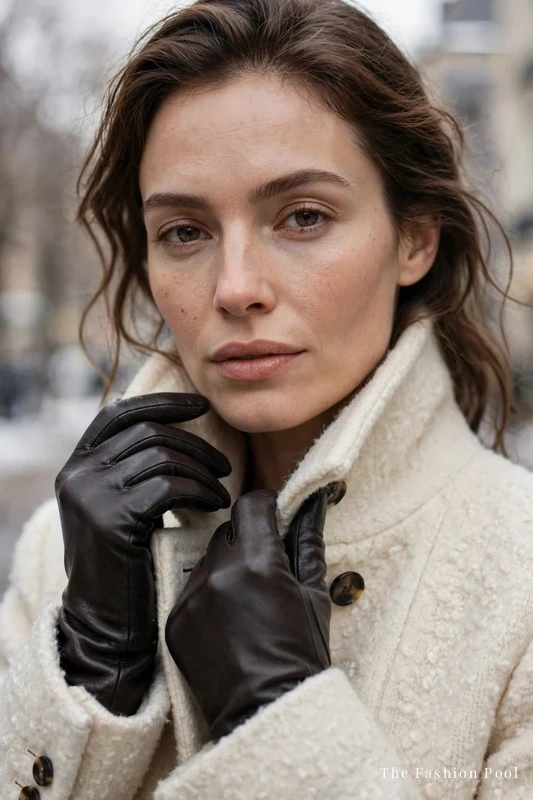
The wrong care is the third: white that is washed with darks, stored without tissue, or worn without a coat in the rain. The fix is the care: wash whites together, store them folded in tissue, and carry the coat. Gloves with a coat is the cold-weather finish — leather gloves, dark, plain — and the gloves are the detail that keeps the hands warm and the cuffs clean.
The test for whether a white outfit looks clean: photograph it in daylight and look at the photograph, not the mirror. The mirror shows the outfit; the photograph shows what the camera will show. If the photograph looks gray, the outfit is gray — and the outfit, not the camera, is the problem.
The bag is the dark anchor: a black or brown tote, plain and matte, that holds everything and still looks like it belongs to the outfit. A white bag is the wrong choice — white bags get dirty first, and a dirty bag makes the whole outfit look dirty. The bag should be the darkest thing in the outfit, not the whitest.
Frequently asked questions
Can you wear white in winter?
Yes — white in winter is a texture problem, not a color problem. Four white pieces in four textures (wool, satin, faux fur, knit) read as deliberate; four white pieces in one texture read as a uniform. Pantone named PANTONE 11-4201 Cloud Dancer its Color of the Year 2026 — the first white in the program’s history.
What is the best white to wear in winter?
One white family: all warm (cream, ivory, soft white) or all cool (bright white, optic white) — never mixed. A warm white next to a cool white makes the warm one look dirty. The texture ladder is the guide: wool white for the coat, satin white for the shine, faux fur white for warmth, knit white for the sweater, scarf, and hat.
How do you keep a white winter outfit from looking flat?
Add a shine: one satin piece per outfit — a satin blouse under the wool coat, or a satin skirt with the fine knit. Hang the coat at the door and the satin carries the evening. Two satin pieces is the mistake; one shine, one matte, and the contrast is the point.
What shoes go with a winter white outfit?
Dark boots — brown or black — flat or with a low block heel. The dark shoe is the anchor that keeps the outfit from floating away. A white boot is the wrong choice: white on white from the coat to the shoe is the uniform the ladder is trying to avoid.
Can you wear a white coat in winter?
Yes — a wool coat in ivory or cream is the winter white coat: structured shoulder, clean lapel, long enough to cover the knit. A faux fur coat in cream is the warmer version and the hero piece for a winter white outfit. The coat decides the outfit, and the coat is the top rung of the ladder.
How do you keep white clothes clean in winter?
Wash whites together, store them folded in tissue, and carry the coat — and check the outfit in daylight, not under a shop light, before buying. Fluorescent light turns white yellow, and yellow white looks dirty. The mirror shows the outfit; the photograph shows what the camera will show.
White in winter is a texture problem, not a color problem. Climb the ladder — wool, satin, faux fur, knit — and the outfit is winter white, not just white.