How to Choose a Necklace for Your Neckline
A necklace that looks right in its box can disappear behind a shirt or keep catching on a sweater. Choosing a necklace for your neckline starts with where the jewelry actually lands, then considers its shape, weight and the rest of your outfit.
Choose a Necklace for Your Neckline by Placement First
For an open neckline, try a pendant or curved chain that stays visibly inside the opening. For a high neckline, place the necklace clearly over the fabric, or leave the neck bare and choose earrings. Check the result while sitting and moving: the useful pairing is one that remains comfortable and visible.
Key Takeaways
- Use neckline charts as starting points, rather than rules about your body.
- Try the actual top before buying another chain; a small length adjustment may solve the problem.
- Choose one main jewelry focal point when collars, prints or texture already add detail.
Start With a Simple Placement Check
Put on the top and any layer you expect to keep on indoors. Try your necklace, then look at the lowest point of the pendant. Is it on skin, entirely on fabric, or caught on the edge between them? If it keeps slipping underneath, choose a different length or skip the necklace.
Do not assume an 18-inch chain lands in the same place on everyone. Tiffany’s necklace sizing guide explains that neck circumference and pendant size affect placement. It suggests previewing chain lengths with measured string. Hold the string loosely, without tying it, over the actual garment; remember that a pendant adds a drop beyond the chain.
Compare two positions before buying. A compatible extender may let an existing necklace clear a crew neckline, but check its clasp fit and strength. An extender lengthens a chain; it cannot shorten one. Avoid knots, improvised clips or adhesive fixes on jewelry and delicate fabric.
Four Everyday Necklines and Necklace Pairings
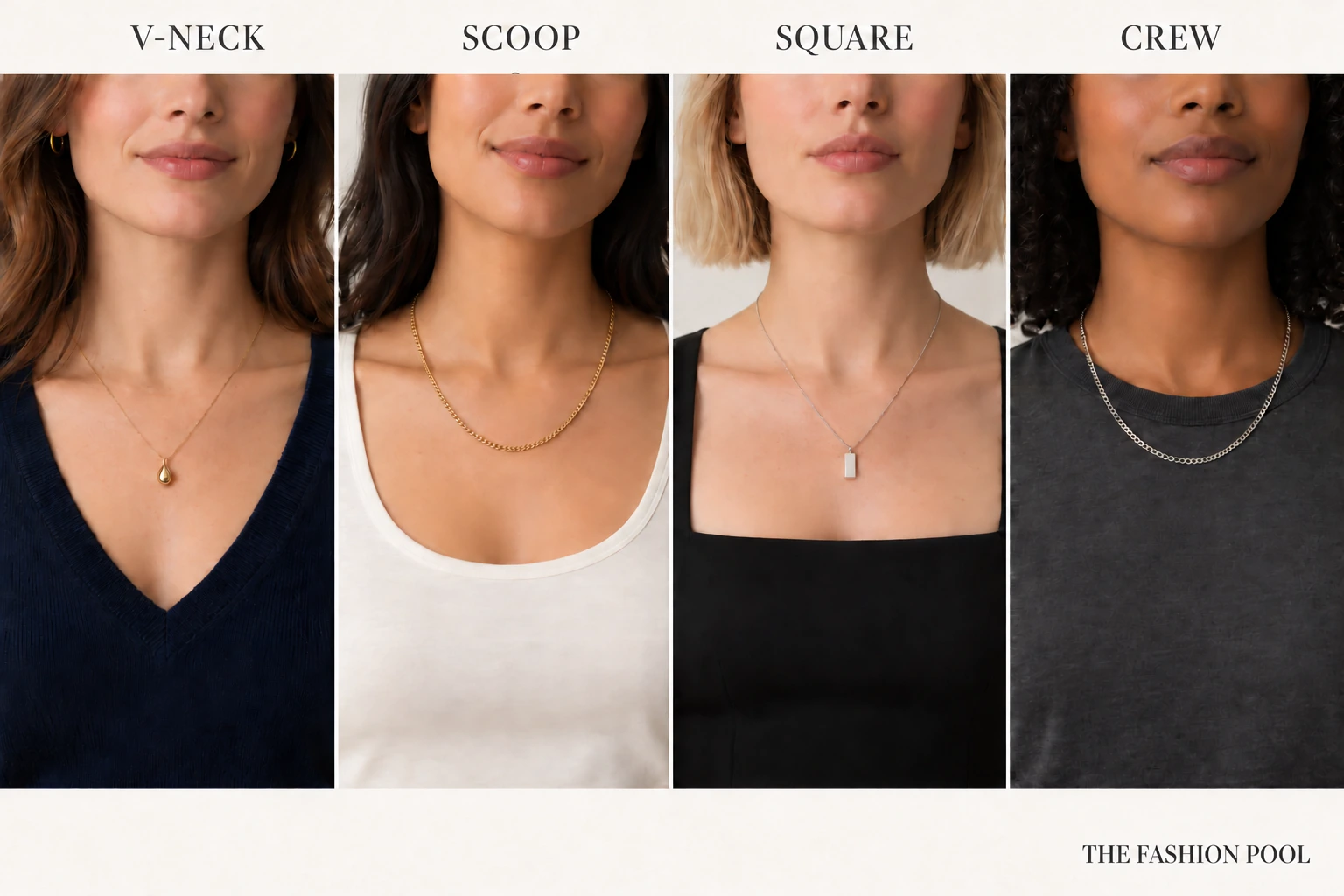
| Neckline | Try first | Check before leaving |
|---|---|---|
| V-neck | A small drop pendant inside the V | The pendant stays above the fabric point |
| Scoop neck | A rounded chain within the opening | The lowest curve clears the moving edge |
| Square neck | A short chain with a compact pendant | The pendant has space around its edges |
| Crew neck | A visible chain over the shirt | The chain does not straddle the collar seam |
V-Neck: Give the Pendant Its Own Space
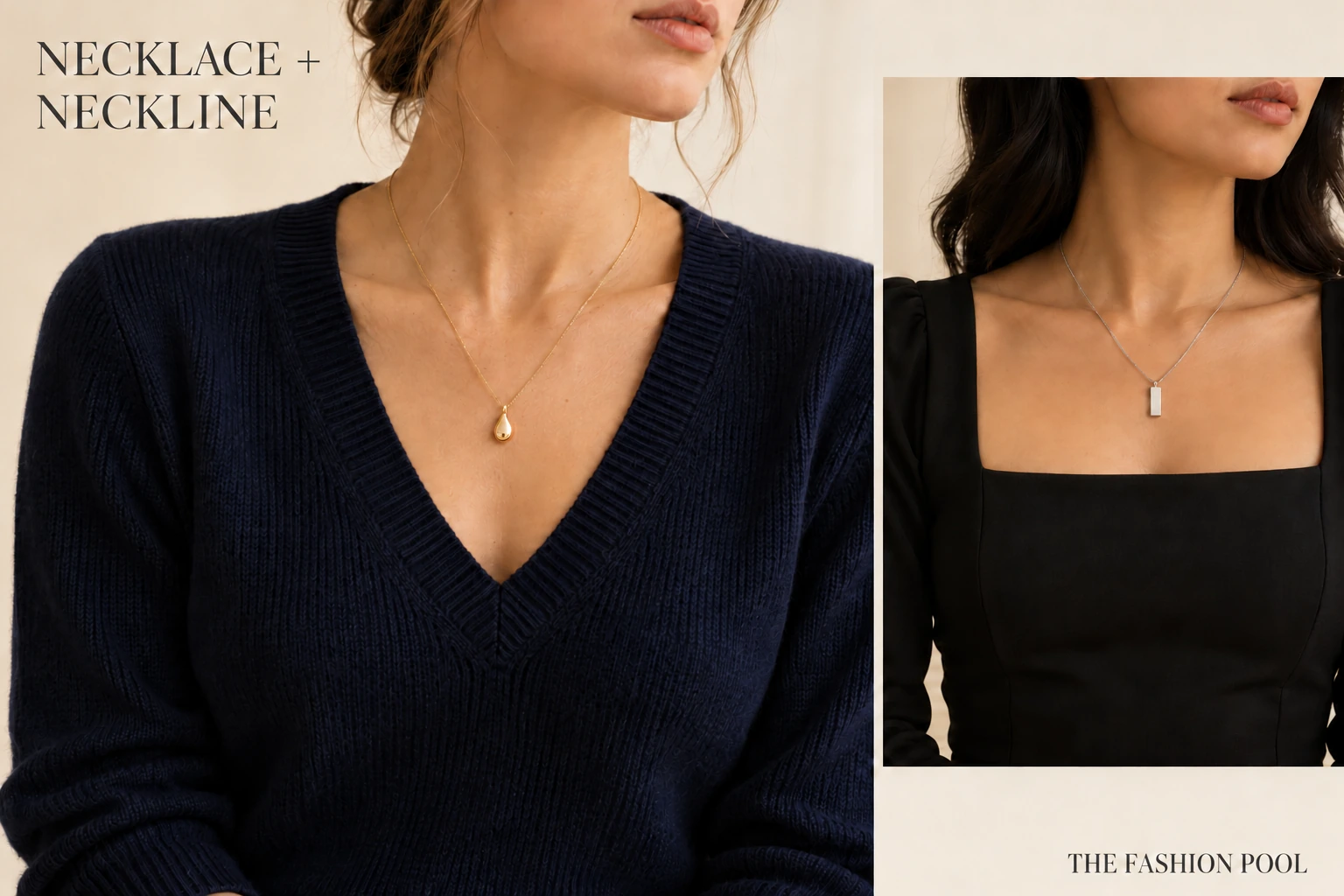
Try a navy V-neck knit, a small gold-tone drop pendant, dark straight-leg jeans and loafers. The pendant repeats the opening’s downward direction without needing to match its angle exactly. Leave visible space between the pendant and the V’s point. If the pendant repeatedly falls behind the knit, shorten an adjustable chain using its intended fastening points or choose another necklace.
Scoop and Square: Compare Curves With Compact Shapes
A cream scoop-neck top gives a rounded chain room to follow the opening. With a black square-neck top, try a compact rectangular pendant as a visual echo of the corners. A round pendant can work too; the important check is clear placement, not matching every line. Keep the same pants and earrings while comparing necklaces so you can see which change matters.
Crew Neck: Make the Necklace Clearly Visible
On a charcoal crew-neck T-shirt, a silver-tone chain worn below the ribbed edge creates visible contrast. A chain that repeatedly catches at that seam needs a placement change. You can also wear a comfortably fitted short necklace above a lower crew opening when there is room. A close collar never needs a tight necklace squeezed above it.
Collared Shirts and Turtlenecks Need Different Solutions
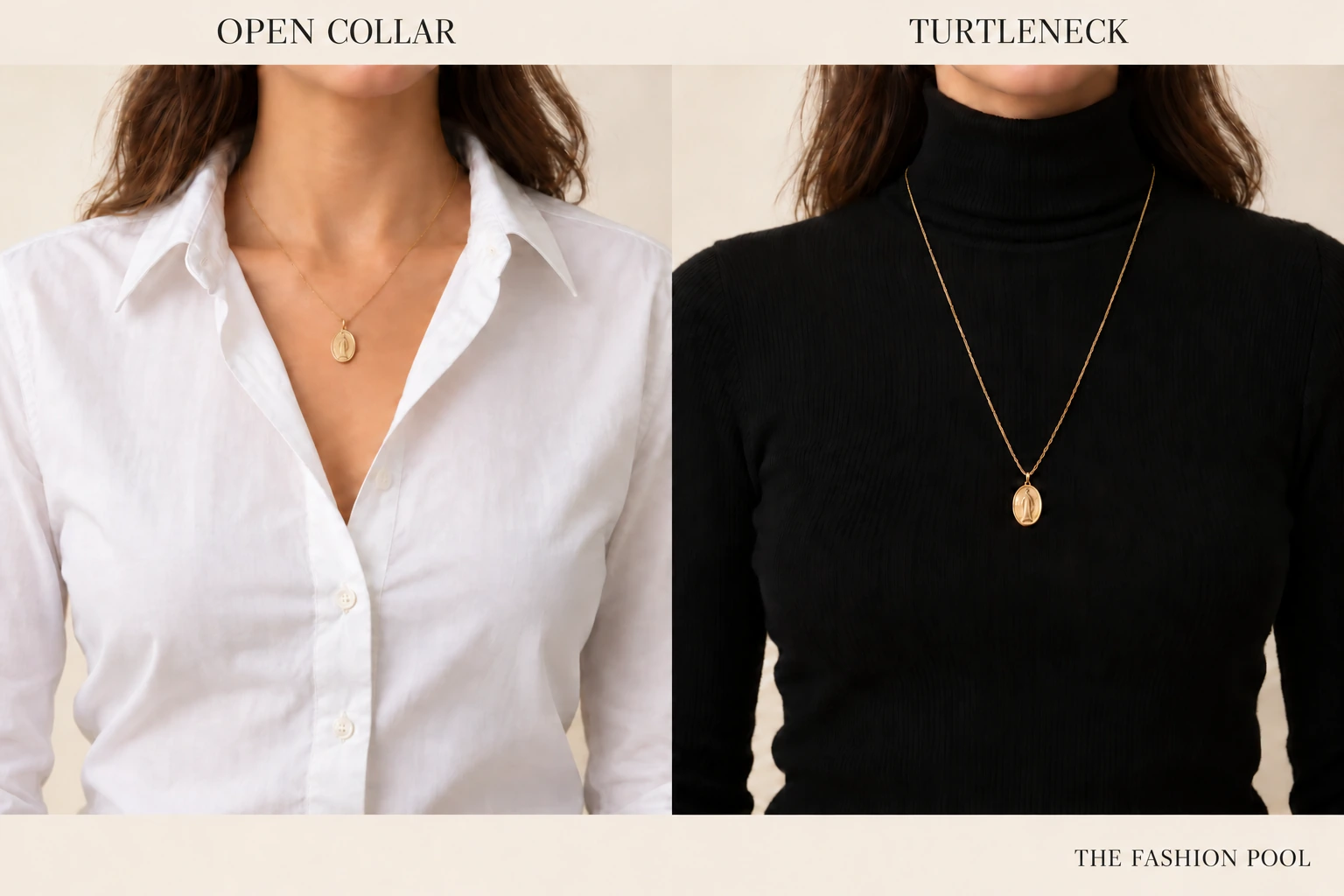
With an open white button-down, try a small pendant on skin between the collar points. Fasten the shirt to your usual comfortable position first, then select the necklace. Do not leave an unwanted gap just to show jewelry; solve shirt gaping at the bust independently.
For a smooth black turtleneck, try a longer gold-tone oval pendant over the fabric. Choose enough visual weight to remain visible, but check whether the pendant pulls or catches. Open knits and fuzzy yarns can snag on prongs or rough links; earrings may be easier. In cold weather, put on your coat and scarf before deciding whether a necklace is practical.
For a buttoned collar, lace neckline, halter or asymmetric top, leaving the neck bare is a complete choice. Try small hoops or studs instead. If you prefer a necklace over a closed shirt, check that its edges do not rub against buttons or trap the collar.
Build an Outfit, Then Adjust One Detail
Use these three formulas as starting points, swapping for pieces you own:
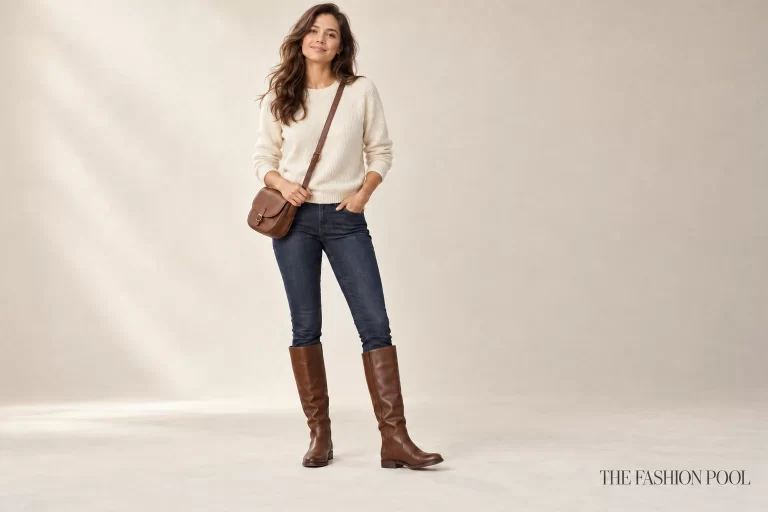
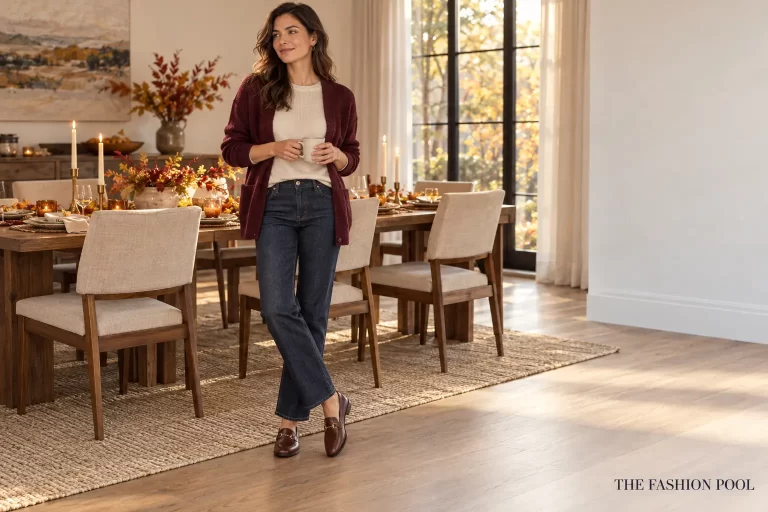
- Everyday: cream scoop-neck tee, rounded gold-tone chain, relaxed jeans and clean sneakers. Add a cardigan that leaves the opening visible.
- Work: open white shirt, small pendant, navy straight-leg pants and loafers. Keep the chain clear of the placket; workplace dress expectations take priority.
- Dinner: black square-neck top, compact silver-tone pendant, fluid pants and flats. If you add statement earrings, compare the look without the necklace before adding more.
Metal color is a preference. Gold against navy and silver against charcoal are useful contrasts; mixed metals can be intentional too. When building a capsule wardrobe, check a necklace against several frequently worn necklines before treating it as an everyday piece.
Common Pairing Problems You Can Fix
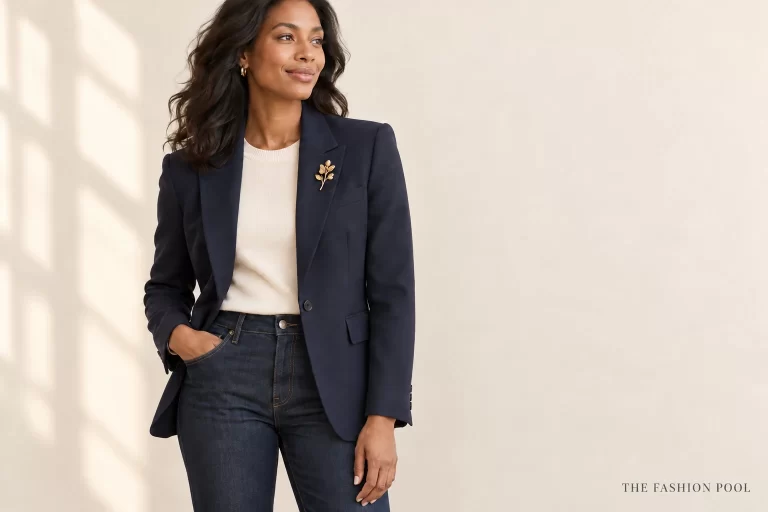
The pendant disappears: adjust the intended clasp setting or switch chains rather than repeatedly pulling down the top. Two necklaces merge: start with one chain and add a second at a visibly different drop; movement can still cause tangling. The jewelry catches: remove it and inspect the links and fabric instead of tugging. The outfit feels crowded: remove one element and compare again. A bold collar or brooch may already provide the detail you want; our blazer brooch guide offers another accessory option.
Frequently Asked Questions
Is a 16-inch or 18-inch necklace more versatile?
Neither length is universally more versatile. Neck circumference, pendant drop and the neckline determine where each lands. Preview both lengths with loosely held measured string while wearing your usual tops. Choose the position that feels comfortable and stays visible, rather than relying on a model’s collarbone placement.
Can I wear a necklace with a busy print?
Yes. Try a simple chain or solid pendant that remains easy to distinguish from the print. If it disappears visually, a stronger shape may help, but adding size is optional. Earrings or a bracelet can finish the outfit when you prefer the patterned neckline to remain the focal point.
Should my necklace match my earrings exactly?
No. Repeating one feature, such as metal color or a rounded shape, can connect different pieces without making them a set. Compare their scale together. Large earrings and a statement necklace may be a deliberate choice, but smaller earrings make it easier to keep attention on a detailed necklace.
Will a necklace extender stop layering tangles?
An extender can separate the resting positions of two chains, but it does not guarantee they will stay untangled. Chain construction, pendants and movement still matter. Check that the extender is compatible with the clasp and suitable for the necklace’s weight. Simplify to one chain if layering keeps becoming distracting.
What if I dislike wearing jewelry against my skin?
You can choose a necklace worn over a smooth top, provided it does not catch or pull the fabric, or skip necklaces entirely. Earrings, a watch or another comfortable accessory can provide a focal point. There is no requirement to fill every open neckline or wear jewelry that feels uncomfortable.
How do I check a necklace before wearing it all day?
Try it with the complete outfit, including any scarf or jacket you expect to use. Sit, turn your head and reach forward normally. Look for slipping, catching, pressure or contact with buttons. If a small intended adjustment does not solve the issue, choose a simpler piece or leave it off.
Conclusion
Choose a necklace for your neckline by checking its position on your own outfit first. Compare one change at a time, keep comfort and fabric in view, and leave the neck bare when that works better. Start with a top you wear often and two necklaces you already own.