How to Wear Socks With Loafers and Jeans: Fit and Color
Jeans and loafers are easy to combine until the socks enter the picture: a thick pair makes the shoe tight, a short cuff disappears under denim, or a bright strip draws more attention than you wanted. The solution is to choose the sock and shoe together, then check what the jean hem reveals.
This guide explains how to wear socks with loafers and jeans through three decisions: thickness, visible length and color. It focuses on straight-leg denim and practical everyday outfits, rather than treating socks as an afterthought or requiring a new wardrobe.
How to wear socks with loafers and jeans
Start with fine crew socks that fit comfortably inside your loafers. Wear jeans that clear the shoe without catching its upper, then choose a tonal sock for a quieter finish, ivory for contrast, or one accent color repeated elsewhere. Check the combination standing, sitting and walking; the sock should stay in place without squeezing your foot.
Key takeaways
- Try the actual socks inside the actual shoes before choosing their color.
- Let hem movement determine sock height, not a fixed number of exposed inches.
- One contrasting detail is enough; a quiet outfit gives a statement sock room.
- Loafers with socks are not a substitute for weather-appropriate footwear.
Choose sock thickness before styling the ankle
A loafer has no laces to loosen when you add fabric. Begin with a fine-gauge cotton-blend or wool-blend sock, then compare the fit with your usual pair. Fiber names alone do not tell you thickness: a fine wool sock can occupy less room than a cushioned cotton sports sock.
In its dress-shoe fit guidance, Samuel Hubbard recommends trying shoes with the socks you intend to wear because sock thickness affects fit. Apply that practical check to loafers without assuming a universal sizing change.
Walk on a clean indoor floor. Your toes should have comfortable room, and the upper should not press painfully across the top of your foot. If adding a sock creates pressure, try a thinner pair or a different shoe fit. Do not push through discomfort to achieve a particular look.
Chunkier loafers can visually suit ribbing, but a thick outsole does not guarantee more room inside. Save heavily cushioned socks for shoes that accommodate them. A smooth foot section with a lightly ribbed leg can add visible texture without the bulk of a hiking sock.
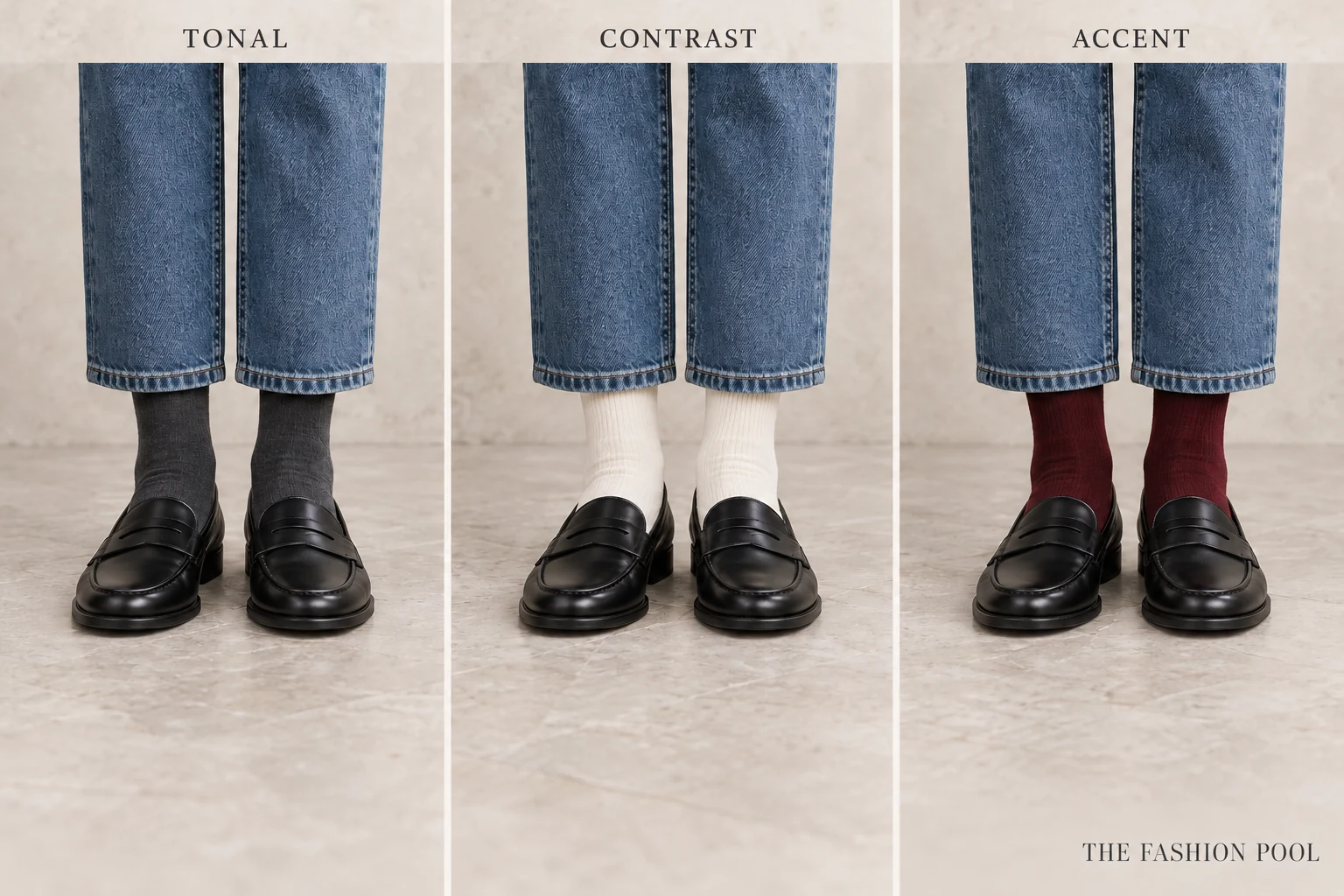
Compare tonal, contrasting and accent socks
Once the fit works, decide whether you want the ankle area to blend into the outfit or become a focal point. These are styling options, not rules about which bodies may wear contrast.
| Effect | Combination | What to check |
|---|---|---|
| Quiet connection | Dark denim, charcoal socks, black loafers | Subtle texture remains visible without a bright band |
| Clear contrast | Medium-blue denim, ivory socks, black or brown loafers | The pale band looks deliberate when the hem moves |
| Single accent | Washed-black jeans, burgundy socks, black loafers | A small bag or top detail repeats the burgundy |
Matching the shoe gives the sock a clear visual relationship; matching dark denim can make the transition quieter. Neither requires an exact dye match. Navy and charcoal can sit comfortably together when the rest of the outfit is simple.
Ivory socks create a stronger break against dark shoes. If that feels too graphic, try oatmeal or gray instead. For a colored sock, choose one shade already present in a scarf, knit or bag, rather than adding several unrelated accents.
Set the jean hem without forcing a cuff
Straight-leg ankle jeans make this combination easy to see. Start with a hem above the loafer opening, leaving enough space that denim does not sit on the raised upper. Sit down: if the sock drops below the hem and you wanted covered ankles, choose a taller pair.
There is no mandatory gap measurement. A longer hem can show socks only when you move, which is equally intentional. With rigid denim, a small single turn-up may reveal the shoe; repeated rolls can create a heavy ring. Leave the hem uncuffed if rolling makes the leg awkward or uncomfortable.
For wide-leg denim, use the broader winter shoes and hem guide to check clearance. This sock-focused approach does not require shortening every pair of jeans or displaying the whole shoe.
Three complete outfits using the same decisions
Dark denim and navy for a quiet finish
Pair dark indigo straight-leg ankle jeans with black penny loafers, fine navy socks, a cream knit and a navy blazer with comfortable shoulder and sleeve placement. The dark sock connects to the denim and jacket, while the cream top provides light near the face. Use a relaxed blazer if you prefer room through the waist.
Ivory ribbing and brown loafers for weekends
Wear medium-blue relaxed straight jeans, ivory fine-rib socks and chocolate-brown loafers with a white tee and oatmeal cardigan. The sock relates to the lighter layers, rather than appearing as an isolated stripe. Keep the cardigan around hip length, or wear a longer one open if that feels more comfortable.
Burgundy socks and black denim for dinner
Combine washed-black straight jeans, black loafers and burgundy socks with a black scoop-neck knit and hip-length jacket. A small burgundy bag repeats the accent without needing matching jewelry. This is a casual dinner option, not a replacement for an event’s formal dress code.
Adjust the outer layer to the temperature. For workplaces that permit denim, the first formula is a starting point; check employer expectations rather than assuming dark jeans always count as business casual.

Troubleshoot before buying another pair
- Socks collect at the shoe opening: try a better-fitting cuff or smoother knit instead of repeatedly pulling them up.
- The hem catches: test a cleaner loafer upper or a different jean length before committing to alterations.
- The contrast feels too strong: replace white with gray, or repeat the light color in your top.
- The shoes feel wrong with thicker socks: resolve fit rather than hiding pressure beneath a longer hem.
For cold, wet commutes, change into loafers indoors if necessary. Check the shoe maker’s weather guidance; smooth leather, suede and lug soles do not by themselves establish waterproofing or suitability for ice.
Frequently Asked Questions
Can petite women wear contrasting socks with jeans?
Yes. Contrasting socks are a visual choice, not something reserved for a particular height. If you prefer a quieter transition, try gray socks with dark denim and black loafers. If you enjoy a visible band, repeat its color above the waist and adjust the hem to your own preference.
Do white athletic socks work with loafers?
They can suit a deliberately sporty outfit if the shoes have room for them. Check the cushioned foot and toe seam rather than judging only the white cuff. If the combination feels crowded, a fine ivory ribbed sock offers a similar contrast with less material inside the loafer.
Should I size up loafers to wear socks?
Not automatically. Fit varies between models, widths and sock constructions. Try the intended pair together and follow the manufacturer’s sizing guidance. If the correct length becomes tight with socks, compare a thinner sock or another width or shape instead of assuming a longer shoe will solve it.
How do I stop a bare strip appearing when I sit?
Choose socks that extend beyond the hem’s highest seated position and have a cuff that stays comfortably in place. Check both legs after crossing and uncrossing them. Longer socks can remain hidden when standing; you do not need to roll the jeans higher just to show their full length.
Can I wear no-show socks instead?
Yes, when you want the appearance of a bare ankle and the temperature suits it. Check that the sock’s cut stays below the loafer opening without slipping under your heel. This creates a different finish from visible crew socks, not a more correct or more polished version.
Will thick socks fix loafers that slip off?
A thicker sock may change how a shoe feels, but it is not a reliable answer to a shoe that will not stay on. Compare the fit at the heel and across the foot with the manufacturer’s guidance. Avoid squeezing your toes just to compensate for looseness elsewhere.
Conclusion
To wear socks with loafers and jeans, settle comfort first, hem movement second and color last. Try one tonal combination with clothes you own, then change only the socks to compare contrast. Keep the version that works for your day, your shoes and your preferred amount of attention.