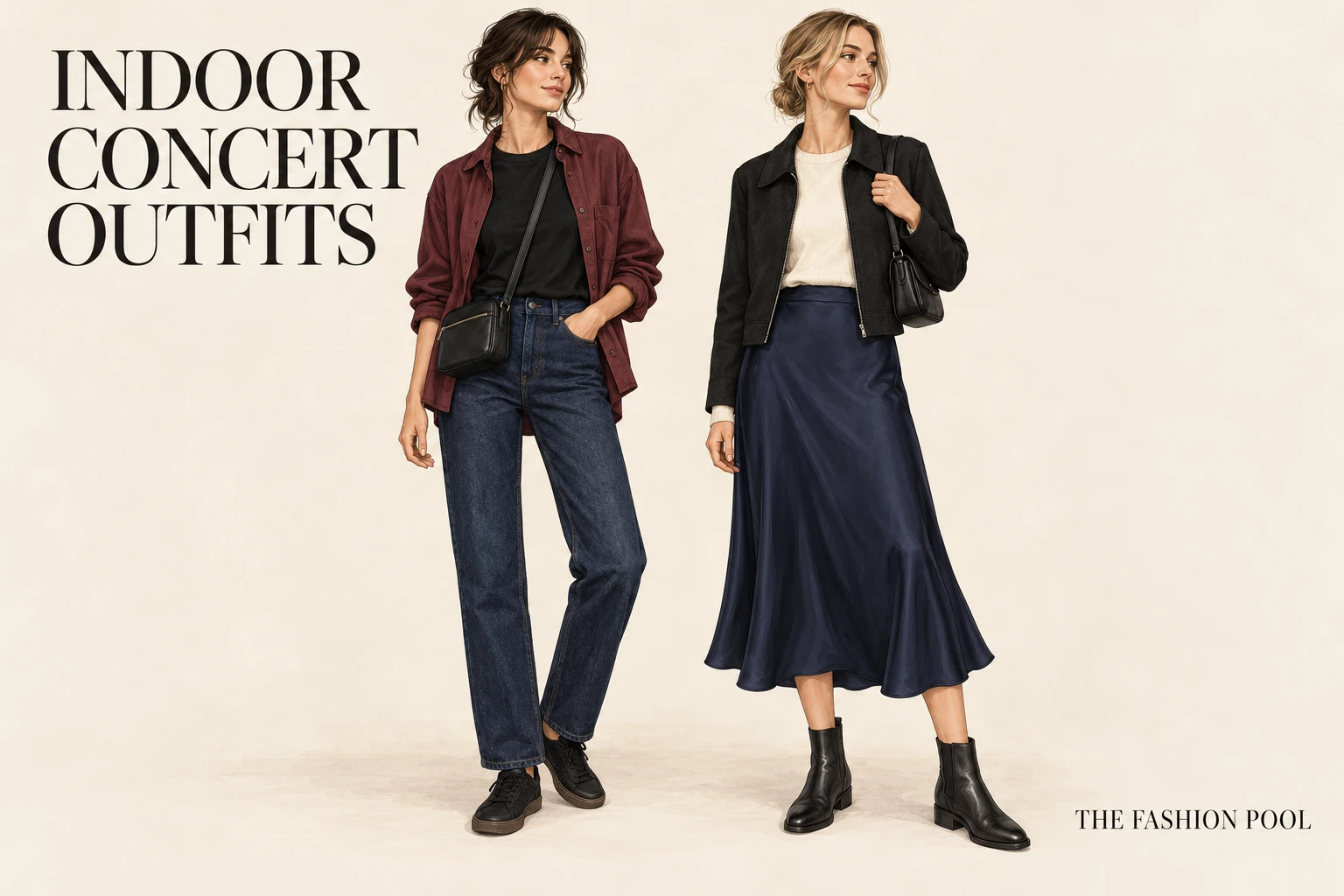
Indoor concert outfits need to work through the journey, the line and the room itself. A look that feels comfortable at dinner may become awkward when you stand through an opening act or carry a jacket for several hours. Start with the ticket type, then choose clothes you can move in without repeatedly adjusting them.
Build indoor concert outfits around your ticket
For a standing show, try a T-shirt, straight-leg jeans, familiar sneakers and a light removable overshirt. For a seated concert, a fluid midi skirt, fine knit and flat ankle boots offer another option. Neither formula is a dress code. Adapt the colors and details to your taste, the venue and the performance, while keeping footwear, storage and temperature changes practical.
Key Takeaways
- Standing and seated tickets create different clothing checks.
- Choose shoes you already know are comfortable for the expected walking and standing.
- Plan where a removed layer will go before leaving.
- Check the specific venue and event bag rules before selecting accessories.
Check the room, route and belongings first
Read the event information for entry restrictions and any stated dress requirements. Indoor does not mean your entire evening takes place indoors: transit, parking and queues can expose you to cold or rain. Build the inside outfit first, then add the outer layer the journey requires. Do not depend on an unknown indoor temperature to make an otherwise uncomfortable outfit work.
Confirm the bag policy on the official venue page, including exceptions relevant to your needs. For example, Brooklyn Paramount’s visitor information publishes its own dimensions. That is a venue-specific policy, not a universal concert standard. Check your actual event again before departure rather than borrowing another venue’s measurements or assuming every small bag is accepted.
Lay out the items you intend to carry before choosing the bag. A compact zipped crossbody can leave your hands free when permitted, but overfilling it defeats the point. Check that the strap does not catch on your jacket and that you can reach the closure. If you use mobility equipment, rehearse the bag and clothing arrangement with it.
A standing-show formula with a removable overshirt
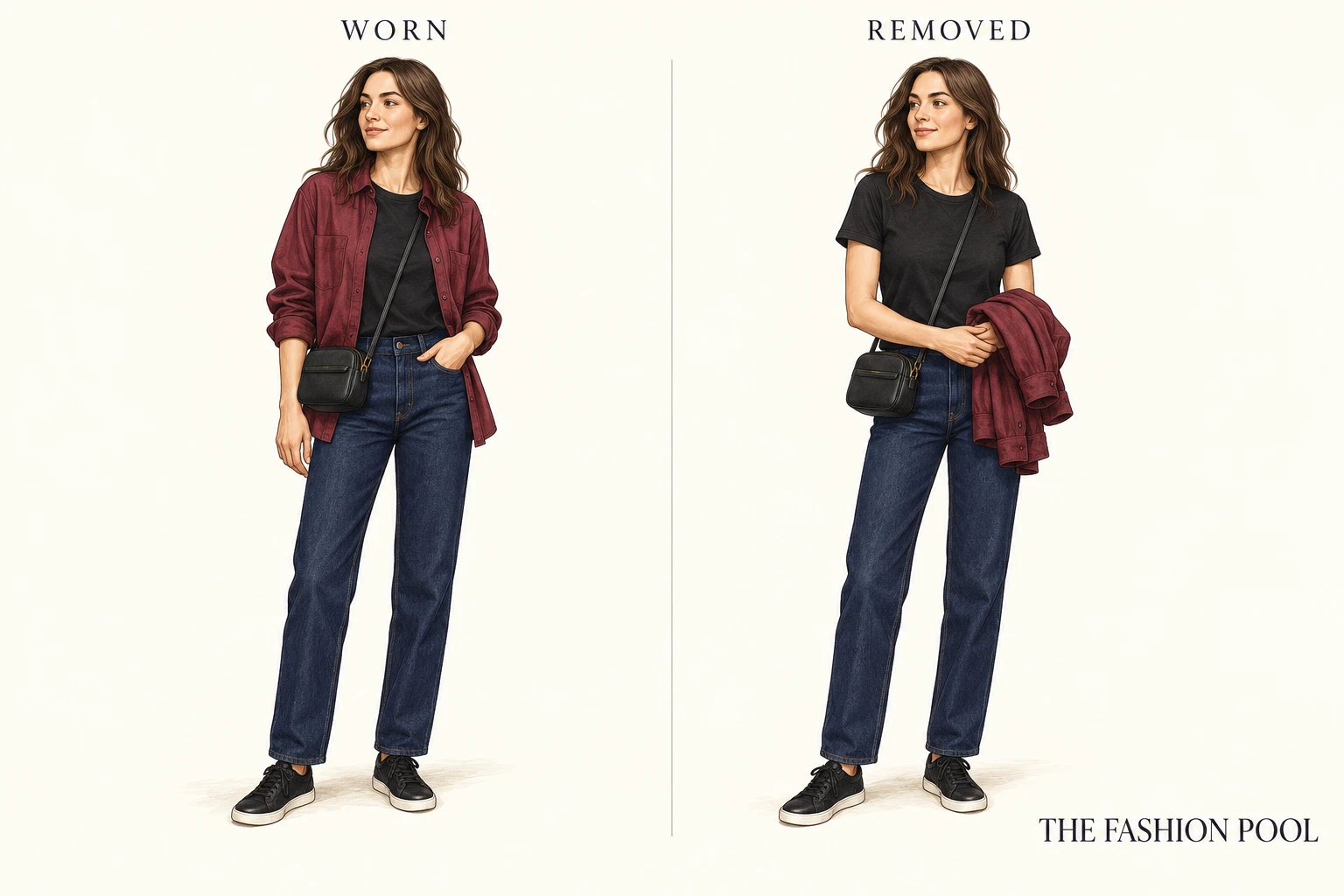
Combine a black cotton T-shirt, dark indigo straight-leg jeans, black sneakers and an open burgundy overshirt. A small black zipped crossbody repeats the darker base. The burgundy layer supplies color without needing extra accessories, while the jeans give the outfit a clear shape when the overshirt comes off. Choose the T-shirt neckline and sleeve length you enjoy wearing.
Check the jeans by sitting, bending and taking several long steps. A waistband that already feels restrictive at home is unlikely to become more comfortable during the evening. Look at the hem with your sneakers on: it should not drag under your heel. If you prefer wider denim, use the wide-leg jeans outfit guide for proportion ideas, then repeat the moving-hem check.
Wear the overshirt open and lift both arms. The shoulder and sleeve should allow that movement without pulling the base layer sharply upward. Roll sleeves only if the fabric stays comfortable and the cuff is not tight. A soft, lightweight woven shirt is easier to fold than a heavy structured jacket, but it is not a substitute for weather protection outdoors.
Remove the overshirt during your rehearsal and decide how you will carry it. The supporting illustration shows it folded in the hands; that demonstrates the change of layers, not a promise of hands-free storage. If carrying it would annoy you, choose another layer or verify a coat-check option. Do not assume a venue provides storage.
A seated-show formula with a fluid midi skirt
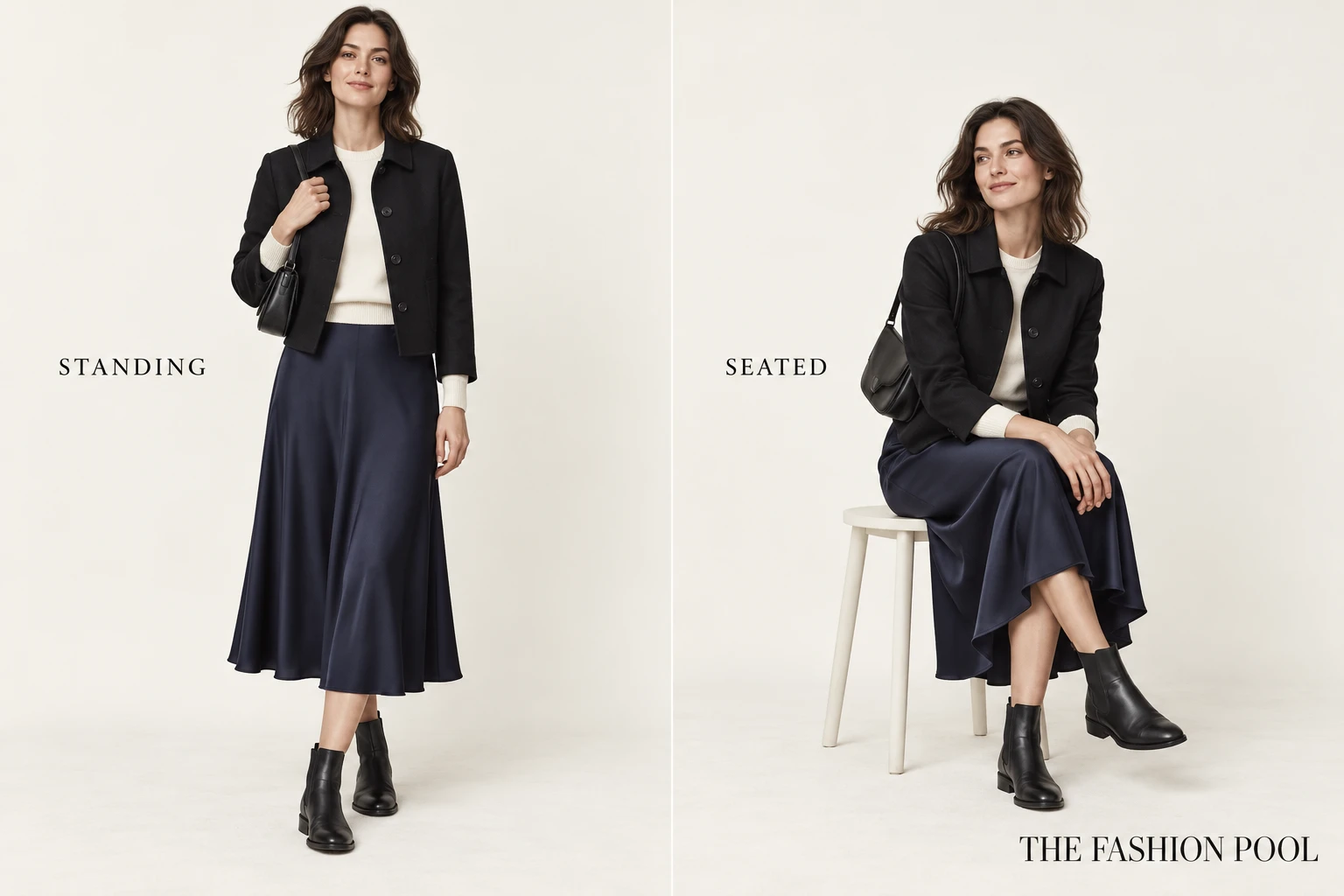
Try a navy fluid midi skirt, ivory fine-gauge crewneck, short black jacket and black flat ankle boots. Add a compact black shoulder bag if permitted. The lighter knit separates the dark skirt and jacket, while the shorter outer layer leaves the skirt’s movement visible. These colors are an example; charcoal, cream and deep green can serve a similar purpose.
Sit in the complete outfit before committing to it. Check whether the waistband presses, the skirt rides higher than you prefer or the jacket bunches behind you. A draping skirt can feel different when seated, especially if its lining has less room than the outer fabric. Take stairs and a normal stride as well; the garment needs to accommodate the route to your seat.
Try the boots with the socks you will wear. Check the shaft edge against your ankle while walking and sitting. Flat does not automatically mean comfortable, and a familiar low heel may suit some readers better than unfamiliar flat boots. Avoid choosing a shoe solely for its appearance in an outfit photograph. Bring the decision back to your own fit and experience.
A seated ticket also involves standing for entry and moving through aisles. Keep the hem clear of the floor and choose a bag that stays close without swinging into neighboring seats. For more skirt-and-flat-shoe decisions, the midi skirt styling guide explains proportion options without requiring heels.
Adapt the formula without adding clutter
In warmer conditions, replace the fine knit with a lighter top and reconsider whether an indoor layer is needed. In colder weather, add a suitable coat for the journey and establish its storage plan. Keep jewelry and decorative details compatible with your movement: a short necklace or small earrings may be easier to manage than pieces that repeatedly catch on knitwear.
Before leaving, perform one final check with everything together. Walk, sit, raise your arms and retrieve your ticket or phone from its intended pocket. If one detail needs constant attention, simplify that detail rather than rebuilding the entire outfit. Comfort and personal style can coexist; the useful question is whether the combination works for your actual evening.
Frequently Asked Questions
Can I wear a dress to a standing concert?
Yes, if its movement and coverage work for you. Walk, sit and raise your arms in it before leaving, and check any slit or loose tie. Pair it with familiar footwear and consider the journey as well as the room. A dress is an alternative to the jeans formula, not automatically a less practical choice.
Do I need a clear bag?
Only the specific venue and event policy can answer that. Some locations restrict bag size or material, and requirements can differ between events. Read the official information before choosing a bag, including relevant medical or accessibility exceptions. Do not assume that a clear bag of any size will qualify.
Should I buy new shoes for the show?
You do not need a new pair to complete these outfits. Familiar shoes let you judge comfort more realistically. If you choose new footwear, try it with the intended socks and allow time to assess walking and standing comfort before the event. An attractive design does not establish that it fits your feet.
What if I want a more expressive look?
Keep the working base and change one visible element, such as the overshirt color, graphic tee or bag finish. Check any added detail against venue restrictions and movement needs. You can also use a different silhouette you already enjoy. The formulas are starting points rather than instructions to dress identically to the illustrations.
Can I wear the same outfit in winter?
The indoor combination may still work, but the route requires a separate weather decision. Add appropriate outdoor layers and footwear for the conditions, then confirm what you can carry or store inside. Do not remove necessary weather protection simply to keep the outfit compact. Indoor comfort does not replace planning for the trip home.
Conclusion
Choose the ticket type first, then build an outfit that supports the evening’s movement and temperature changes. Rehearse it with your real shoes, bag and outer layer. Keep the details you enjoy and adjust the ones that demand attention before the first song starts.