How to Style a Midi Skirt for Petites Without Heels
A midi skirt and flat shoes can be an easy everyday pairing, yet the combination sometimes feels different from the outfit pictured online. On a petite frame, the skirt may land lower, a sweater may hide its shape, or the shoe may disappear beneath the hem.
This guide focuses on getting those pieces working together without adding heel height. The goal is an outfit you enjoy wearing, not a requirement to look taller.
How to style a midi skirt for petites without heels
Start with a skirt that stays comfortably in place, then choose a hem that clears your shoes and allows a normal stride. Pair it with a top whose ending you can see, or a small tuck if comfortable. Choose flats for the activity first; adjust the skirt and top around them rather than squeezing into pointed shoes for an optical effect.
Key Takeaways
- Judge the hem on your body with your actual shoes, not the model’s height.
- Separate a fit problem from a preference about volume or contrast.
- Use one visible transition: a waistband, jacket opening or deliberate top hem.
- Walk, sit and try a step before committing to the combination.
Choose the skirt length with your shoes on
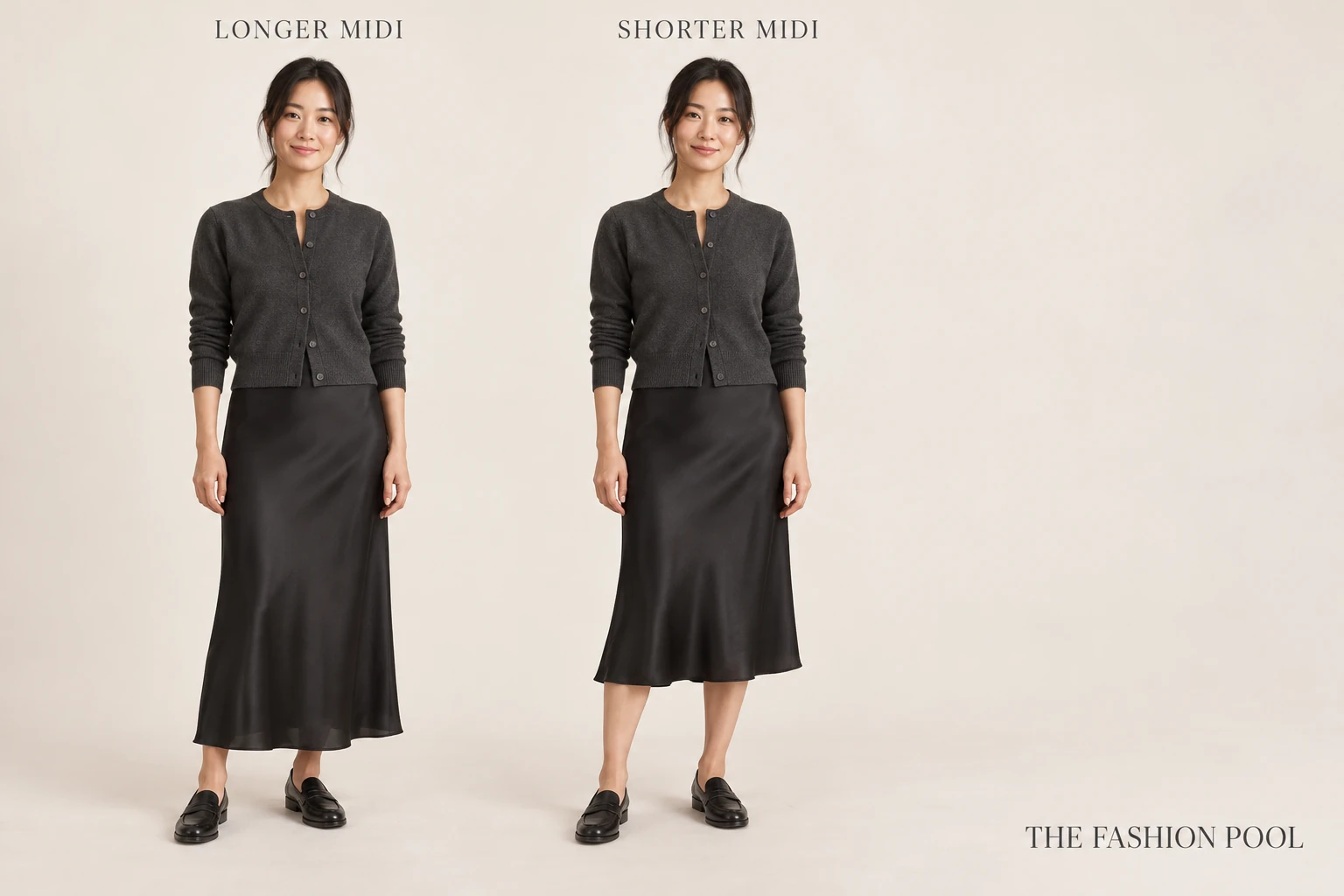
A midi falls between the knee and ankle, but the label does not tell you exactly where a particular skirt will finish. Compare the listed garment length with a skirt you already own, measuring from the same waistband position. Body measurements and garment measurements are not interchangeable.
Petite sizing is not simply a smaller clothing size. Anthropologie’s petite fit guide describes changes to proportions and garment details, including shorter skirt hems. Other brands vary, so check their own measurements rather than assuming the same size will fit identically.
Put on the intended flats and assess the outfit from the front and side. If the skirt nearly covers the shoe, compare a slightly shorter length using a secure temporary fold while standing still. Do not walk with loose pins. If you prefer a longer, flowing silhouette and can move freely, there is no need to expose a prescribed amount of calf.
Before permanent alterations, ask a tailor to assess the lining, pleats, curved hem or border print. Raising a waistband to shorten a skirt can also move its shaping and slit to the wrong place. A shorter version may be a better starting point.
Match skirt shape to the way you move
| Skirt construction | Try with flats | Check before leaving |
|---|---|---|
| Soft A-line | A waist-length knit and Mary Janes | Fabric releases below the waist without pulling |
| Fluid slip shape | An untucked short cardigan and simple flats | Seams hang without twisting; sitting remains comfortable |
| Straight denim | A tucked tee and sneakers | The vent or slit permits your usual stride |
| Pleated | A smooth top and loafers | Pleats fall freely instead of being stretched open |
These are starting combinations, not body-type assignments. A full skirt can work with a roomy top if you like that shape. If the result feels busier than intended, change one variable: shorten the top, open a layer, or choose quieter footwear. You do not need to remove all volume.
If the waistband digs in while sitting, a different size or cut is more useful than a styling trick. Likewise, shoes cannot solve a skirt that restricts your knees. Keep the fit decision separate from whether you prefer a longer-looking line.
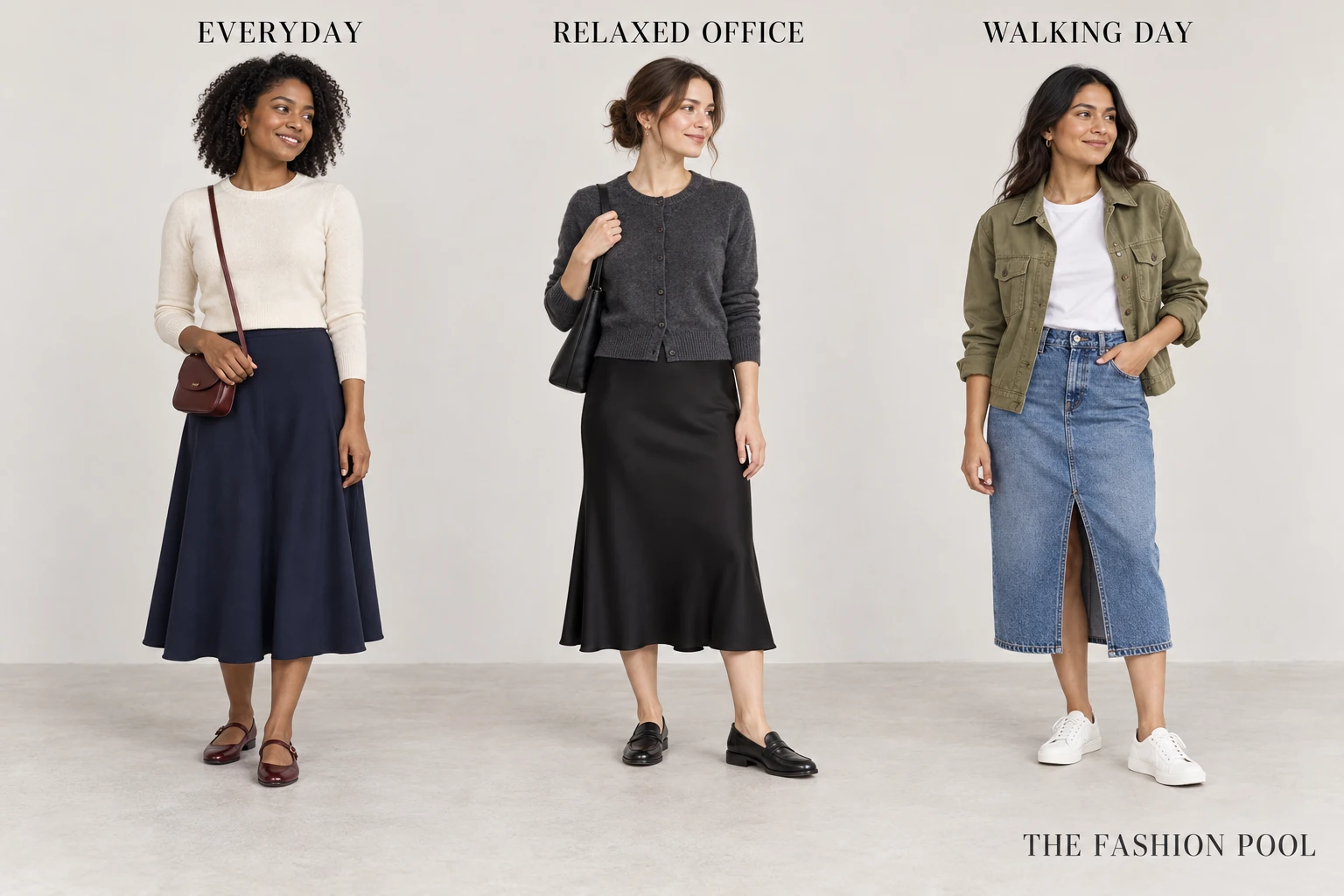
Three midi-skirt outfits built around flat shoes
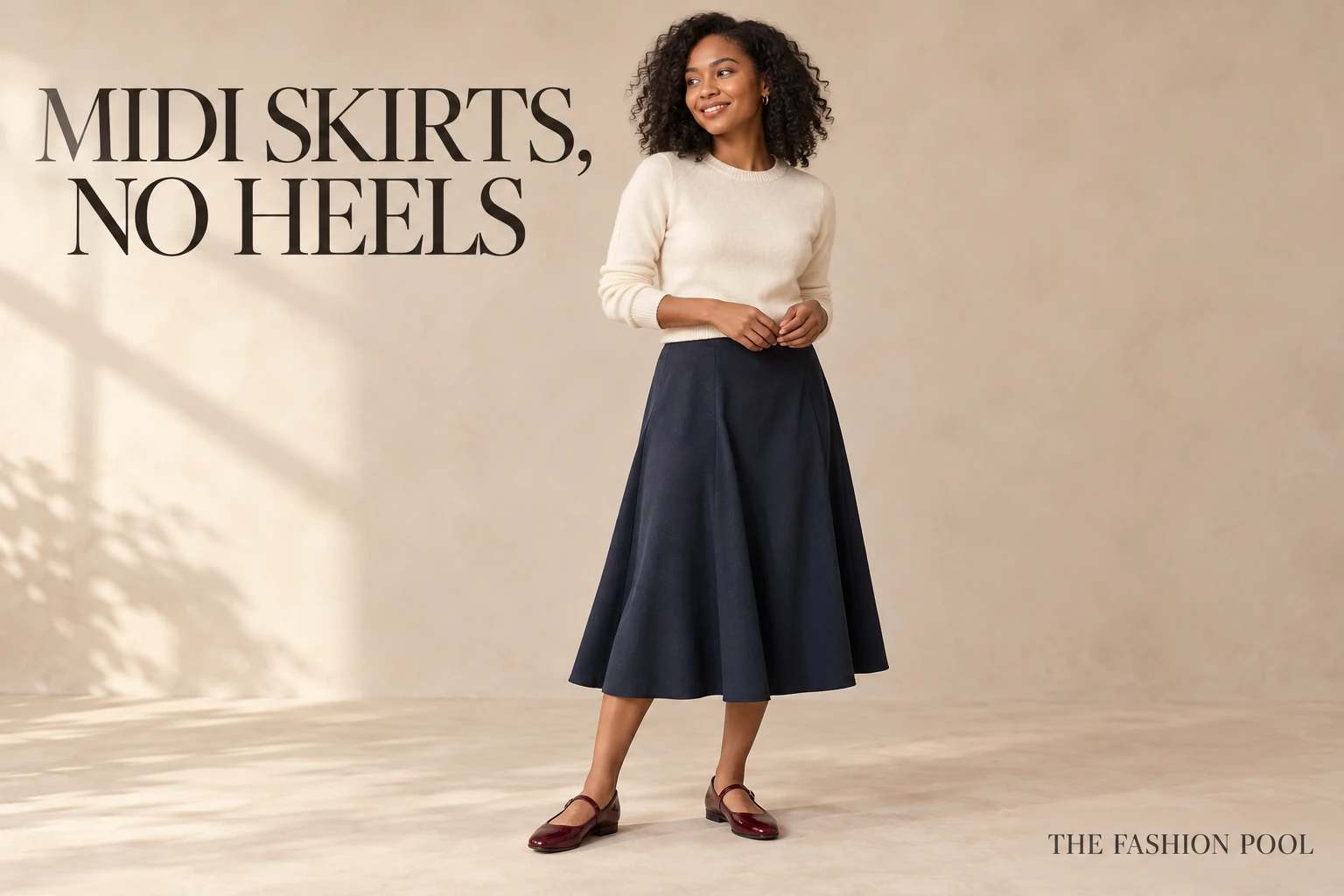
Everyday: navy A-line skirt and Mary Janes
Combine a navy soft A-line midi with an ivory fine-knit crewneck ending near the waistband and burgundy flat Mary Janes. The shorter top leaves the skirt’s shape visible without requiring a tuck; the burgundy adds a deliberate accent against navy.
Choose a strap position that feels comfortable when walking, and check that the knit allows comfortable arm movement. A small crossbody keeps the outfit hands-free. For more coverage, use a longer knit with side openings rather than pulling it tightly over the waistband.
Relaxed office: black slip skirt and loafers
Try a black fluid midi, a charcoal waist-length cardigan worn buttoned, and black flat loafers. The related colors make the pieces feel connected, while the different textures keep the outfit from looking like a uniform. A rounded or almond toe is just as valid as a point.
Check your workplace’s dress expectations and the skirt’s opacity in daylight. If adding a blazer, choose its length intentionally rather than assuming cropped is mandatory. Our petite blazer fit guide explains shoulder, sleeve and movement checks before styling.
Walking day: denim midi and sneakers
Use a mid-blue straight denim midi with a walking vent, a white crewneck tee and white low-profile sneakers. A light olive waist-length utility jacket introduces structure without covering the whole skirt. Tuck only as much tee fabric as feels comfortable.
Try stairs and a seated position: a stiff denim skirt can look roomy while still limiting your stride. If a broader sneaker is your comfortable choice, keep it and reassess the top length instead. This outfit should support walking, not merely resemble a picture.
Adjust layers, color and socks for the weather
For cool, dry days, try opaque tights with loafers or Mary Janes and check that your feet do not slide inside the shoes. Matching tights and shoes can create a quieter transition, but contrasting socks can be an intentional feature too. Compare both with the complete outfit.
On colder days, flat boots under the skirt offer another option; test whether the shaft catches the lining as you walk. Choose outerwear for warmth and movement. The petite winter layering guide covers broader layer decisions without requiring every jacket to end at the waist.
Delicate flats are not the answer for every forecast. In rain or snow, use footwear suited to the conditions and change indoors if practical. In warm weather, replace the knit with a cotton top and choose sandals that stay secure on your feet. Dress for local conditions rather than the calendar alone.
Frequently Asked Questions
Can a petite person wear a long midi with flats?
Yes. Check that the hem clears the ground and shoes, and that the skirt permits comfortable walking and sitting. A longer midi is a valid preference, not a proportion mistake. If the combination feels different from what you intended, compare top lengths before deciding that the skirt needs shortening.
Do the flats have to be pointed?
No. A pointed toe changes the shoe’s outline, but it is not a requirement for petite styling. Rounded Mary Janes, almond-toe loafers and sneakers offer different visual effects. Start with footwear that fits comfortably, then choose skirt length and color contrast around the shoes you actually want to wear.
What if I do not want to tuck my top?
Try a top ending near the waistband, a cardigan with a clearly finished hem, or an open jacket over an untucked base. None requires exposing your stomach. For a deliberately relaxed outfit, keep a longer top and use its shape or side openings to show some of the skirt’s movement.
Can I wear socks with a midi skirt and flats?
Yes, provided the socks and shoes fit comfortably together. Fine socks create less additional shoe volume than thick pairs. A related color makes the transition quieter; a contrasting sock creates a visible break you may enjoy. Check the combination while standing and walking rather than treating that break as automatically wrong.
Should I buy a petite skirt or alter a regular one?
Compare both when possible. Petite versions may change more than overall length, while a regular skirt that fits well could need only a hem adjustment. Ask a tailor about the particular construction before buying for alterations, especially with pleats, a lining or a decorative border that you want to preserve.
How can I make sneakers feel intentional with a midi?
Repeat an existing outfit color in the sneakers, or use a simple tee to connect their casual character with the skirt. Keep the hem clear of the shoes and check movement. A low-profile pair is one option, not an obligation; use your preferred comfortable sneakers and adjust other pieces first.
Conclusion
To style a midi skirt for petites without heels, choose your everyday shoes first, check the skirt in motion and adjust one proportion at a time. Try one of the formulas using clothes you own. Keep the version that feels comfortable and expresses the silhouette you prefer.