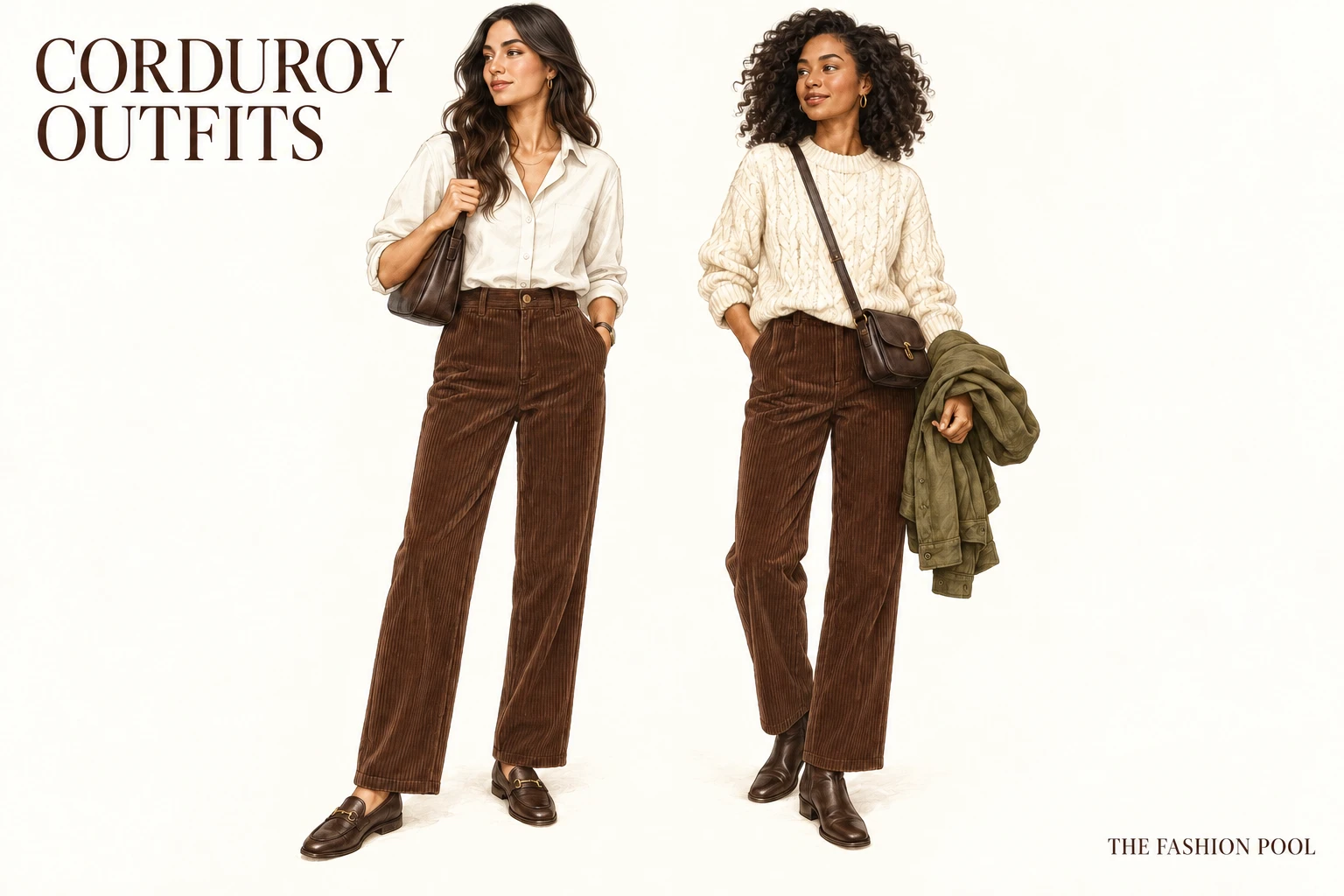
Corduroy pants can change a familiar outfit without requiring a new wardrobe. Their ridged surface adds detail even when the colors are quiet. The useful decision is how much other texture you want beside it, followed by the practical questions of waistband room, shoe shape and hem length. These two corduroy pants outfits use the same brown trousers to make those choices easier to see.
Build corduroy pants outfits from texture and fit
Start with comfortable straight-leg brown cords, then compare a smooth ivory shirt with a cream cable-knit sweater. The shirt leaves the trouser texture more isolated; the sweater repeats texture across the outfit. Finish the first with brown loafers and the second with flat ankle boots. Neither combination is a rule about body shape or age. Choose the surface relationship you enjoy, then check it while moving.
Key Takeaways
- Compare tops while keeping the trousers steady to see what changes.
- Smooth fabric and textured knitwear create different effects; either can work.
- Check the waistband with your actual tuck, rather than judging empty trousers.
- Try each shoe with the hem before deciding whether alterations are needed.
Compare a smooth shirt with a cable knit
Look at your cords in ordinary daylight. Notice their color, the prominence of the ridges and how the fabric hangs. A closely ridged pair can look different from deeply ridged cords in the same brown. The garment’s weight, cut and construction also matter, so the fabric name alone does not tell you how warm, stiff or relaxed the trousers will feel.
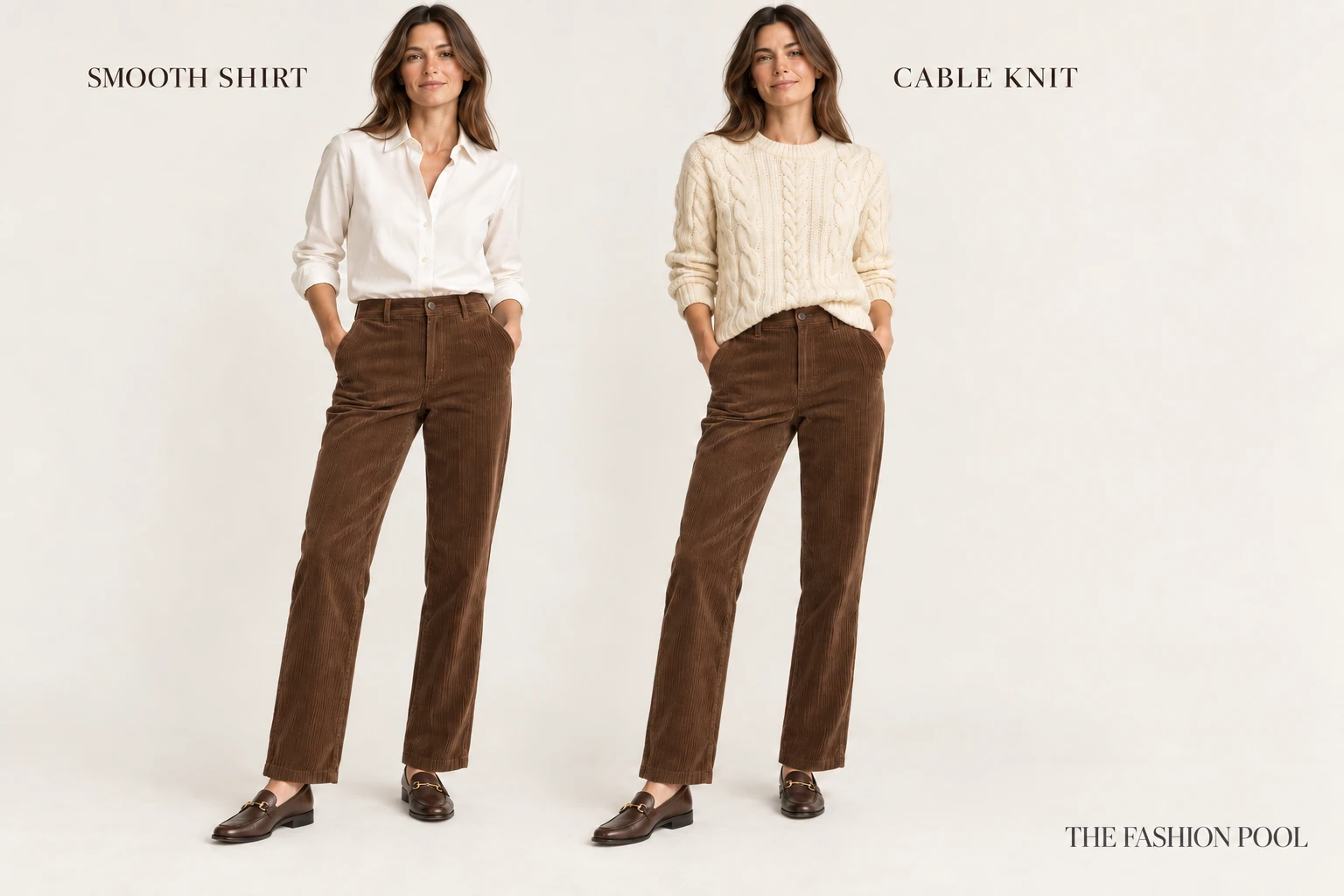
For a controlled comparison, keep the trousers and shoes unchanged and swap only the top. First try a smooth ivory cotton shirt, then a cream cable knit. The illustration uses brown loafers in both views so footwear does not compete with the texture decision. Observe the complete outfit from normal viewing distance rather than judging the fabrics only side by side on a bed.
The smooth shirt creates a clearer difference between the upper and lower surfaces. The knit makes texture a feature of both halves. If the second feels busier than you prefer, try a finer plain knit before rejecting sweaters altogether. If you like a richly textured combination, keep it. There is no requirement to restrict an outfit to one textured garment.
Color changes can distract from this comparison. A bright patterned shirt may draw more attention than either fabric surface, which is useful when that is your intention. To understand texture first, choose tops in similar light neutrals. Afterward, experiment with olive, navy or burgundy. Treat these as palette options rather than colors everyone must wear with brown.
Outfit one: ivory shirt and brown loafers
Combine chocolate brown straight-leg cords, a smooth ivory button-down shirt, dark brown loafers and a compact dark brown shoulder bag. Tuck the shirt, then release a little fabric above the waistband so it does not pull immediately when you sit. The light top separates the trousers from the face, while the brown shoes and bag provide related accents without demanding identical finishes.
Check the front fastening and pockets with the shirt inside. If they pull more than they did without a tuck, try less fabric or wear the shirt untucked. A shorter shirt can be another option. Do not choose a restrictive trouser size just to make the waistband look neat. If the shirt gaps across the bust, use the separate button-down fit guide rather than expecting a tuck to fix that problem.
Look at the hem with the loafers on, then take several steps. Make sure the back does not repeatedly slide beneath your heel. A small fold at the shoe can be a deliberate preference, but fabric dragging on the ground is a practical issue. Try a different shoe or consult an alteration professional about the finished length before cutting or permanently changing the trousers.
This combination can suit lunch, errands or a relaxed workplace that permits it. Add an outer layer appropriate to the weather and setting. An open cardigan changes the texture balance; a smooth jacket preserves more contrast. Assess the actual employer’s expectations before describing cords as office clothing. The same outfit can read differently in different workplaces.
Outfit two: cream knit and flat ankle boots
Keep the brown cords and replace the shirt with a cream cable-knit sweater. Add dark brown flat ankle boots and a compact brown crossbody bag. An olive jacket supplies an optional outdoor layer. The cover shows it carried over an arm so the knit remains visible; that is an outfit presentation, not a suggestion that carrying a jacket will be convenient all day.
Try a small front tuck only if the sweater’s thickness and waistband room allow it comfortably. Leave the sides relaxed and sit down. If the knit bunches or the waistband presses, release the tuck and compare the untucked hem. A shorter sweater can also make sense. The sweater-tucking guide explains the fabric-placement decision in denim; apply the same comfort check to your particular cords.
Walk in the boots and watch where the trouser hem meets the shaft. A narrow opening can catch on a boot even when the standing outfit looks tidy. A roomier leg or lower shaft may resolve the interaction. Flat boots are simply the example here: choose footwear whose fit you know, and repeat the hem check whenever you change the sole height.
Put on the olive jacket and reach forward. Cable knit can occupy more sleeve space than a thin shirt, so assess arm movement and closure rather than assuming the same jacket works identically over both. If the combination feels restrictive, change the layer or knit weight. For warmer conditions, try a lighter plain sweater instead of retaining every illustrated item.
Keep the outfit useful beyond the mirror
Before leaving, sit, climb a step and retrieve something from your bag. Check the trousers at the knees and waistband, then inspect the hem again. Follow the garment’s own care label when cleaning; an outfit idea does not establish wash temperature or drying instructions. The easiest repeat outfit is one whose pieces already fit your routine and whose maintenance you understand.
Frequently Asked Questions
Can I wear black shoes with brown corduroy?
Yes. Black can provide a stronger contrast than the related brown shoes shown here. Try repeating it in a bag or jacket if you like a connected accent, but exact repetition is optional. Check the whole combination in daylight before replacing something you already own. Brown trousers do not require brown footwear.
Do corduroy pants need a belt?
No. A belt is optional when the waistband fits comfortably and stays where you want it. Add one for a visible styling detail or light support, while checking the loops and buckle comfort. If the trousers need substantial tightening, assess the cut or size rather than asking a belt to handle the entire fit problem.
Can I leave the shirt untucked?
Yes. Compare the shirt’s length and shape with the trousers while standing and sitting. An untucked hem can create a relaxed outline, while a tuck exposes more of the waistband. Neither is universally better. If the shirt catches awkwardly beneath a jacket, try a shorter layer or adjust the jacket rather than forcing a tuck.
Are corduroy pants always winter clothing?
No single season applies to every garment. Consider fabric weight, fiber content, lining and your local conditions. A pair that feels comfortable on a cool day may be too warm in another setting. Use the actual trousers to decide, and substitute lighter layers when needed instead of assuming the fabric name guarantees comfort.
What if my cords have a wider leg?
Keep the texture comparison, then repeat the hem and shoe checks with that silhouette. A wider leg changes how fabric falls around footwear and how much of the shoe remains visible. You can still use either top. Adjust the tuck and outer layer by preference rather than assigning wide trousers one compulsory top shape.
Conclusion
Use one pair of cords to compare smooth and textured tops, then complete the outfit with your actual shoes and layers. Keep the surface combination you enjoy and resolve any waistband or hem interference. A short movement check makes these ideas easier to reuse beyond an illustration.