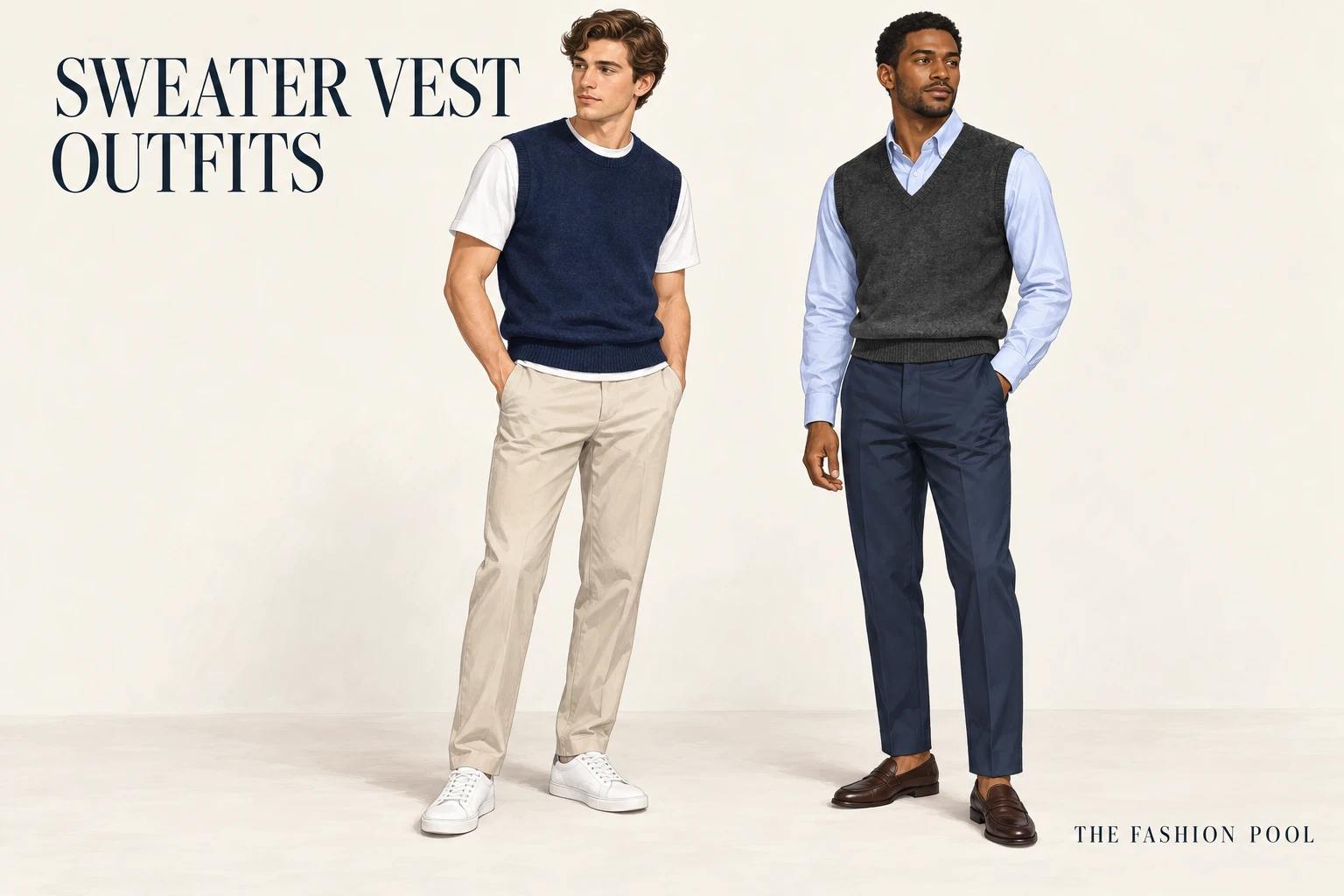
A sweater vest leaves the base layer on show in places a regular sweater covers: the sleeves, shoulder edges and sometimes the shirt hem. That makes the pairing part of the outfit rather than something hidden underneath. These sweater vest outfits for men use a T-shirt and an Oxford shirt to show two different approaches, with checks you can repeat using your own clothes.
Build sweater vest outfits for men around the base layer
For a casual starting point, combine a navy crewneck sweater vest, white T-shirt, stone chinos and white sneakers. For a more polished alternative, try a charcoal V-neck vest, pale blue Oxford shirt, navy trousers and brown loafers. Fit the vest over the actual base layer, then check the armholes, neckline and waistband while moving. The formulas are options, not a dress code or a rule about age.
Key Takeaways
- Try the vest over the layer you intend to wear, not an unrelated thin top.
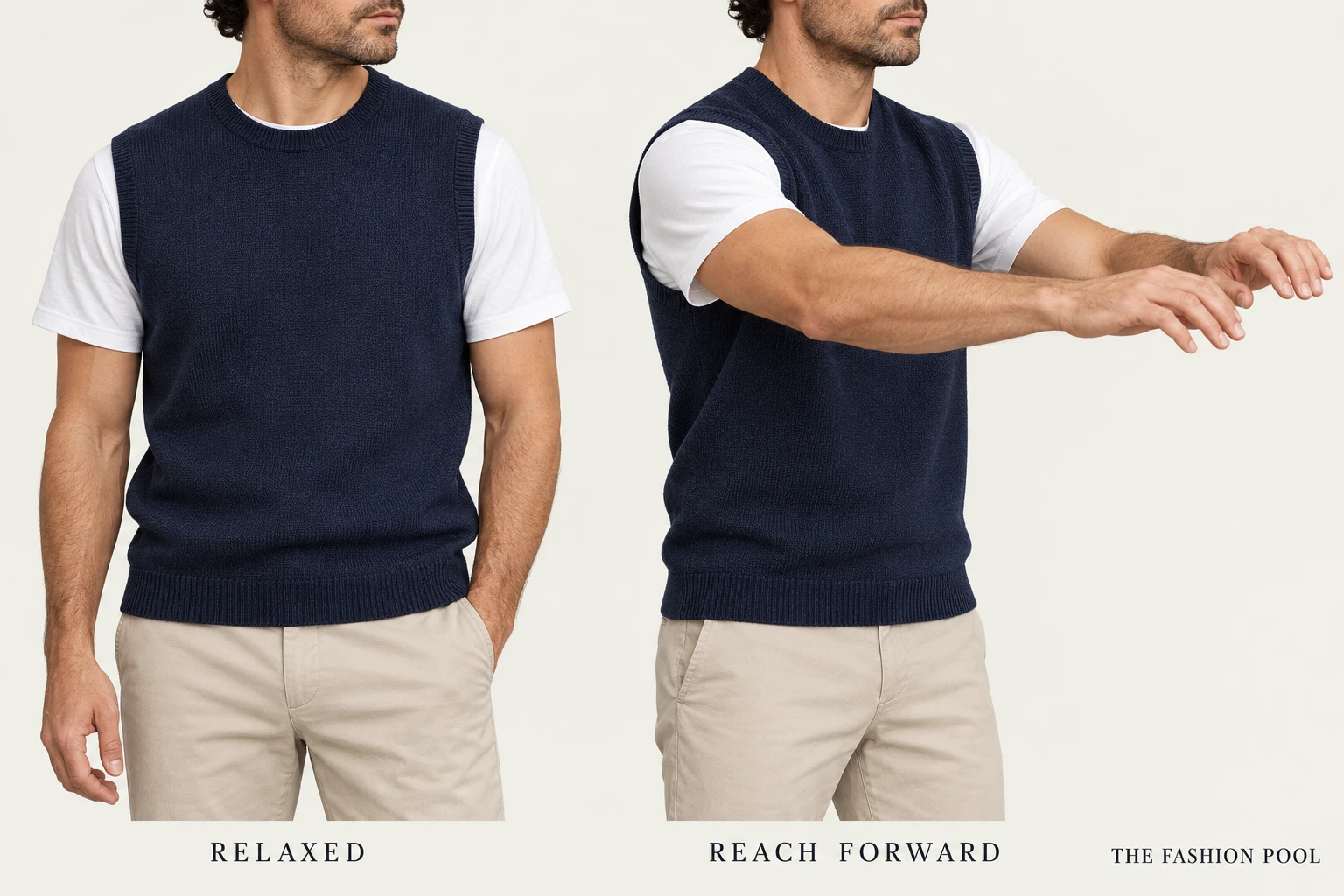
- Check armhole comfort with your arms forward as well as relaxed.
- A visible T-shirt neckline or shirt hem can be intentional.
- Assess the outfit with its real trousers and outer layer before changing sizes.
Check the armholes before choosing the silhouette
Put on the base layer by itself and smooth it into a comfortable position. Then add the vest without pulling the shirt tightly downward to make it look perfect. Look at the shoulder edges and armholes. Notice whether the base fabric sits naturally or collects in a dense fold where the knit opening meets the sleeve. Some visible fabric is part of layering; discomfort is a separate issue.
Reach forward gently as though holding a steering wheel, then lower your arms. The supporting illustration demonstrates these two positions, rather than a tested fit result. Check for digging at the underarm, pulling across the upper back or a hem that stays caught high afterward. A vest can move with you without needing to remain completely still. Readjustment after every small movement is a useful signal to compare another combination.
If the armhole feels tight, remove the vest and repeat the movement in the base layer alone. This helps establish which garment is restricting you. Try a less bulky shirt or a vest with a different opening before assuming a larger size solves everything. More chest room may also change the shoulder and hem. Compare the complete garment rather than correcting one point in isolation.
A deliberately roomy vest can have lower armholes and show more shirt at the sides. That appearance is not automatically poor fit. Decide whether you like the exposed layer, then check movement and whether the knit slips around excessively. A close fit and a relaxed fit are different styling options, not measures of how correctly someone dresses.
Outfit one: navy crewneck vest and white T-shirt
Pair a navy crewneck sweater vest with a plain white short-sleeve T-shirt, stone straight-leg chinos and white low-top sneakers. The light sleeves and neckline outline the darker knit, while the stone trousers keep the lower half lighter. Start without extra accessories so you can see the garment relationship clearly. Add a watch or bag only if it serves your actual day.
Choose a T-shirt whose sleeves remain comfortable outside the vest openings. A very wide sleeve may gather at the shoulder edge; an especially tight sleeve can feel restrictive on its own. Neither problem requires a universal sleeve measurement. Try the combination and compare. The small white neckline visible in the cover is deliberate, as is a narrow strip of T-shirt below the vest.
If you dislike that lower strip, try tucking the T-shirt or choosing a shorter one. Do not repeatedly pull the vest downward to hide it. The knit hem should sit where its cut and your trousers allow it comfortably. Sit down with the tuck in place and check whether the waistband gains unwanted bulk. Leaving the tee untucked is a valid alternative if the result suits you.
Finish with familiar sneakers and check the chino hem while walking. If adding a casual jacket, try it over both layers and reach forward again. For a different removable outer layer, the overshirt guide explains that garment’s separate fit decisions. Avoid assuming a jacket that fits over a T-shirt has identical room over knitwear.
Outfit two: charcoal V-neck vest and blue Oxford
Combine a charcoal V-neck sweater vest, pale blue long-sleeve Oxford shirt, navy straight trousers and dark brown loafers. Tuck the shirt into the trousers and leave the knit vest outside. The shirt collar sits above the V-neck, while the visible sleeves make the layered construction clear. The darker trousers create a quieter base than the light chinos in the first outfit.
Check the collar with your head turned both ways. It should not feel trapped or require constant rearranging. A V-neck provides a different opening from the crewneck example, but the exact depth and collar shape still need to work together. If the points repeatedly fold under the knit, compare another shirt or neckline rather than pinning the collar into an uncomfortable position.
Smooth excess shirt fabric at the sides before putting on the vest, then sit and reach. Do not force the shirt skin-tight to eliminate every crease. A tuck needs room for ordinary movement. If you prefer a full-sleeve sweater instead, the sweater-over-shirt guide covers that related outfit; this sleeveless version adds the separate armhole and exposed-sleeve decisions.
The combination may suit a relaxed dinner or a workplace that permits it. It does not automatically meet every business-casual expectation. Add a blazer or coat only after checking sleeve room and closure over the complete outfit. If the jacket feels restrictive, change its cut or the knit weight instead of assuming the missing sweater sleeves eliminate all layering bulk.
Adjust texture and weather without rebuilding everything
Keep the colors steady while comparing a fine knit with a chunkier vest. This makes the added texture easier to evaluate. In Percival’s sweater-vest guide, T-shirts and buttoned shirts appear as different base-layer options. Those are useful possibilities, not proof that every vest works with every shirt.
Choose warmth from the actual fabric and local conditions. Sleeveless does not guarantee a cool outfit, and a thin vest does not replace necessary outdoor protection. Check each garment’s care label before washing. Once the pairing works, change one element at a time, such as the trouser color or base shirt, and repeat the movement check rather than buying a whole new outfit.
Frequently Asked Questions
Can I wear a sweater vest without a shirt?
You can choose that look if the garment feels comfortable against your skin and provides the coverage you want. Check the neckline, armholes and fabric directly rather than assuming a layered vest works identically on its own. The two outfits here use base layers, so their fit checks should be repeated if you remove one.
Should a sweater vest cover my waistband?
There is no single required position for every cut. Compare the hem with your actual trouser rise while standing and sitting. A shorter vest may show part of a shirt; a longer one may overlap more. Choose the outline you prefer, then check that the knit does not catch or bunch uncomfortably at the waistband.
Can I wear a patterned vest with a plain tee?
Yes. A plain tee can leave the pattern as the main visible detail. Start with a color already in the vest if that makes the combination easier to assemble, but exact matching is optional. Keep the same armhole and hem checks. A pattern does not change the need for comfortable movement.
Do loafers require bare ankles?
No. Choose socks according to comfort, shoe fit, weather and the appearance you prefer. Try the loafers with the socks you intend to wear, since thickness changes the available room. The illustrated outfit shows one presentation, not a requirement to expose skin or wear a particular sock type.
What if the vest looks fine but feels tight when seated?
Check the trouser waistband and tucked base layer separately first. Then compare how the vest hem sits over them. A snug ribbed edge, excess tucked fabric or restrictive trousers can contribute to the sensation. Try a different combination or cut rather than stretching the knit aggressively to force more room.
Conclusion
Choose the base layer first, then assess the sweater vest in motion with real trousers and shoes. Use the T-shirt formula for a casual starting point or the Oxford combination for a more polished option. Keep the details you enjoy and change any garment interaction that demands constant attention.