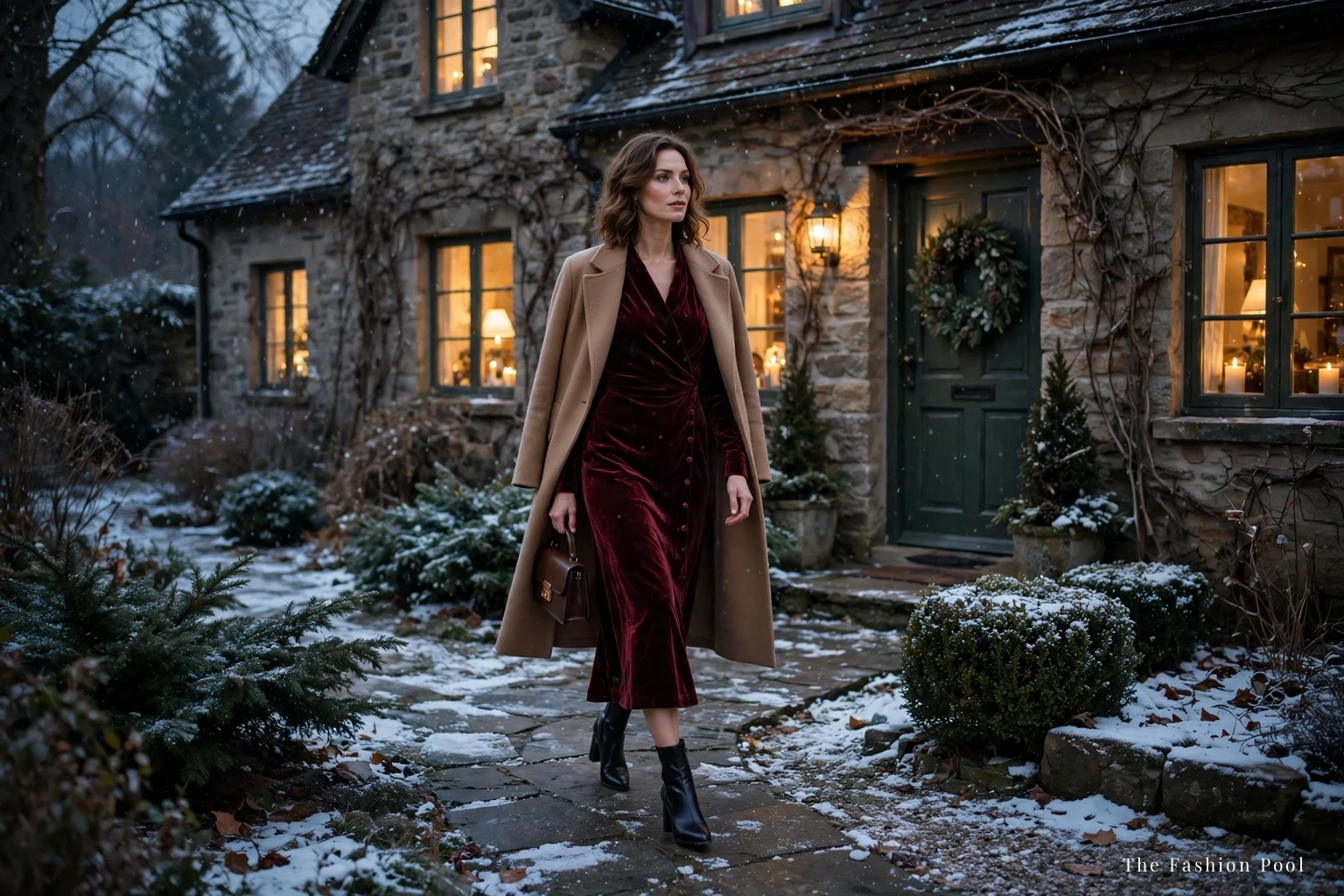
A christmas eve outfit is not one outfit. It is one outfit that has to work in three rooms: the candlelight service, the dinner table, and the late drinks after it. Each room asks for something different — the service wants covered shoulders and warmth, the dinner table wants a dress that sits well for two hours, the late drinks want a layer that comes off without a struggle — and the mistake is dressing for one room and hoping the other two take care of themselves.
This guide plans the evening room by room. Decide what each room needs first, then build one outfit that passes all three, with a coat for the arrival photograph and hair and makeup that survive candlelight. Three rooms, one outfit, no changing in the car.
The three rooms of Christmas Eve
Before you open a wardrobe, name the rooms. Most Christmas Eves have the same three, in the same order, and the order matters because the rooms get warmer and the outfit gets more relaxed as the night goes on — never the other way round.
The first room is the service: a church, a chapel, or a candlelit gathering at someone’s house. It is cold, it is dim, and it lasts about an hour. Shoulders are covered, the coat stays on until you are seated, and the shoes are quiet on a stone or wooden floor. Nobody photographs the service, but everyone sees the arrival.
The second room is the dinner table: the family meal, the long sit, the second helping. The dress has to sit well — no waistband that digs in after an hour, no skirt that rides up when you stand, no sleeve that drags in the gravy. This is the room the outfit is photographed in, around the table and by the tree.
The third room is late drinks: the kitchen, the living room, the last glass by the fire. The coat is off, the layer comes off or stays on by choice, and the outfit has to look finished without the outer layers doing the work. This is the room where an outfit planned only for dinner falls apart, because the structure that held it together is hanging on a hook by the door.
Judge the outfit by the third room, not the first. If the outfit looks right with the coat off and the layer off, it will look right with them on. If it only looks right fully layered, the late drinks will expose it.
The service: candlelight, covered shoulders, warm coat
The service sets the outfit’s rules, because it is the most formal room and the coldest one. Start here and the other two rooms get easier.
Covered shoulders are the rule in most services, and they are practical as well as respectful: churches are cold in December, and a bare shoulder in a pew is a cold shoulder. A dress with sleeves, a velvet blazer over a sleeveless dress, or a fine knit under a coat all pass. A strapless dress with a shawl does not — the shawl slips, the shoulders show, and the whole evening becomes an exercise in holding fabric in place.
Warmth is the second rule, and it is the one people underestimate. The walk from the car, the wait outside, the stone floor underfoot: the outfit needs tights, a coat that actually closes, and shoes that keep the feet warm. Knee-high boots under a midi dress are the right call for the walk and the wait; our guide to wearing knee-high boots with jeans without bunching covers the fit that keeps the line clean, and the same fit works under a dress.
Candlelight is the third thing to plan for, because it changes how color and fabric read. Dark, rich colors look better than pale ones in candlelight: burgundy, emerald, navy, deep plum. Velvet and satin catch the low light; chiffon and thin jersey go limp in the cold and look washed out. A small amount of shine is right for the service — a velvet dress, a satin skirt — but save the full sequins for New Year’s Eve, where they belong.
The coat stays on for the arrival and comes off once you are seated. Choose it knowing that: it should look deliberate in the arrival photograph and come off without a struggle in a crowded pew.
The dinner table: the dress that sits well
The dinner table is where the outfit is tested, because it is where you sit in it for two hours. A dress that looks right standing in a mirror can fail at the table in three ways, and all three are worth checking at home.
The first is the waistband. A waistband that feels fine standing up can dig in after an hour of sitting, and a dress with a fitted waist and no give is the worst version of this. Choose a waist that gives: a wrap dress, an empire line, a soft waistband, or a dress with a little stretch. Try it sitting down, not just standing up — an hour in the chair at home tells you more than a mirror ever will.
The second is the skirt. A pencil skirt rides up when you stand and sit repeatedly; a full skirt needs managing every time you sit down. A midi skirt — straight or gently flared — is the safest shape for a long dinner: it sits cleanly, it stands cleanly, and it does not need attention. A satin midi skirt is the festive version, and it photographs well by the tree.
The third is the sleeve. A wide sleeve drags in the gravy and the candles; a tight sleeve restricts the reach across the table. A fitted sleeve to the wrist, or a three-quarter sleeve, is the practical shape. If the dress has a wide sleeve, the velvet blazer over it is the fix — our velvet blazer guide covers the shape that works over a dress without swallowing it.
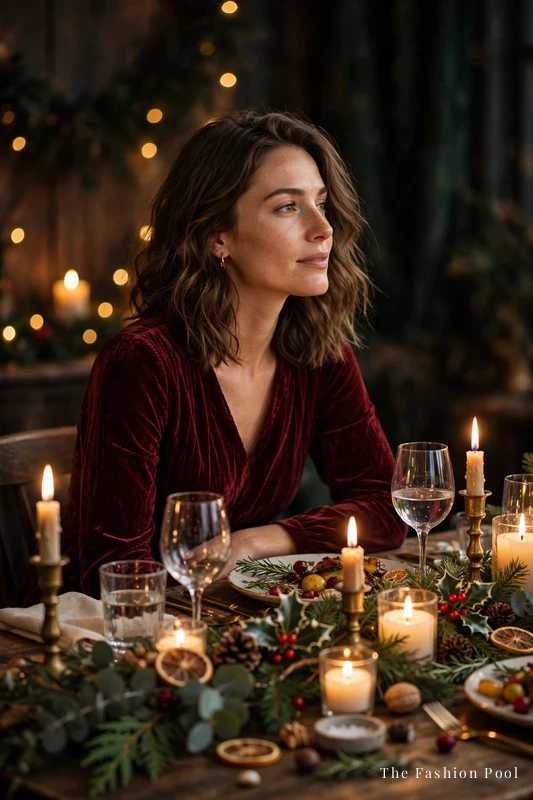
Color at the table follows the same rule as the service: dark and rich, with one warm note. A burgundy dress with gold earrings, an emerald dress with a cream wrap, a navy dress with a velvet blazer. The table is lit by lamps and candles, and the colors that look best in that light are the ones that already look like Christmas.
Late drinks: the layer that comes off
Late drinks are the room most outfits forget, and they are the reason the layer matters. The coat is on the hook by the door, the house is warm, and the outfit has to stand on its own for the last hour of the night.
The layer is the decision. A velvet blazer that comes off easily and drapes over a chair is the right layer for late drinks: it adds warmth at the service, structure at the table, and it leaves a finished outfit behind when it comes off. A cardigan that has to be buttoned and unbuttoned is the wrong layer — it is fussy at exactly the moment nobody wants fuss.
The dress underneath has to be the outfit, not the underlayer. If the dress only looks right with the blazer on, the late drinks will expose it. Test this at home: take the layer off, stand in front of the mirror, and ask whether the outfit is finished. If the answer is no, the dress is wrong, not the layer.
Shoes change here too. The heeled boots that carried the evening come off for the last hour, or the flats come out of the bag. Nobody photographs feet by the fire, and the walk to the car at midnight is the difference between ending the night well and ending it barefoot on a cold step. Pack the flats before you leave the house — the bag should hold them from the start.
The last glass is also the last photograph, usually taken by someone who has had the same last glass. The outfit that survives it is the one with one clear idea — a velvet dress, a satin skirt, a single piece of jewelry — and nothing that needs adjusting.
The coat: the arrival photograph
The coat carries the arrival — the walk up the path, the photographs outside the house, the first minute in the doorway. It is also the piece most people choose last, which is why so many Eve outfits look unfinished in the photographs that get kept.
A tailored wool coat is the safest choice, and camel is the easiest color to choose: it sits well over dark dresses and velvet, and it reads clearly in the arrival photograph.
A faux fur coat is the festive choice — warm and dramatic, and it makes the arrival itself the statement, before anyone sees the dress.
What not to wear: a puffer jacket, which swallows the dress and makes the arrival look like a chore; a short cropped jacket that ends at the dress’s waist and cuts the outfit in half; a coat that does not close over the dress, which means the dress is doing the coat’s job.
Check the pairing at home before the night: a coat that fits over a fine knit will not fit over a velvet blazer, so try both together while there is still time to change one.
Hair and makeup for candlelight
Candlelight is kind to some things and cruel to others, and hair and makeup should be planned for it the way the outfit is.
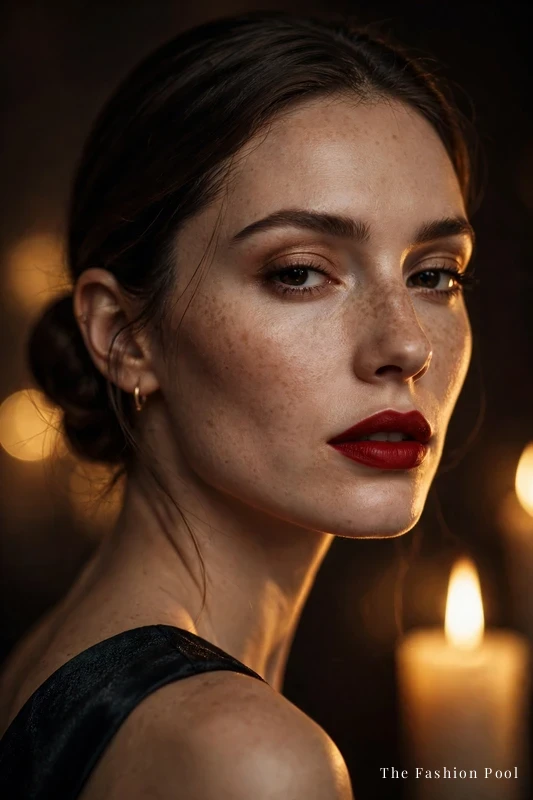
Hair first: candlelight is dim, so the shape matters more than the detail. A low bun, a soft wave, a half-up style — all of them read clearly in low light, because the silhouette is what the eye sees. A complicated updo with pins and twists disappears in the dark; the work is invisible and the pins are the only thing anyone notices. Keep it simple, keep it secure, and pin it so it survives the coat, the hug at the door, and the lean over the dinner table.
Makeup follows the same logic: one strong feature, the rest quiet. A red lip is the classic Christmas Eve choice, and it works in candlelight because the color holds in low light when everything else softens. If the lip is red, the eye stays quiet — mascara and a little liner, no heavy shadow. If the eye is the feature, the lip stays nude or soft. Two strong features in candlelight read as stage makeup, not evening makeup.
The one practical rule: set it. Candlelight is warm, the house is warm, the night is long. A setting spray or a pressed powder in the bag is the difference between makeup that lasts until late drinks and makeup that gives up at the dinner table. Touch up once, after dinner, and leave it alone after that.
What not to wear on Eve
Some outfits fail on Christmas Eve before the night starts, and they all fail the same way: they were planned for a party, and Eve is not a party.
Full sequins are the first one. A full sequin dress is a New Year’s Eve outfit — our New Year’s Eve guide says the same thing, and Eve is the night the sequins wait for. On Christmas Eve, full sequins read as a costume in a room full of family, and they photograph as a mirror in candlelight. One sparkling piece — a sequin skirt, a metallic top — is the limit, and even that is better saved for the late drinks.
A strapless dress is the second. It needs a shawl for the service, the shawl slips, and the whole evening becomes an exercise in holding fabric in place. A dress with sleeves, or a sleeveless dress with a velvet blazer that stays on, is the fix.
White is the third. A white or cream dress looks beautiful in daylight and washed out in candlelight, and it is the first thing to show a splash of gravy or red wine. Dark colors are the Christmas Eve colors; save the white for a summer wedding.
Anything that needs adjusting is the fourth. A dress that has to be pulled down every time you stand up, a neckline that has to be checked, a heel that has to be kicked off under the table — Christmas Eve is a long evening with people you love, and the outfit should let you forget it is there. If you are thinking about the outfit during dinner, the outfit is wrong.
Frequently asked questions
What should I wear to a Christmas Eve service?
A dress with sleeves or a velvet blazer over a sleeveless dress, tights, knee-high boots or heeled ankle boots, and a coat that closes. Covered shoulders, warm feet, dark rich colors — burgundy, emerald, navy.
What do I wear to Christmas Eve dinner?
A midi dress that sits well — a wrap dress, an empire line, or a soft waistband — with a fitted or three-quarter sleeve. Try it sitting down at home first: the waistband and the skirt are what fail at the table.
Can I wear sequins on Christmas Eve?
One sparkling piece, at most — a sequin skirt or a metallic top with quiet partners. Save the full sequin dress for New Year’s Eve, where it belongs.
What coat do I wear on Christmas Eve?
A tailored wool coat — camel is the easiest — or a faux fur coat for the festive version. Try the coat and the dress together at home, and make sure the coat closes over the dress.
What shoes should I wear on Christmas Eve?
Heeled ankle boots or knee-high boots for the service and the arrival, with flats in the bag for late drinks and the walk home. The boots keep the feet warm on the walk; the flats end the night well.
Can I wear black on Christmas Eve?
Yes. Black velvet or black satin reads as celebration in candlelight, not mourning. Give it texture or one warm note — gold earrings, a burgundy lip — so it does not look like work.
Three rooms, one christmas eve outfit. Dress for the service, sit well at the table, and let the layer come off for late drinks — and the photographs will show the evening you meant to have, not the outfit you fought.