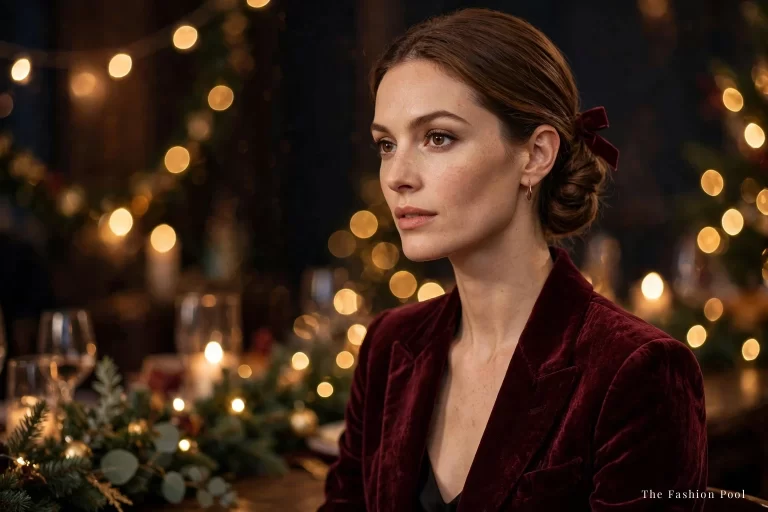
A red christmas dress outfit is the easiest way to look dressed for a holiday party — and the easiest to get wrong. Red is the color everyone notices first, so the dress does the talking before you do. Get the styling right and the dress looks expensive, intentional, and entirely yours. Get it wrong and the same dress reads like a costume borrowed for one night — which is why so many red dresses are worn exactly once, to a single party, and then sit in the closet until next December.
The fix is to let the dress carry the red, keep everything else quiet, and restyle the same dress three ways — for a daytime outing, for the party itself, and for a second party a week later. This article shows the before, the version that only works once, and the after. Nothing about the dress changes. Everything around it does.
The Before: the red dress you only wear once
The before outfit is not a bad outfit. That is the trap. Put it together and it looks right in the mirror: a deep red midi dress, a red lip to match, red nails, statement earrings, strappy metallic heels, and a glitter clutch. Every piece is good on its own. Together they add up to one note played very loudly — red, shine, and more red — and the outfit has nowhere to go after that. It is a party outfit in the narrowest sense: it works for one kind of evening, in one kind of light, and it announces itself so clearly that everyone remembers it. That is the problem. A dress people remember in detail is a dress you cannot wear again to the same crowd, and the holiday season is full of the same crowd.
The second problem is that the before version is too much for anything except the party. It is too dressy for a daytime lunch, too shiny for a family dinner, too memorable for a second invitation. So the dress gets one outing and then waits a year.
The third problem is subtler. When everything is red — lips, nails, shoes, bag — the dress stops being the color in the outfit and becomes one red thing among many. The dress, which should be the point, gets lost in its own accessories. It is a failure of editing, not of taste: too many good ideas in one outfit, all of them shouting.
None of this is the dress’s fault. A deep red midi dress in crepe or heavy satin is one of the most useful things in a winter wardrobe. It suits most skin tones, it photographs well in low light, and it needs almost nothing to look finished. The before version buries those strengths under styling. The after version lets the dress lead.
The After: change everything except the dress
The after starts with one rule: the dress carries the red, and everything else goes quiet. At most one red accent beyond the dress, no competing shine, no statement piece fighting the dress for attention. Shoes go neutral — black, nude, or a quiet metallic. The bag goes small and plain. The jewelry goes down to one piece. Hair goes up or back so the neckline shows. Makeup picks one focal point — lips or eyes, never both loud at once.
It is about giving the dress room. A deep red dress next to quiet neutrals looks richer, not plainer, because the color has nothing to argue with. The same dress that looked like a costume next to a glitter clutch looks expensive next to a black bag and simple heels.
The rule also makes the dress reusable, which is the whole point of this article. When the accessories change completely, the outfit changes completely, even though the dress is identical. The people at the second party see a different outfit, because the frame around the dress is different. That is how one red christmas dress outfit covers three occasions instead of one.
How to wear a red dress in the daytime
The daytime version is the one most women never try with a red dress, because the before version taught them the dress is party-only. It isn’t. Put a tailored coat over it, swap the heels for flats, and a red christmas dress outfit becomes a daytime outfit with a party underneath.
Start with the coat. A tailored wool coat in camel or charcoal, long enough to cover the dress hem, takes the formality down immediately — the red shows at the hem and the neckline, like an accent rather than a statement. A velvet blazer works the same way indoors, over the dress at a lunch or a daytime gathering, and it reads as part of the outfit rather than outerwear. Either way, the layer does the toning down; the dress does not have to.

Shoes make the second difference. Flat shoes — loafers, ballet flats, or simple ankle boots — drop the outfit out of evening territory. Nobody reads it as party wear with flats and a coat. Keep the bag small and plain: a black crossbody or a simple tote, nothing shiny.
Hair and makeup stay simple too. Hair up in a low bun or pulled back, stud earrings or nothing at all, and makeup close to your everyday version — the red dress is already the color in the outfit, so the face does not need to compete. Nails go nude or a soft neutral.
This version is for the daytime things the holiday season is full of: a lunch, a school event, a family visit, a walk through the Christmas market. The dress that looked too much for all of those in the before version fits all of them now, because the styling around it changed.
How to style a red dress for the party
The party version is the after at full strength: the same dress, worn the way the before version was trying to be worn, but edited. The dress is the star now, and everything else is built to show it off.
Hair goes up — a low chignon or a sleek bun — so the neckline and the shoulders show. One piece of jewelry, not three: statement earrings or a cuff, never both, and nothing that competes with the dress’s color. The rule from the after section applies here: the dress carries the red, everything else stays quiet.
Shoes are where most party versions go wrong. The before version wore strappy metallic heels with a glitter clutch, and the shine piled up. The after version picks one shiny piece: metallic heels with a plain black clutch, or black heels with a small metallic bag. Never both shiny. Heels are the right call for an evening party — block heels if the floor is uncertain, stilettos if it isn’t — and our guide to holiday party shoes covers which heel survives a long evening.
Makeup follows the same one-focal-point rule. A red lip works with this dress, but only if the eyes stay soft; a strong eye works, but only with a nude lip. Nails: nude, or deep red if the lip is nude — one red accent beyond the dress, never two.
The party version above is built for a friend’s or family party. For a work event, start from the daytime version with heels — and for the dress-code side, our office holiday party guide covers it.
How to wear the same red dress to a second party
The second party is where the after earns its keep. A week later, another invitation, the same crowd — and the same red christmas dress outfit, looking like a different outfit because every accessory changed.
Give the second party its own concrete look: a gold cuff and studs instead of statement earrings, block-heel ankle boots instead of stilettos, a small black clutch instead of a metallic bag, and hair down with a side part instead of a chignon, kept off the shoulders so the neckline still shows. Each change is small; together they are a different outfit.

The one thing that does not change is the dress, and that is the point: an outfit is a dress plus its frame, and when the frame changes completely, the outfit reads as new. The before version could never do this, because its frame was the dress itself — red on red on red — and there was nothing to change without changing the dress.
This is also the version to reach for when the second party is a different kind of event from the first. The dress with a cuff, boots and hair down reads as a different register from the dress with earrings, heels and a chignon. The dress is the same; the room reads it differently, because you gave it a different frame.
What not to do with a red dress
A few mistakes undo even a good red dress, and they are all versions of the same error: too much of a good thing.
Do not match everything to the dress. Red lips, red nails, red shoes and a red bag next to a red dress do not look coordinated — they look like a costume. One red accent beyond the dress is the limit, and none at all is fine.
Do not add shine on top of shine. A red dress already catches the light; sequins, glitter and metallics all at once turn it into a disco ball. If you want sparkle, give it one place to live — a single sparkling piece — and keep the rest of the outfit plain; and if sequins are what you want, give them their own outfit instead: our sequin guide builds the look around them properly.
Do not buy the dress in a fabric that fights you. Red shows every wrinkle, every pull and every cling. Crepe, velvet and heavy satin hold their shape and skim rather than cling; thin jersey clings, shows underwear lines, and wrinkles the moment you sit down.
Do not ignore the fit. Red draws the eye, so a fit problem the eye would skip in black gets noticed in red. Check the waist — the dress should sit at your natural waist, not above or below it — and the shoulders, which should sit on your shoulders, not slide. If either is wrong, a tailor is cheaper than a second dress.
Do not wear it to a work party without toning it down first — start from the daytime version with heels (see the office guide linked above).
What shoes, hair and makeup go with a red dress?
Shoes first, because they set the formality of the whole outfit. Nude heels lengthen the leg and disappear under a midi dress; black heels are the safe default and work with every version above; metallic heels are the party choice, but only with a plain bag. Avoid red shoes with a red dress — the match is the before version in miniature — and avoid white shoes or pale pastels, which fight the dress for attention. Skin-tone nude is the exception: it reads as bare leg, not as a competing color. Block heels survive long evenings and uncertain floors better than stilettos.
Hair should show the neckline. An updo — a low chignon, a sleek bun, a twist — suits the dress best at a party, because the dress’s neckline is part of the look. Hair down works too, but keep it off the shoulders if the dress has a detailed neckline, or the hair hides the dress. A side part or a low ponytail is enough change for the second party.
Makeup is the last decision, and the rule is the same as everywhere else in this article: one focal point. A red lip with soft eyes is the classic pairing, and it works because the lip echoes the dress without matching it exactly — a slightly deeper or slightly brighter red than the dress reads as intentional, while an exact match reads as a set. A strong eye with a nude lip is the alternative, and it suits a dress with a high neckline. Either way, keep the rest of the face quiet; the dress is already doing the color work.
Frequently asked questions
Can I wear a red dress to a Christmas party?
Yes — red is the classic Christmas party color, and a Google Trends round-up published in October 2026 (DLOOK) calls red the single most-searched Christmas party color in America, with Christmas party dress searches spiking in late November and early December. That is directional, second-hand evidence, not a Pinterest figure. A red dress works at a Christmas party because the color suits the season, not because of a trend number.
Can I wear the same red dress to two parties?
Yes, if you change the frame completely — different jewelry, different shoes, different bag, different hair. The dress is the same; the outfit reads as new because everything around it changed. The before version could not do this, because its styling was the dress itself: red on red on red, with nothing left to change.
What shoes go with a red dress?
Nude, black, or metallic heels for a party; flats or ankle boots for daytime. Avoid red shoes — the match turns the outfit into a costume — and avoid white shoes, which fight the dress. Block heels survive long evenings better than stilettos.
What color bag should I wear with a red dress?
Black is the safest, nude is the softest, and a small metallic clutch works for an evening party. Keep it plain — the bag’s job is to disappear, not to compete with the dress. Never a red bag with a red dress.
Can I wear a red dress to a work holiday party?
Yes — start from the daytime version (tailored coat or blazer, heels, quiet shoes and bag, one piece of jewelry) and check the office holiday party guide for the dress-code side.
What makeup goes with a red dress?
One focal point: a red lip with soft eyes, or a strong eye with a nude lip. A red lip slightly deeper or brighter than the dress reads as intentional; an exact match reads as a set. Keep nails nude, or deep red if the lip is nude — one red accent beyond the dress, never two.
One dress, three parties. The before version wore the red dress once because its styling only worked one way. The after version changes everything except the dress, and one red christmas dress outfit covers a daytime outing, a party, and a second party. The dress was never the problem. The frame was. Change the frame, and the red dress stops being a one-night outfit and becomes the hardest-working dress in your winter wardrobe.
Keep your style story going.
Find your next outfit idea, styling detail or wardrobe solution.
Explore the latest edit ↗