Cold-Weather Business-Casual Capsule Wardrobe Guide
A cold-weather business-casual capsule wardrobe should solve two different environments: the commute outside and the heated workplace inside. Build it around light base layers, polished indoor pieces, one or two removable mid-layers, weather-appropriate outerwear, and shoes that suit both the dress code and the ground conditions.
The goal is not a tiny closet or a rigid uniform. It is a reliable set of clothes that can produce complete work outfits without forcing a heavy sweater, wet boots, or a bulky coat to stay on at your desk.
Quick Answer: Plan the Indoor Outfit First
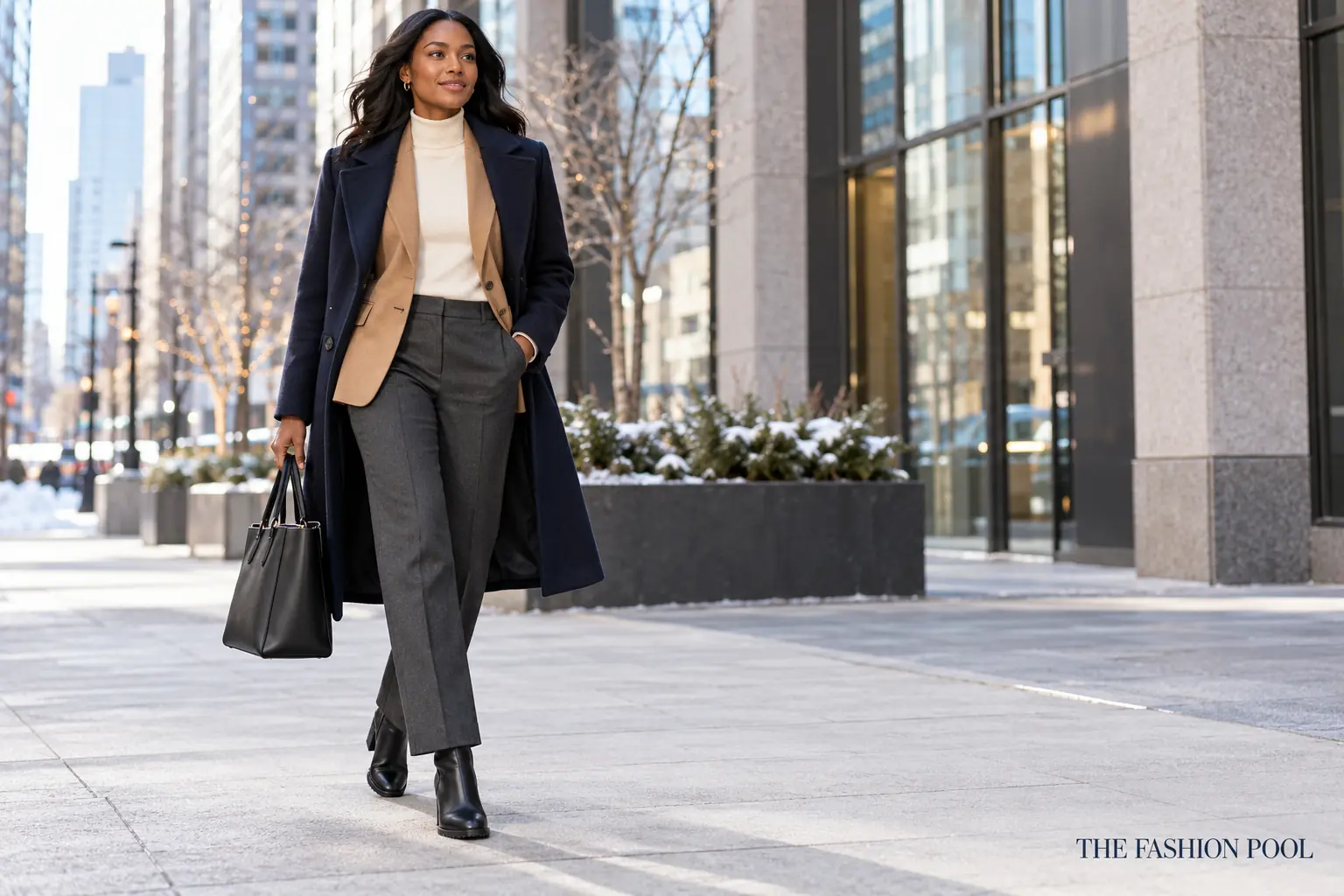
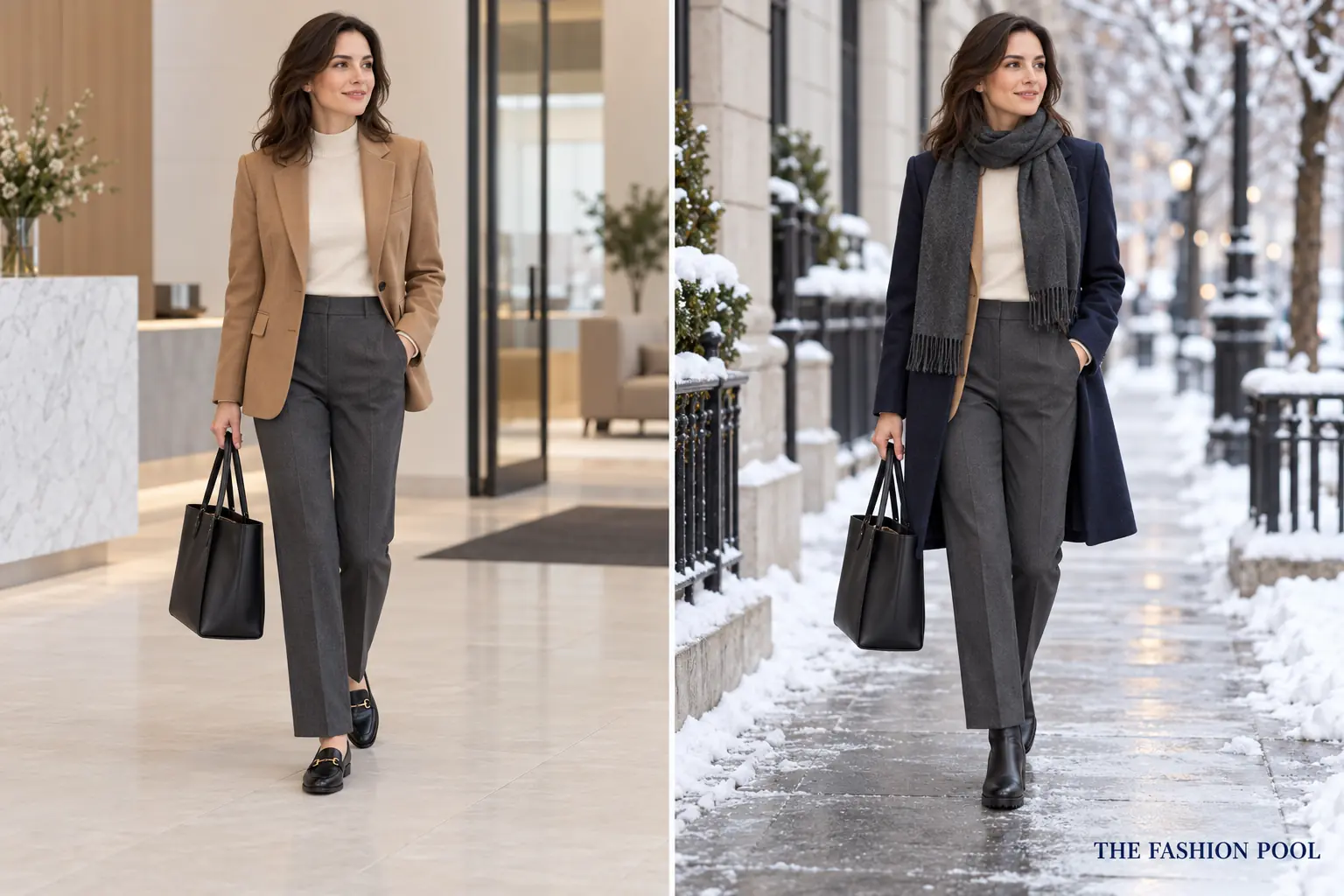
Choose an office-ready base outfit—such as a fine knit with trousers, a blouse with a midi skirt, or a simple dress with a blazer—then add warmth in removable stages. A coat and weatherproof boots handle the commute; a cardigan, blazer, or lightweight knit handles indoor temperature changes. Keep the palette coordinated so those practical swaps still look intentional.
Business casual varies by employer, industry, and event, so confirm your workplace rules before relying on jeans, sneakers, sleeveless tops, or open-toe shoes. The capsule below is a flexible framework rather than a universal dress code.
Set Three Guardrails Before Choosing Pieces
Your actual workplace dress code
Write down what people in your workplace really wear on ordinary days, client days, and casual Fridays. If dark denim is never acceptable, do not include it simply because another capsule does. If meetings require a blazer, treat that blazer as a core piece instead of an occasional extra.
Your commute and local winter
A person who drives from a garage needs different protection from someone who walks to a train in wind, slush, or rain. The National Weather Service recommends checking the forecast and dressing for outdoor conditions. Choose the coat, footwear, and accessories for the exposure you actually face, not only for how they look indoors.
Your office temperature
Heated offices can make a thick sweater uncomfortable by midmorning. REI’s layering guide separates base, insulating, and weather-protective roles; that same logic can inform a work outfit. Use a smooth base, an optional indoor layer, and a separate commute shell or coat so you can adjust without rebuilding the outfit.
Build a Cold-Weather Business-Casual Capsule
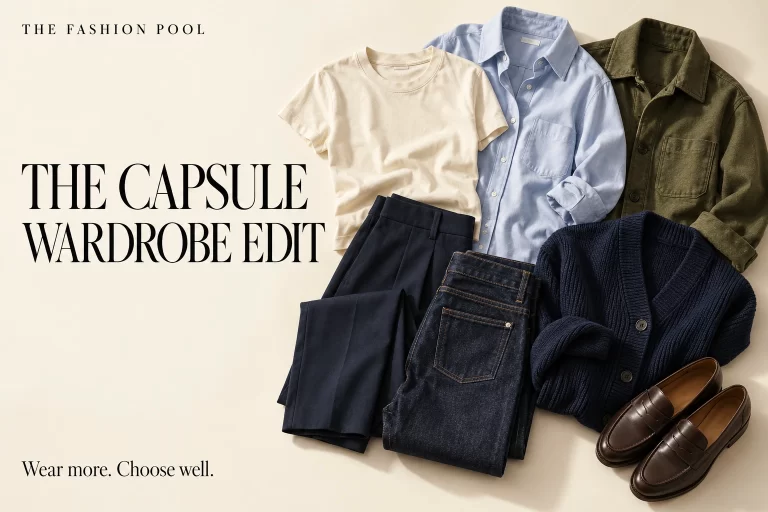
Start with a small palette that lets most tops work with most bottoms. Navy, charcoal, camel, chocolate, olive, cream, and black are easy foundations, but any coordinated colors can work. Add one accent—perhaps burgundy, forest green, icy blue, or rust—to keep the wardrobe from feeling flat.
Three polished tops
Choose a fine-gauge crewneck, a thin mock neck, and a blouse or polished shirt. Each should work alone indoors and fit smoothly beneath the main layer. Avoid buying three tops that all demand different bras, special care, or incompatible necklines unless those requirements already fit your routine.
Three bottoms with different functions
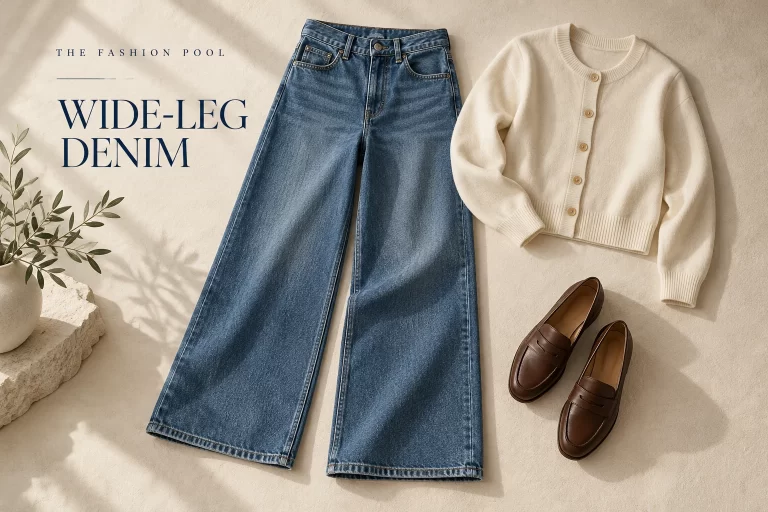
A straight or gently wide trouser covers regular office days. A second trouser in another neutral gives the capsule breathing room. A midi skirt adds a different silhouette and can work with tights and tall boots. If your office permits it, dark, clean-finish jeans can replace one bottom for casual days; our wide-leg jeans guide explains hem and proportion choices.
Two indoor layers
A single-breasted blazer supplies structure for meetings, while a fine cardigan offers adjustable warmth on quieter days. Check both over the capsule tops. Sleeves should move comfortably, buttons should close without pulling, and the cardigan should not create a thick ridge under the blazer if you occasionally combine them.
One dress and two footwear roles
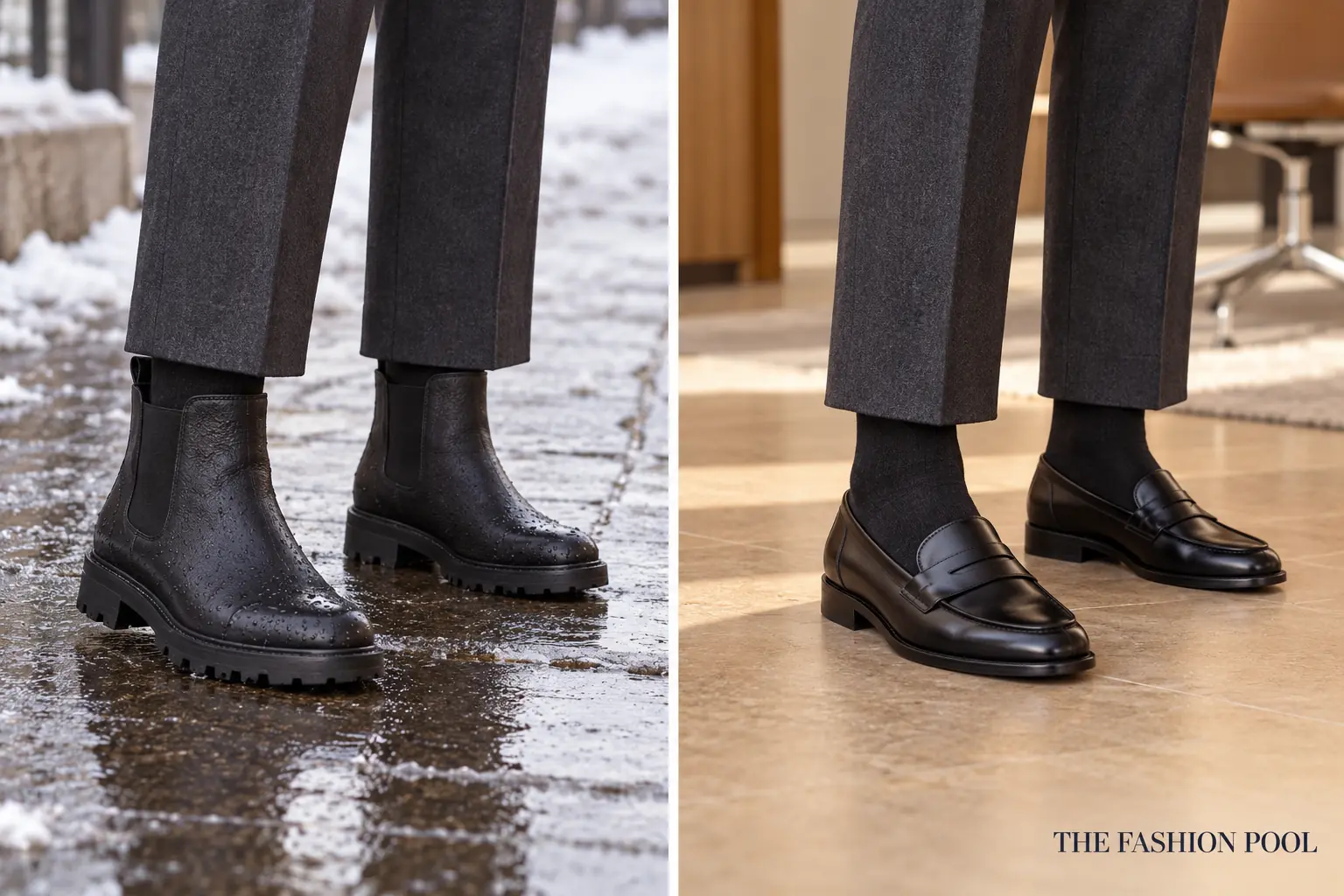
A simple knit or woven midi dress provides a one-piece option for presentations or busy mornings. For shoes, separate the indoor and outdoor jobs when winter conditions demand it. Loafers, flats, or low pumps can stay at work; weatherproof ankle or tall boots can handle the commute. One pair does not have to solve every situation.
Outerwear and small accessories
Choose a coat that closes over the blazer or cardigan you will actually wear. Add a scarf, gloves, warm socks, and a work bag that can hold an indoor shoe swap if needed. The broader planning method in our capsule wardrobe guide can help identify gaps before shopping.
Four Repeatable Cold-Weather Work Formulas
| Situation | Indoor outfit | Commute additions |
|---|---|---|
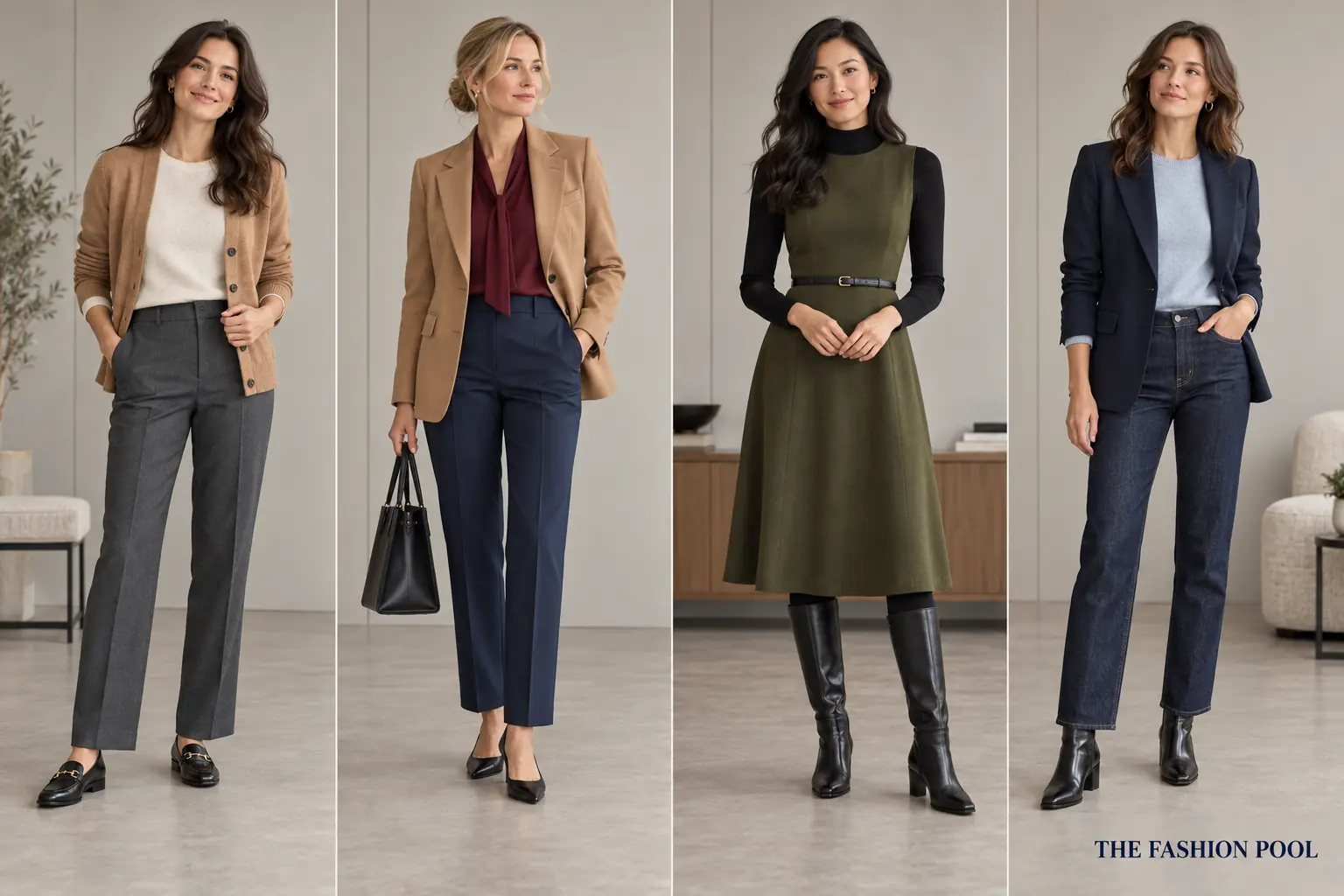
| Regular office day | Fine-knit crewneck, straight trousers, and cardigan | Wool coat, scarf, and weatherproof ankle boots |
| Client meeting | Blouse, second neutral trousers, and blazer | Structured coat and commute boots; change into loafers indoors |
| Presentation day | Mock neck beneath the midi dress with a belt if desired | Long coat, tights, and tall boots suited to the forecast |
| Casual Friday | Dark jeans, fine knit, and blazer when denim is allowed | Insulated coat and clean weather-ready boots |
These formulas work because every commute layer can come off without leaving an unfinished outfit. Repeat the same trouser with another top, swap the blazer and cardigan, or use the dress with either layer. The combinations remain useful without claiming that every possible mix will suit every office.
Common Capsule Mistakes to Avoid
Counting pieces instead of checking outfits: a neat row of neutral garments is not useful if the shoes, hems, and layers do not work together. Try each planned formula before removing tags or buying duplicates.
Using only heavy knits: several thick sweaters limit temperature control and may not fit under a blazer. Mix fine knits with one warmer option so you can adjust.
Ignoring care and drying time: a capsule needs enough rotation for laundry, spills, and wet commutes. Check care labels and make sure delicate pieces do not create an unrealistic weekly workload.
Forcing one shoe to do everything: indoor polish and outdoor traction are different needs. A desk-side shoe swap can be more practical than compromising both.
Frequently Asked Questions
How many pieces should a winter business-casual capsule contain?
There is no required number. Begin with enough tops, bottoms, and layers to cover your workweek plus realistic laundry timing. The framework above uses three tops, three bottoms, two indoor layers, one dress, footwear, and outerwear, but you can remove or add pieces based on dress code, climate, and how often you repeat outfits.
Can jeans be part of a business-casual capsule?
Only when your workplace permits them. Choose a clean, dark wash without heavy distressing, then pair the jeans with a polished knit, blouse, blazer, and tidy footwear. If denim is accepted only on Fridays, treat it as an occasional option rather than a core bottom. When rules are unclear, ask or observe before building outfits around jeans.
What fabrics work well for a cold office commute?
Fine wool or wool blends, compact knits, ponte, lined woven fabrics, and suitable technical base layers can provide warmth without excessive thickness. Fabric performance varies by construction and care, so check labels and comfort. For wet or windy travel, let the outer layer provide weather protection instead of expecting an office blazer or delicate knit to do that job.
Do all capsule wardrobe colors need to be neutral?
No. Neutrals make mixing easier, but a coordinated color can be just as repeatable. Try one accent across a blouse, knit, scarf, or bag while the larger pieces share two or three base colors. The useful test is whether the accent works with several bottoms and both indoor layers, not whether it follows a minimalist palette.
How do I stay warm without looking bulky at work?
Place warmth where it can be removed: use a smooth base, one insulating mid-layer, and a coat designed for outdoor conditions. Avoid stacking several stiff or oversized pieces at the shoulders. Our winter layering guide offers additional proportion ideas that can be adapted for any height.
Should winter boots stay on all day at the office?
They can if they are comfortable, dry, clean, and appropriate for your workplace. However, insulated or wet boots may feel uncomfortable indoors and can look too casual for some offices. Keeping loafers, flats, or another approved pair at work protects the indoor outfit while allowing the commute shoe to prioritize warmth, water resistance, and traction.
Conclusion
A useful cold-weather business-casual capsule wardrobe separates the polished indoor outfit from the protective commute layers. Start with your workplace rules, weather, and office temperature; then choose coordinated tops, bottoms, layers, and footwear that perform specific jobs. Test complete outfits, not isolated pieces. The result is a flexible work wardrobe that stays professional indoors and practical on the way there.