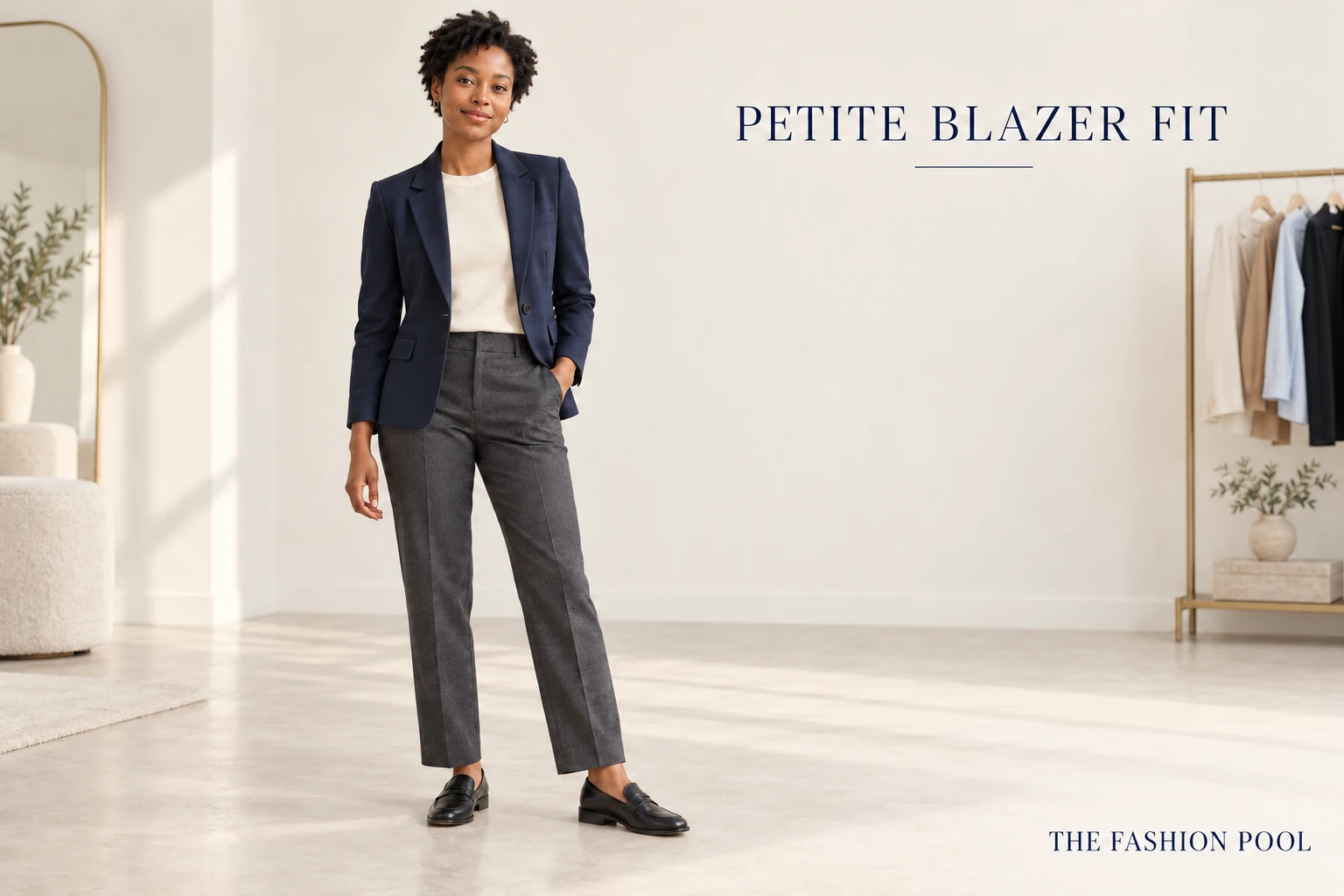
Petite Blazer Fit: Shoulders, Sleeves and Length
A blazer can fit across the bust yet leave the sleeves over your hands or the waist shaping too low. Petite blazer fit depends on how the jacket is proportioned, not simply whether its label has a P.
Use the checks below over the clothes you actually plan to wear. Separate comfort and construction from your preferred silhouette: a cropped jacket and a roomy longline blazer can both fit well.
Petite Blazer Fit: The Quick Check
Start with comfortable shoulders, upper arms and chest, then assess sleeve length and body length. Move before deciding. If the collar shifts sharply, the front pulls or reaching feels restricted, compare another size or cut before planning alterations. Choose the hem for your outfit rather than a universal height rule.
Key Takeaways
- Compare petite and regular cuts when proportions seem misplaced.
- Test the blazer over your intended shirt or knit.
- Judge a dropped shoulder against the design, not a tailored-jacket rule.
- Ask about alteration feasibility before committing to a purchase.
Understand What Petite Sizing Changes
Petite does not mean a smaller bust or one body shape. In its petite fit guide, Anthropologie describes adjusted jacket proportions including shorter bodies, shorter sleeves and higher armholes. Those are that retailer’s design explanations, not measurements guaranteed across every brand.
If regular sleeves run long but the torso feels right, petite may solve one problem while creating another. Compare the same style in both ranges where possible. Read the size chart for body measurements; check separate garment measurements for actual jacket length. Do not compare a shoulder-to-cuff sleeve measurement with one taken from the center back.
Check the Blazer at Rest and in Motion
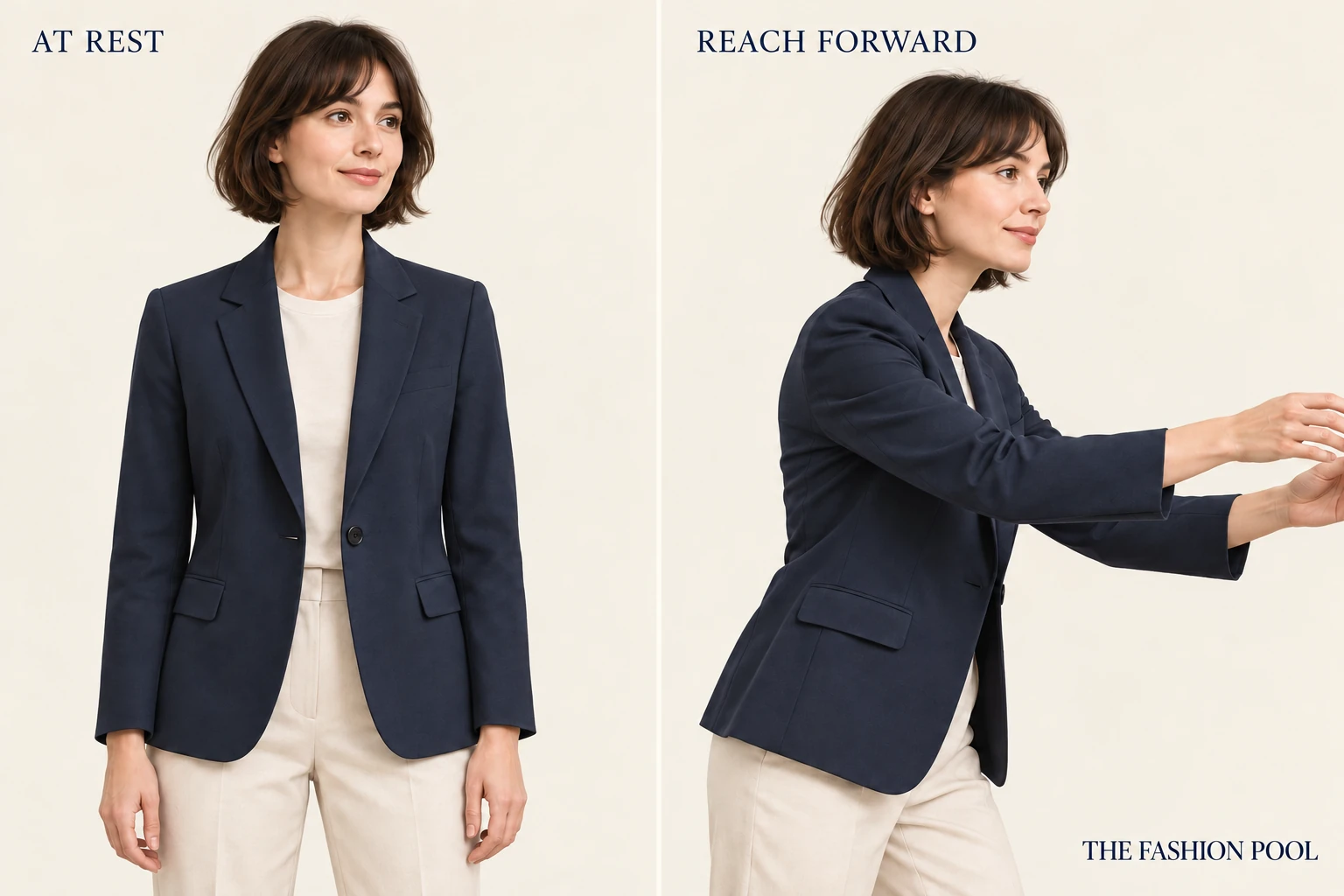
Wear your intended underlayer, settle the jacket naturally and relax your arms. For a conventional set-in sleeve, use a seam near the shoulder edge as a starting reference. Deliberate extended shoulders can sit farther out; they still need to feel stable and allow movement.
- Look front and back. Check whether the collar rests comfortably and the lapels lie without persistent buckling. Examine strong pulling lines rather than expecting every crease to disappear.
- Close it as intended. Fasten the working front button if you will wear it closed. A pronounced X-shaped pull suggests comparing more room or different shaping; it does not identify one cause by itself.
- Reach and sit. Reach toward a desk, bend your elbows and sit down. Some folds and sleeve movement are normal. Binding, painful pressure or constant readjustment are reasons to reconsider.
If a thin tee works but your sweater makes the upper arms tight, change the layer or jacket cut. An open front does not resolve restricted sleeves. For a cold-weather outfit, our petite winter layering guide explains how to leave room between garments.
Set Sleeve Length for the Design
For a full-length tailored sleeve, the wrist area is a useful starting point when your arms hang naturally. A bracelet sleeve intentionally ends higher; an oversized sleeve may intentionally cover more of the hand. Decide whether that length suits typing, eating and carrying a bag.
Push sleeves up only if they stay comfortably in place. If you keep resetting them, compare another length instead of treating the styling trick as a fit solution. Look inside the cuff before requesting alterations: lining, vents and working buttonholes can affect what is practical.
Compare Cropped and Longline Blazers With Your Outfit
Choose length while wearing the pants, skirt or dress you expect to pair with the jacket. Take a full-length view, then sit and walk. You are checking garment interaction and coverage, not trying to correct your height.
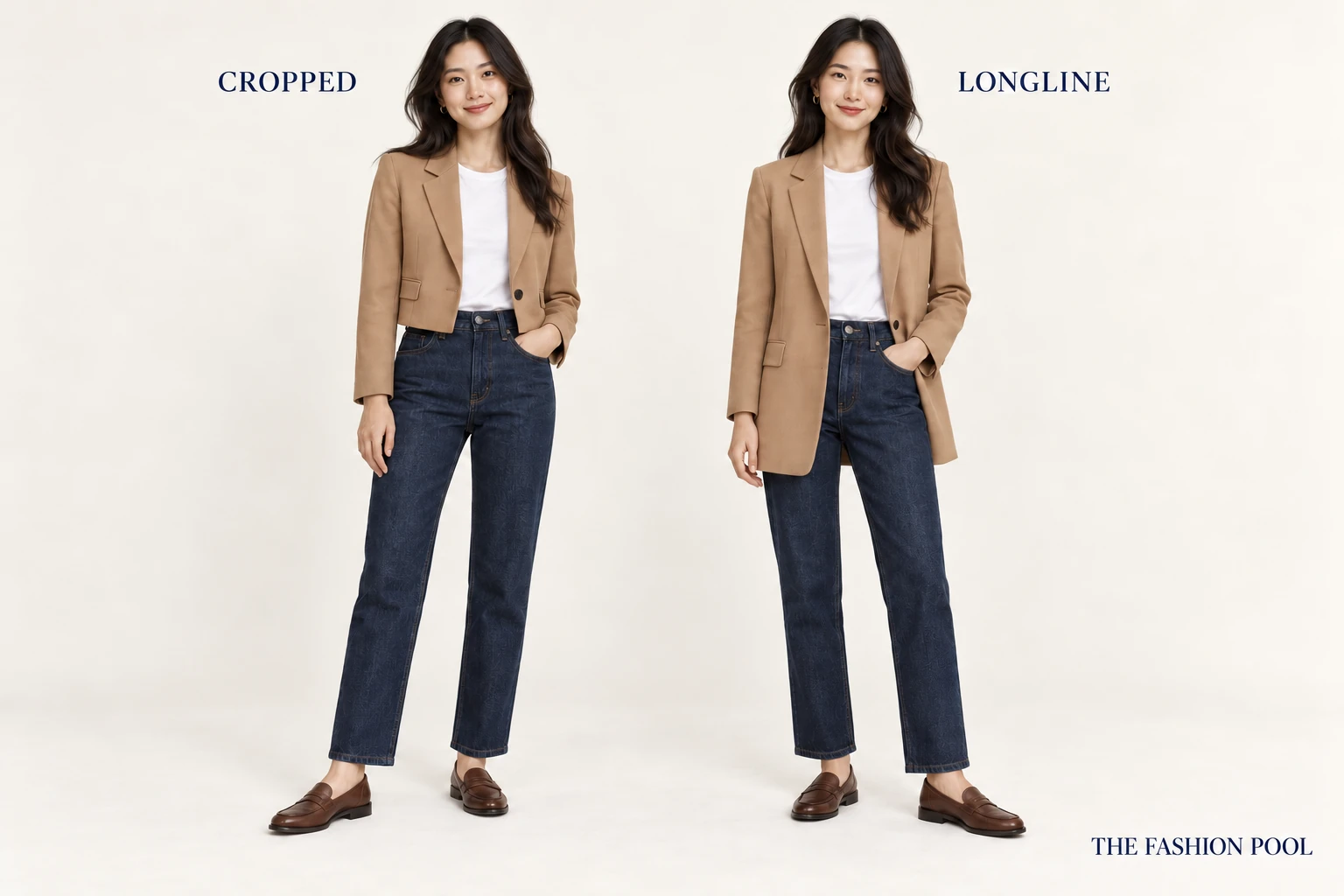
| Cut | Try it with | Check before choosing |
|---|---|---|
| Cropped or upper-hip | Camel blazer, white tee, dark straight jeans and brown loafers | Does the tee remain covered when reaching? Do the blazer hem and waistband meet comfortably? |
| Longline | The same tee, jeans and loafers under an open upper-thigh blazer | Does the hem hang freely over the hips? Do the pockets and button position look deliberate? |
The shorter version shows more of the jeans; the longer version gives extra coverage and a different outline. Neither requires heels. With wide-leg denim, compare the jacket’s volume and opening against the examples in our wide-leg jeans styling guide. Roomy jeans and a roomy blazer are a valid choice when you like the outline and both pieces move comfortably.
Choose a Different Cut or Consider Alterations
Identify the change you need before committing to a jacket or an alteration. Sumissura’s women’s suit alteration guide identifies shoulder alterations as complex. Treat major shoulder or armhole problems as reasons to compare another jacket first, rather than assuming every fit issue is a simple repair.
If the shoulders and movement work but sleeves are long, ask a tailor to assess the cuff construction. If the waist shaping sits too low, shortening only the hem will not move it upward. Ask whether the proposed change preserves pocket spacing, vents and the intended silhouette; get a garment-specific quote.
Avoid sizing down solely to shorten a blazer: that also changes room through the body. Once fit works, build combinations from your existing pieces using our cold-weather business-casual capsule guide.
Frequently Asked Questions
Can I wear regular-size blazers if I am petite?
Yes. Your arm length, torso and preferred silhouette may suit a regular cut. Compare where the collar, shoulders, sleeves and shaping sit rather than choosing by height alone. If only the sleeves need adjustment, ask about that specific construction before deciding whether the jacket is worthwhile.
How do I distinguish oversized design from poor fit?
Look at the intended shape, then test comfort and stability. An oversized blazer can have extended shoulders and generous body room while its collar stays comfortable and its sleeves allow movement. If the jacket continually slips, binds or needs repositioning, compare another size or pattern rather than accepting discomfort as part of the style.
Should a blazer close even if I usually wear it open?
For a conventional button-front blazer, closing it is a useful diagnostic check. It helps reveal tension across the chest and waist. Your preferred open silhouette can still guide the decision, and intentionally open-front designs are different. Regardless of fastening, the upper arms and back need enough room for ordinary movement.
What if the shoulders fit but the bust feels tight?
Compare another cut with more room or different shaping through the chest. Sizing up may help, but check what happens to the shoulders and armholes. Do not force the button or rely on stretching the fabric. A tailor can assess options, but the available seam allowance and construction limit alterations.
Can petite women wear double-breasted blazers?
Yes. Try the jacket both fastened and open if you expect to use both versions. Check whether the overlapping front lies comfortably and whether the lapels and button placement suit the look you want. Double-breasted construction does not require a particular height, bust size or shoe heel.
Should I size up to wear a sweater underneath?
Try the actual sweater first. You may need a roomier sleeve or a different jacket cut rather than a larger size everywhere. Check the back and upper arms while reaching, then inspect how the blazer sits over a thinner top. Choose for the combination you will use most.
Conclusion
Good petite blazer fit starts with comfortable movement, then sleeves and a length that works with your clothes. Compare cuts before assuming you need alterations. Choose one jacket, test it over your intended layer and judge the full outfit while standing, sitting and reaching.