Winter Layering for Petite Women: A Practical Guide
Winter layering for petite women works best when every piece has a clear job: a smooth base, one insulating middle layer, and weather-ready outerwear. The aim is not to make a petite body look taller or smaller. It is to keep several garments from competing at the same point.
You do not need cropped everything or high heels. Choose one place to define the silhouette—perhaps the waist, wrist, ankle, or coat opening—and let the other layers provide warmth.
Quick Answer: Use Three Functional Layers and One Clear Proportion
Start with a smooth base, add one warm middle layer, and finish with a coat that closes comfortably. Then create one visible line: tuck the inner top, show a cuff, open the coat indoors, or repeat one color from top to shoe.
For genuinely cold, wet, or windy conditions, function comes first. REI’s layering guide separates clothing into moisture-management, insulating, and weather-protective roles. The National Weather Service recommends checking the forecast and dressing for outdoor conditions. Style only after the outfit meets your warmth needs.
Build Warmth Without Stacking Too Much Fabric
The problem is often not the number of garments but where their thickness collects. A chunky sweater, oversized blazer, and padded coat may restrict the shoulders and create several bulky edges.
Choose a base that disappears under the outfit
A fitted tee, thin turtleneck, or smooth thermal adds warmth without changing the garment above it. Check that its neckline, cuffs, and hem stay in place. If it rolls or bunches, try a longer body or softer fabric rather than sizing down.
Use one main insulating layer
Choose a fine-gauge sweater for an office, a cardigan for adjustable indoor warmth, or a compact fleece for a casual day. If it has a dramatic collar, balloon sleeve, or cable texture, keep the coat simpler and roomy in that area.
Let the coat solve the weather problem
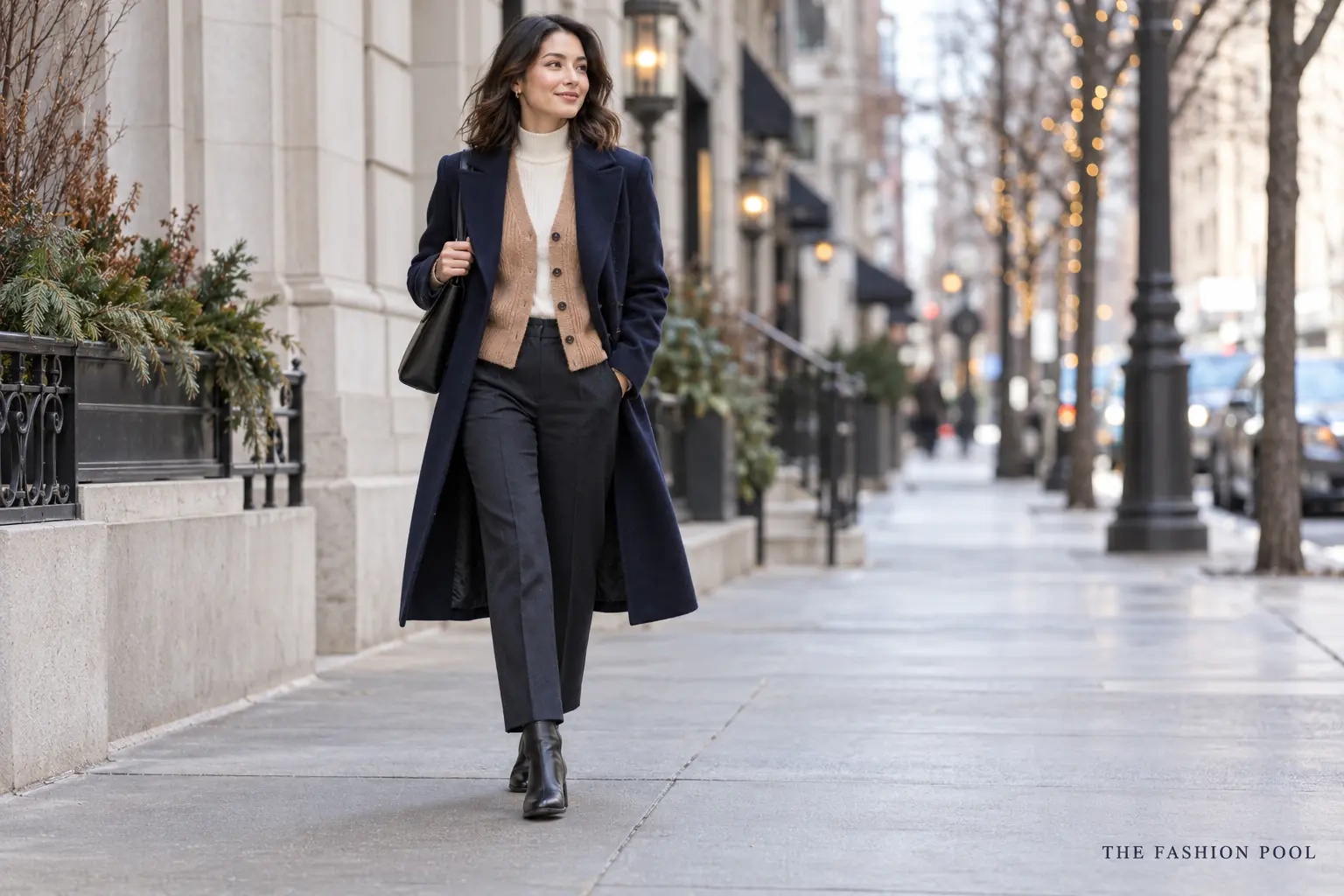
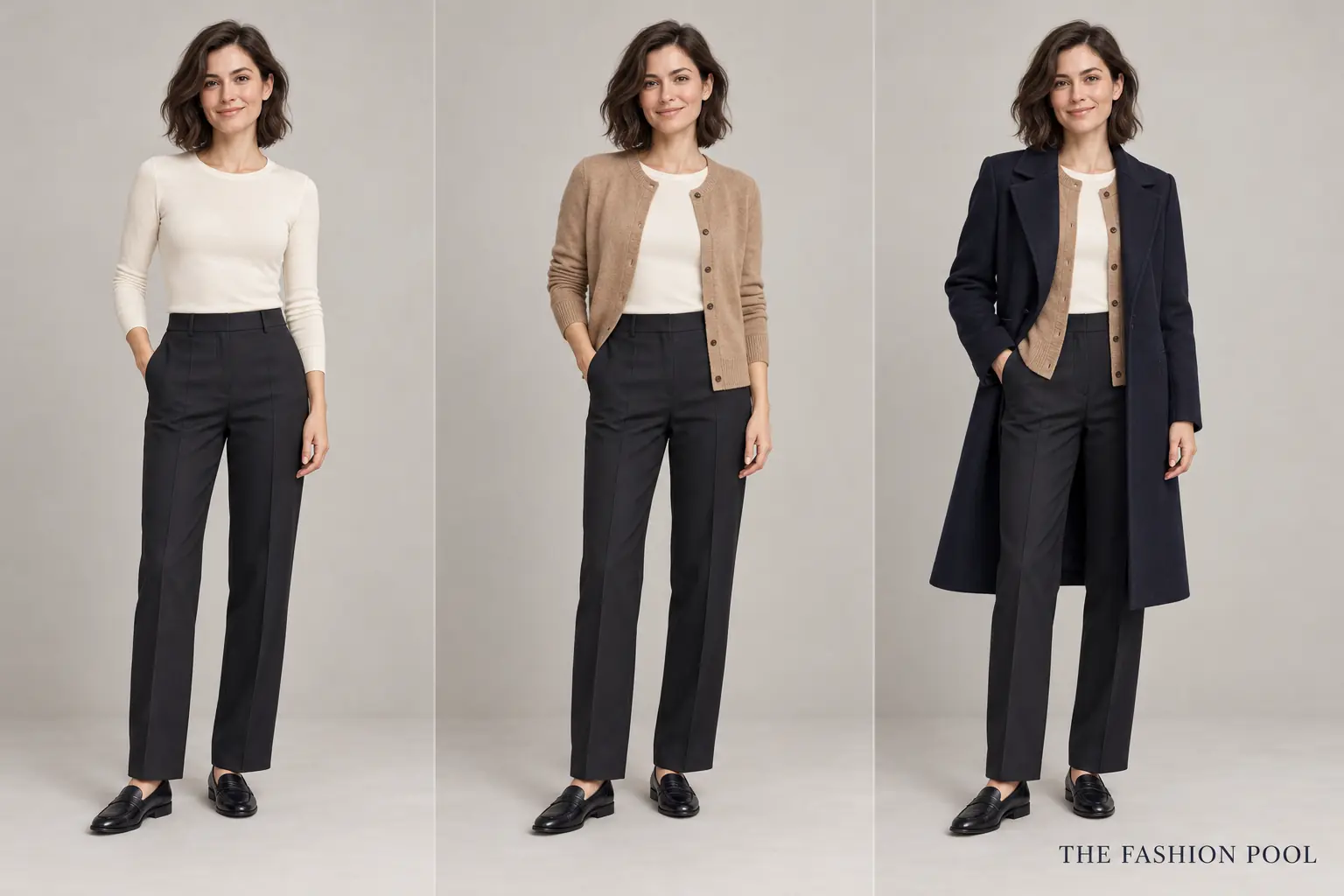
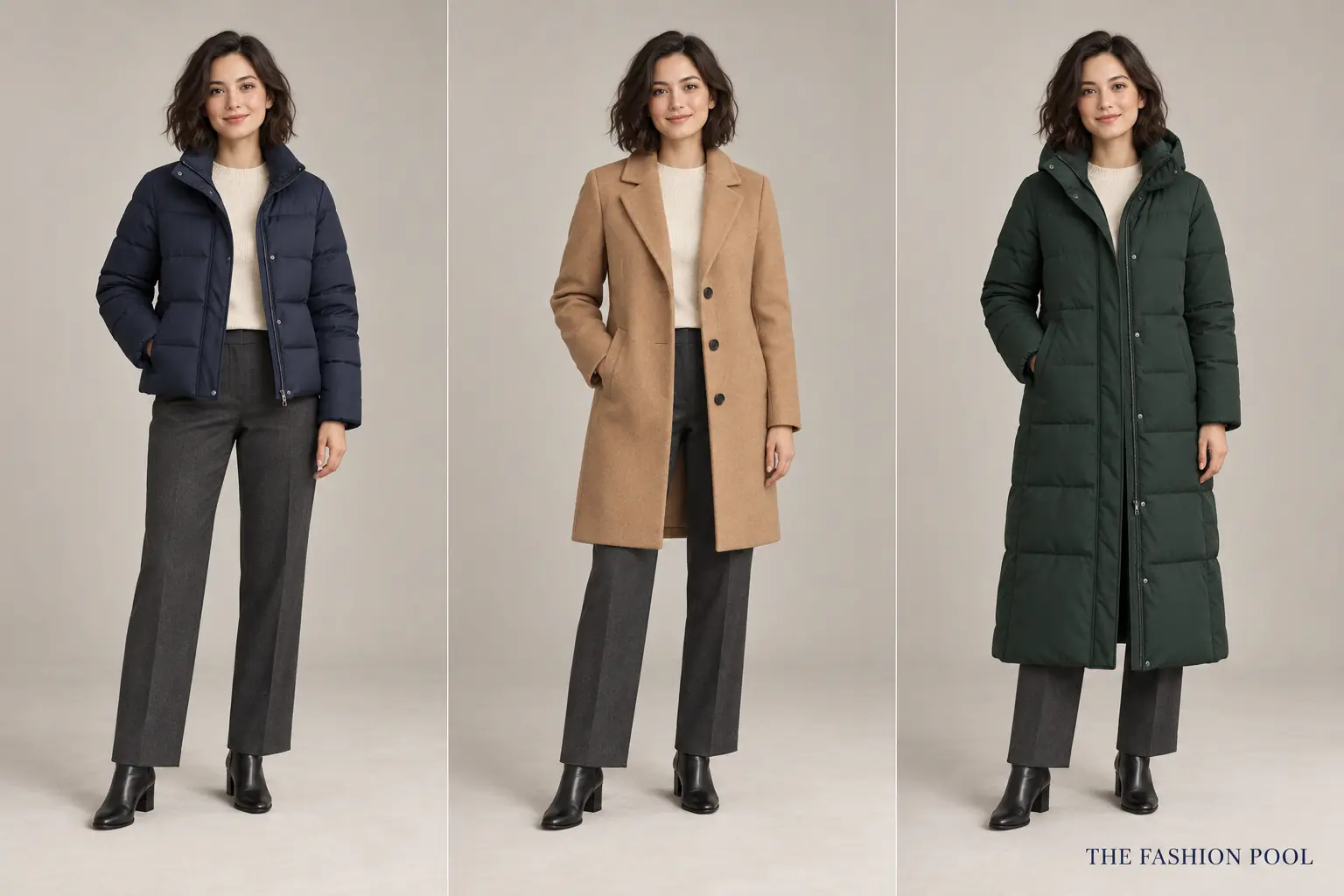
A coat should close without compressing the knit. A short puffer shows more of the leg line; a knee-length coat creates a clean frame; and a long insulated coat provides coverage. None is automatically best. Check shoulder fit, hand movement, and whether the hem suits your routine.
Control Proportion at the Edges of Each Layer
Layer lengths read best when they look deliberate. If a sweater hangs below a cropped jacket, show that contrast confidently or choose closer hem lengths. A narrow accidental strip between two strong hems can feel unfinished.
- At the waist: try a full tuck with thin knits, a small front tuck with softer sweaters, or a cardigan that ends near the waistband.
- At the wrist: push up a blazer sleeve slightly or let a fine-knit cuff show below a coat. This adds definition without removing warmth from the core.
- At the ankle: avoid bunching where pants meet boots. Tailoring, another boot shaft, or a shorter pant can create a cleaner meeting point.
- At the neckline: keep one dominant shape. A crewneck under a collared coat is simple; a scarf can supply the focal point when the rest is quiet.
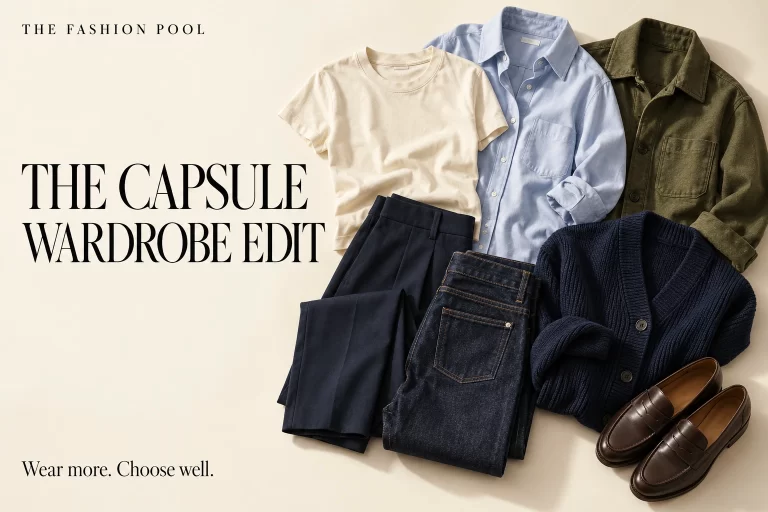
If you are building a smaller closet, the neutral base pieces in our capsule wardrobe guide can make these combinations easier to repeat.
Petite Winter Layering Outfit Formulas
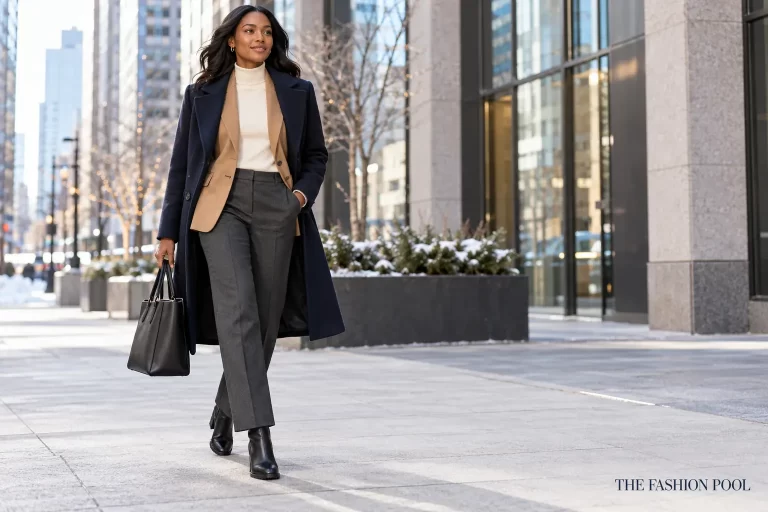
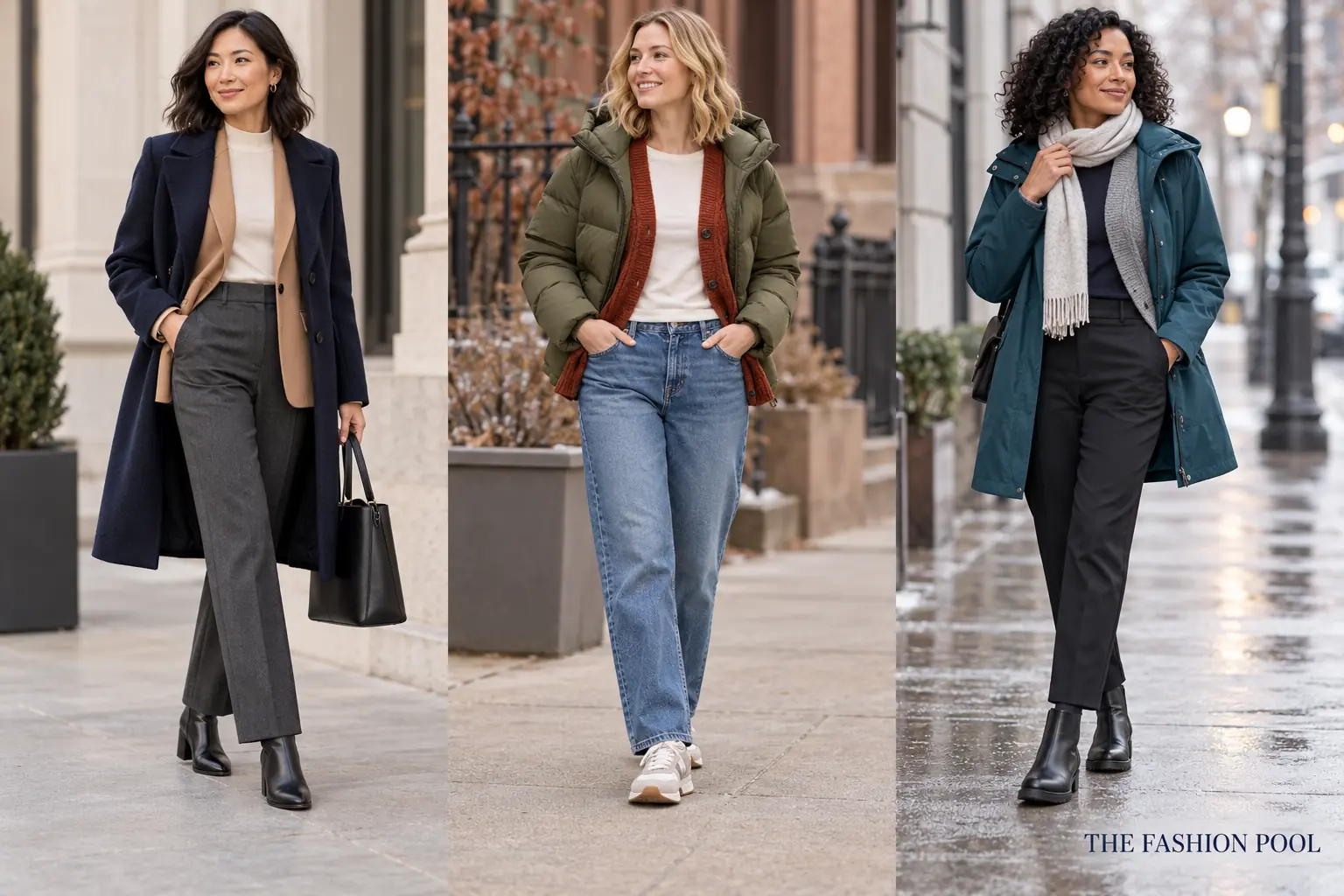
Office: fine knit, straight trousers, blazer, and long coat
Begin with a thin mock neck and straight or gently wide trousers. Add a single-breasted blazer and knee-length coat. Keeping the blazer and trousers close in color creates a calm inner column. Loafers work indoors; weatherproof ankle boots are more practical outside. Store indoor shoes at work if snow makes one pair unrealistic.
Weekend: fitted tee, cardigan, jeans, and short puffer
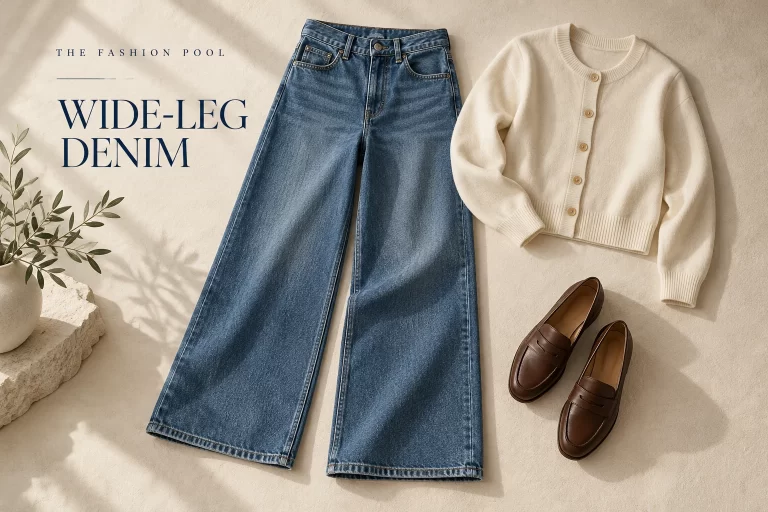
Pair a smooth tee with a hip-length cardigan, relaxed jeans, and a short puffer. Button the cardigan at the center or leave it open. With wide-leg denim, decide the shoe before adjusting the hem. Our wide-leg jeans formulas explain balance, while the winter footwear guide covers boot shafts and wet weather.
Wet commute: thermal top, compact knit, dark pants, and rain-ready shell
Use a moisture-managing base, compact knit, and trousers that stay clear of puddles. Add weather-ready outerwear and shoes with useful traction. A charcoal, navy, or olive base keeps the outfit cohesive; a lighter scarf or bag adds contrast. Weather protection matters more than preserving a delicate hemline.
Dinner: lightweight turtleneck, midi skirt, tall boots, and belted coat
A thin turtleneck under a midi skirt leaves room for a coat. Tall boots reduce the exposed gap, and a coat belt can define the silhouette. If the skirt and coat are both full, choose a softer skirt or wear the coat open indoors.
Common Layering Mistakes and Easy Fixes
Buying the coat for a thin outfit: try it over the sweater or blazer you will actually wear. A coat that cannot close or allow arm movement is not a useful layering piece.
Using multiple statement volumes: let one item lead. Pair an oversized scarf with a simpler coat, or a dramatic puffer with a quieter knit and straight pants.
Following a height rule: petite bodies vary in torso, rise, shoulder, and leg proportions. Step back, sit, reach, and walk. Comfort and clean garment interaction matter more than a rigid coat-length rule.
Ignoring the indoor outfit: plan what remains after the coat comes off. A base plus middle layer should still feel complete at work, in a restaurant, or on public transit.
Frequently Asked Questions
Can petite women wear long coats?
Yes. A long coat can create a clean outer line and provide valuable coverage. Look for a shoulder fit that stays in place, sleeves that do not cover your hands, and a hem that does not interfere with stairs or wet ground. Petite sizing or alterations may help, but the best length depends on your proportions, climate, footwear, and daily movement.
How many layers should a petite winter outfit have?
There is no fixed number. A base, one insulating layer, and outerwear is a useful starting system, but mild weather may need fewer pieces and severe conditions may need more specialized protection. Decide by forecast, activity, and personal comfort. Visually, several thin functional layers often feel easier than two stiff, oversized layers competing at the shoulders and hips.
What sweater shapes work well under winter coats?
Fine-gauge crewnecks, mock necks, and cardigans are easy to layer because they add warmth without excessive thickness. Chunky sweaters can also work when the coat has enough room through the shoulder and sleeve. If both pieces are bulky in the same area, choose a smoother knit, a simpler sleeve, or a roomier coat instead of forcing the combination.
Do petite women need to define the waist when layering?
No. Waist definition is one styling option, not a requirement. You can create structure through a visible wrist, a clean coat opening, a repeated color, or a deliberate pant-and-shoe connection. Some outfits feel better with a tuck or belt; others work through an uninterrupted straight silhouette. Choose the point of definition that suits the clothes and your comfort.
How can I layer over wide-leg jeans without looking overwhelmed?
Start by setting the jeans’ hem for the intended shoe. Then use a base layer that sits smoothly at the waistband and choose one clear outerwear shape, such as a short puffer or a straight knee-length coat. The aim is not to minimize your body; it is to prevent fabric from bunching at the waist, ankle, and coat hem all at once.
What colors make layered winter outfits easier to coordinate?
A small palette is helpful but does not have to be monochrome. Try two neutrals plus one accent, or repeat one color in the knit and shoe while the coat contrasts. Similar values—such as charcoal, navy, and deep green—create a subtle blend. Cream, rust, red, or icy blue can then provide a clear focal point through one accessory or layer.
Conclusion
Successful winter layering for petite women is practical coordination: give each garment a function, manage thickness where pieces overlap, and create one deliberate proportion. Start with the forecast and your comfort, then adjust hems, cuffs, color, or coat shape. The result should feel warm, mobile, and recognizably yours.