How to Style Wide-Leg Jeans: 5 Wearable Outfit Formulas
Wide-leg jeans can feel easy to wear until you start choosing a top, jacket and shoes. A roomy leg changes the outline of an outfit, and the same pair can look casual, softly tailored or ready for dinner depending on what surrounds it.
This guide explains how to style wide-leg jeans with five practical outfit formulas, plus checks for hems, layers and comfortable movement. Start with a pair you already own. The goal is to understand your options before buying another top or deciding that the silhouette does not work for you.
How to style wide-leg jeans: start with length and shape
Choose shoes first, check that the jeans clear the ground, then decide where your top should end. A tucked tee, a waist-length cardigan or a longer shirt worn open can each work. Finish with a layer that leaves room for your arms and a color repeated elsewhere in the outfit. You do not need heels or a tight top to wear wide-leg denim.
Key Takeaways
- Judge the hem with the shoes you will actually wear, including when you walk.
- A visible waistband is one styling option; an open layer or intentional loose silhouette offers another.
- Use garment length, fabric thickness and color repetition to make combinations feel connected.
- Adapt the formulas to your weather, comfort and dress code rather than copying every accessory.
In this guide
- Check the jeans before styling
- Five outfit formulas
- Match the hem to your shoes
- Adjust a combination that feels awkward
- Frequently Asked Questions
Check the jeans before styling
Wide-leg describes the leg shape, not a single waistband height or fit through the seat. The Levi’s women’s jeans guide, for example, lists wide-leg cuts with different rises, thigh fits and stretch specifications. Use that distinction when comparing garments: a wide hem does not tell you whether the waist or hips will feel comfortable.
Try sitting, bending and taking a normal stride. Check whether the waistband stays comfortable without relying on a tightly pulled belt. If the waist gaps while the hips feel right, compare another cut or ask a tailor about the specific adjustment. Sizing down may make the seat less comfortable without solving the mismatch.
Notice the fabric in your own pair. Hold the leg away from your body and let it fall. Does it keep a defined outline or settle into soft folds? That observation is more useful for styling than assuming every denim blend behaves alike. A structured pair can give a soft knit some contrast; a fluid pair can sit comfortably alongside a relaxed shirt.
If you are also deciding which pieces deserve space in your closet, the capsule wardrobe guide for women explains broader wardrobe planning. Here, keep the decision smaller: one pair of jeans, the shoes you need today and a top that feels good with both.
Five wide-leg jeans outfit formulas
These are styling examples, not lists of products to buy. Each formula uses a different relationship between the top, denim and footwear. Substitute comparable pieces from your wardrobe and keep the part that makes the combination useful.
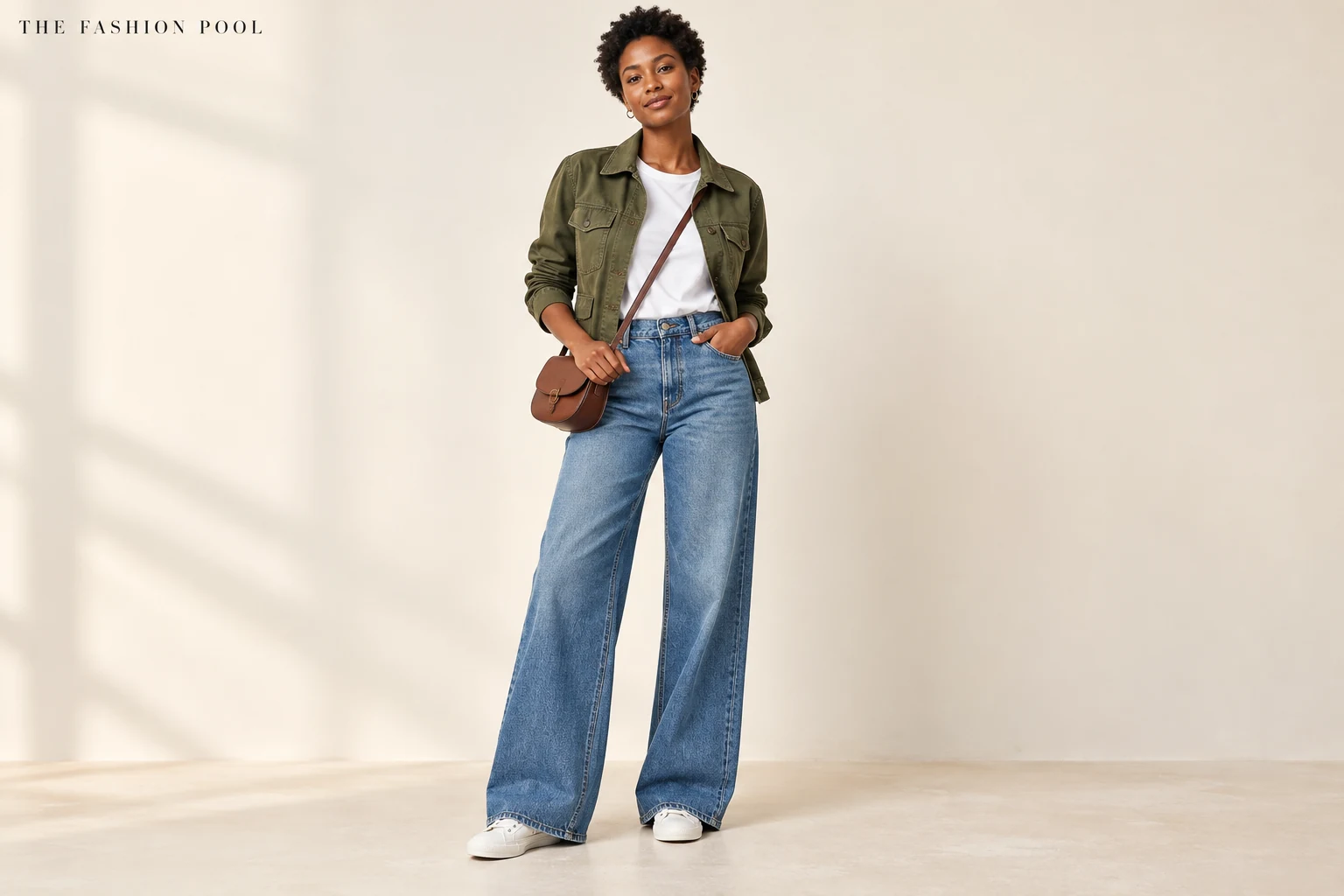
1. White tee, olive jacket and sneakers
The combination: medium-blue wide-leg jeans, a white crewneck tee, an open olive upper-hip-length utility jacket and white low-profile sneakers. A brown crossbody bag adds a warm accent without introducing another large block of color.
The tee gives the outfit a simple center; the jacket supplies pockets, texture and a clear upper edge. Try a small front tuck if you want to show the waistband. If tucking feels restrictive, let a tee that ends near the waistband hang naturally. Choose the version that allows you to sit comfortably.
Keep the jacket open when you want the white tee to remain visible. This creates a light vertical area between the olive panels, even without a fitted base layer. In mild weather, remove the jacket rather than adding an unnecessary layer. For wet conditions, switch to suitable footwear and reassess the hem; the illustrated sneakers are a styling example, not weather protection.
2. Blue shirt, navy blazer and loafers
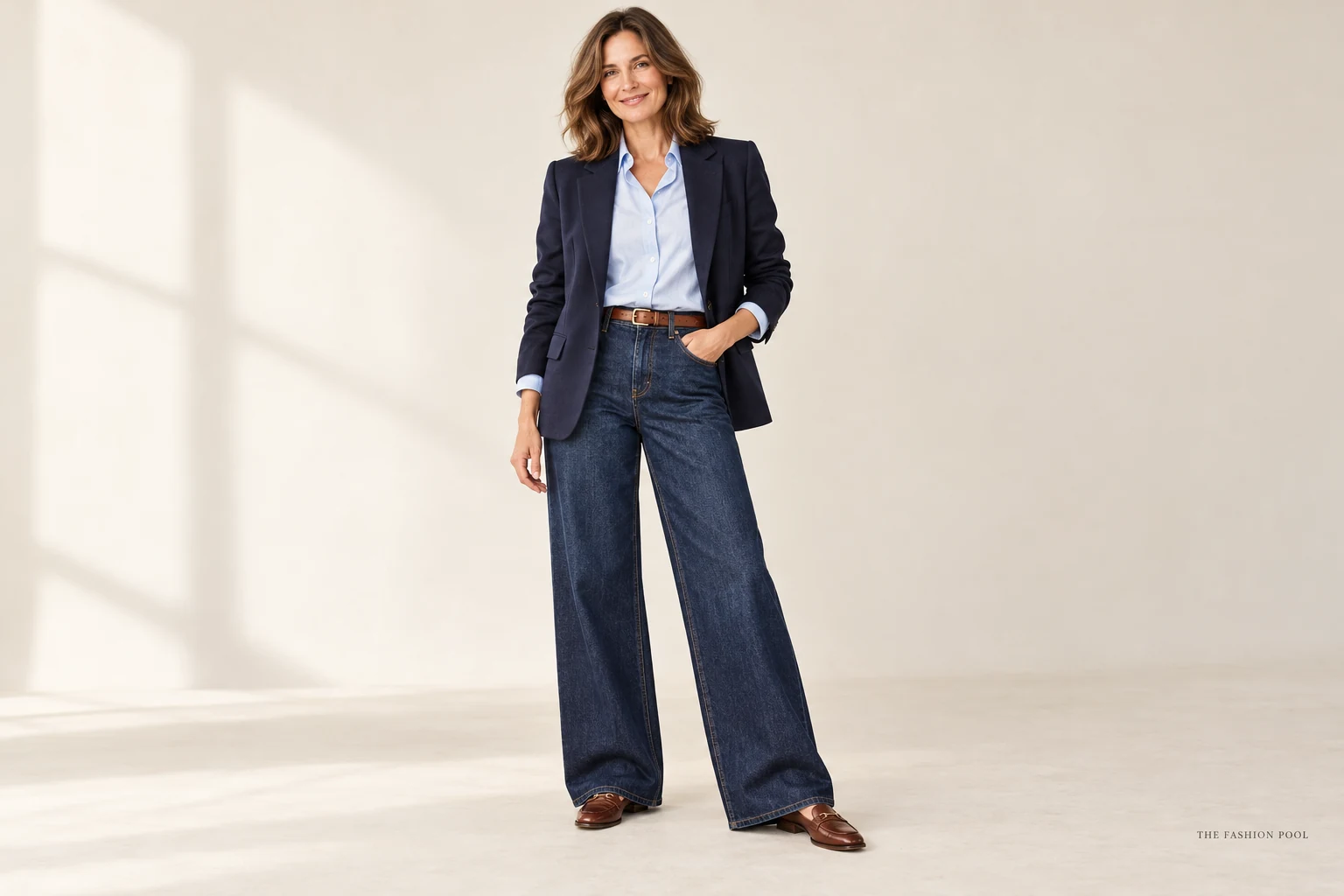
The combination: dark-indigo wide-leg jeans, a pale-blue button-down shirt, a navy hip-length blazer and brown loafers. A simple brown belt can connect the shoes to the waistband if you enjoy that detail.
The two blues make the upper half feel connected, while darker denim keeps the outfit quieter than a heavily faded wash. Tuck the shirt only if it sits smoothly and comfortably. A bulky shirt bunching at the waistband can be replaced with a thinner one or worn with the front loosely tucked.
Check the blazer across the shoulders and upper arms before judging its length. Wear it open if buttoning creates tension. A hip-length blazer can work with roomy jeans: a visible shirt front and a hem that clears the shoes help preserve the separate shapes. This is an option for a workplace that permits denim, not a universal business-casual uniform. Follow your employer’s actual dress code.
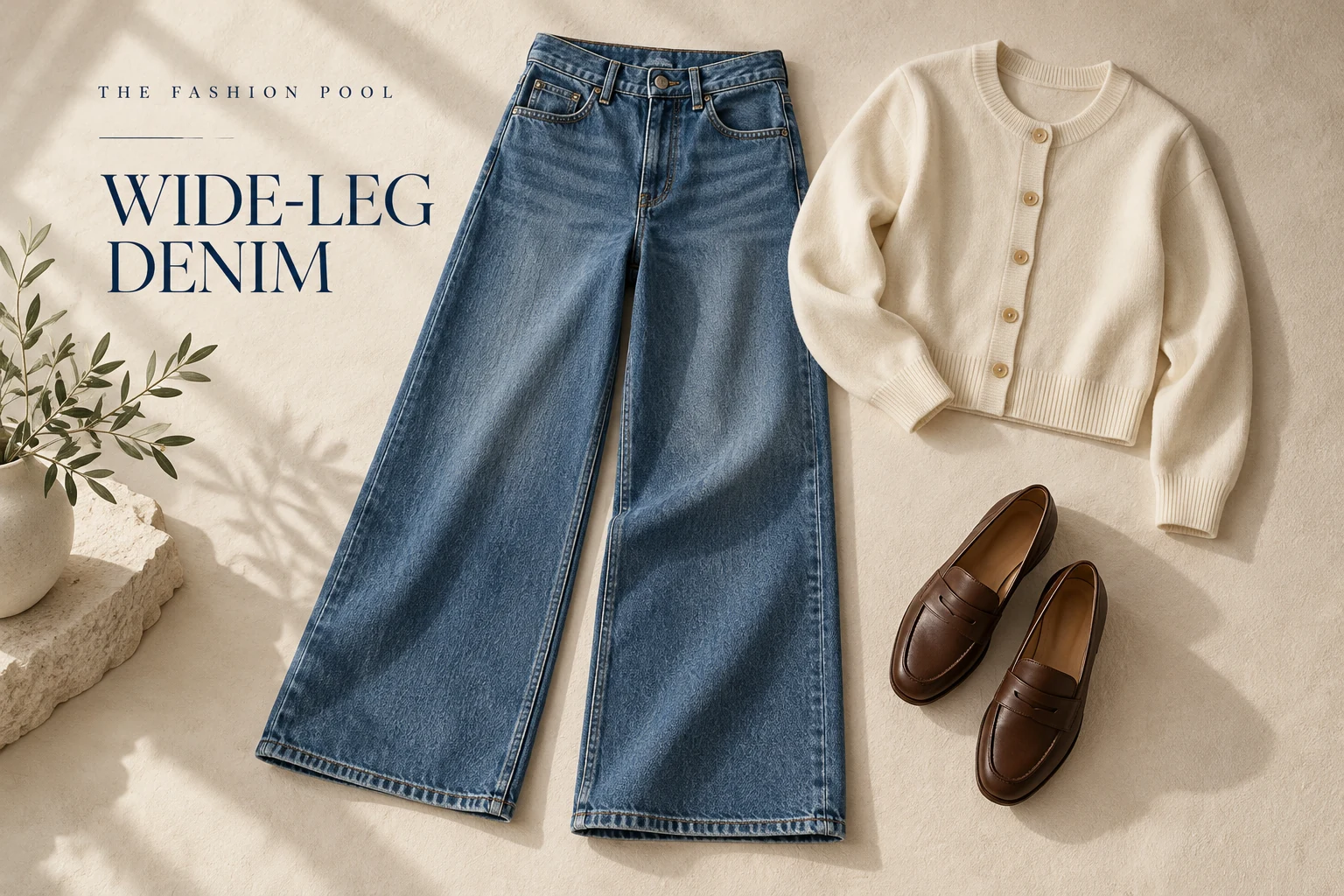
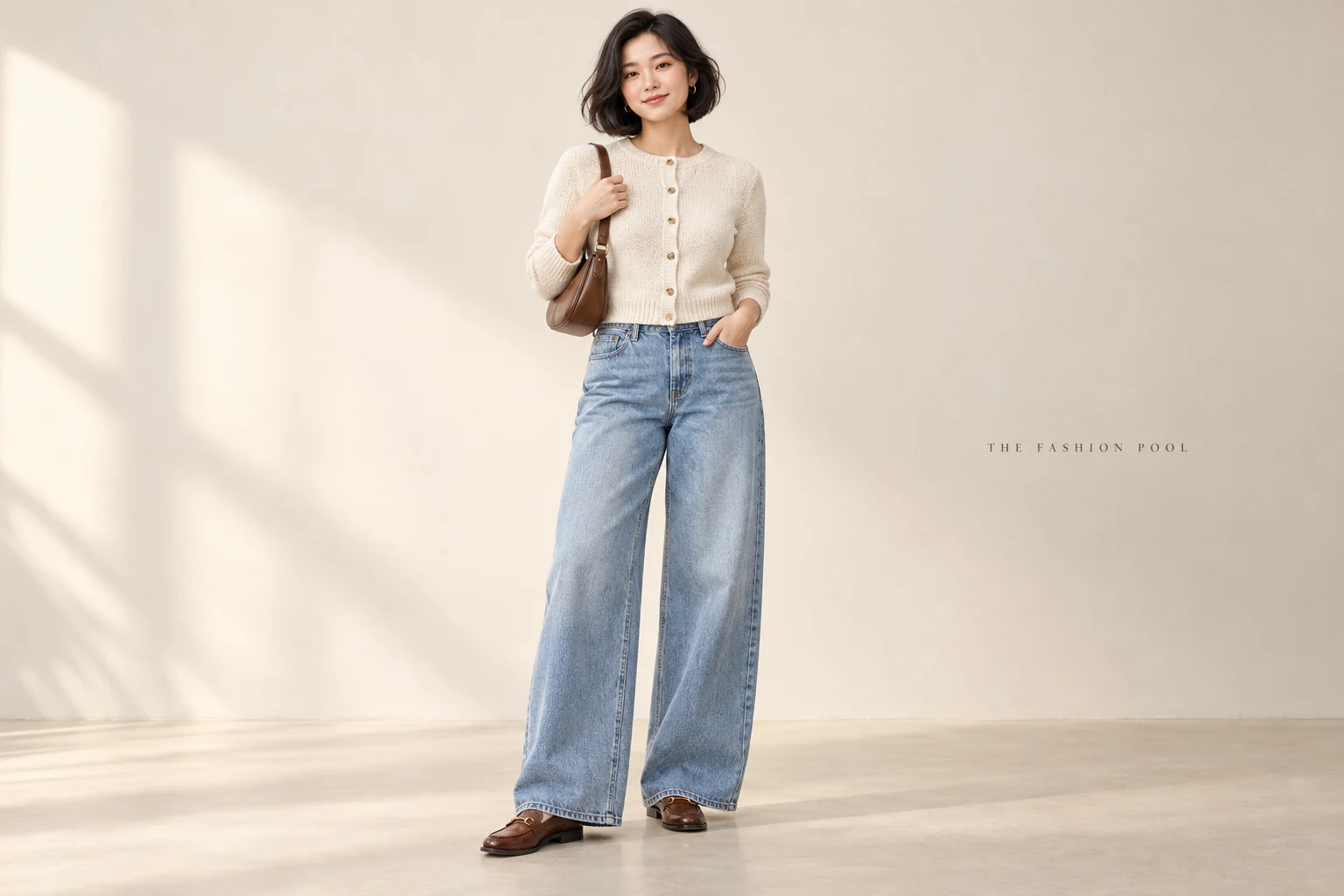
3. Cream cardigan, light-wash jeans and loafers
The combination: light-blue wide-leg jeans, a cream waist-length buttoned cardigan and brown loafers. A small brown shoulder bag repeats the footwear color. Wear a comfortable base layer underneath if you prefer more coverage or the knit feels open between buttons.
Here the cardigan’s length does the work of a tuck. Look for a hem that rests near your preferred waistband position rather than assuming every item labeled cropped will land there. Lift your arms and check whether it still gives the coverage you want. The knit should button without pulling if you intend to wear it closed.
A compact cardigan keeps the outline easy to read while the pale denim adds a softer color contrast. If you prefer a longer sweater, wear it loose and let the jeans fall cleanly underneath; a visible waist is optional. For a cooler day, add a coat with enough space over the knit and remove it indoors. Keep the loafers if they suit the conditions, or change the shoes and check length again.
4. Black satin shirt, dark jeans and pointed flats
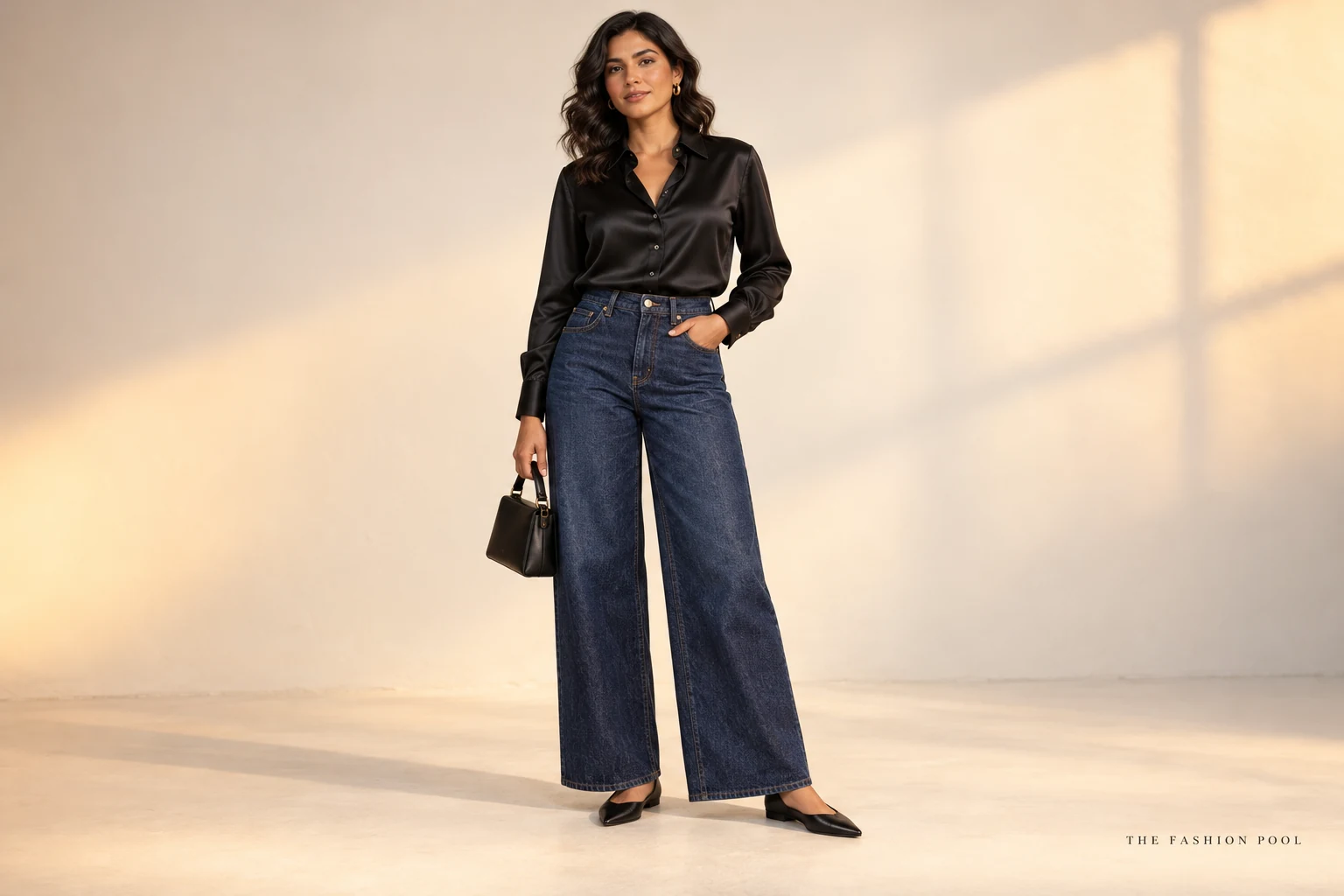
The combination: dark-indigo wide-leg jeans, a black long-sleeve satin shirt, black pointed-toe flats and a small black bag. Simple earrings provide a finishing detail without requiring a heel or an elaborate accessory set.
The shirt’s sheen distinguishes this outfit from the blazer formula. Inspect the particular garment’s fiber label, opacity, drape and care instructions rather than assuming a smooth finish tells you everything about its construction. Choose an opaque shirt or a suitable underlayer for your preferred coverage.
Try the shirt fully tucked, front tucked or loose with sleeves that fit comfortably. A pointed flat can remain visible below the wide hem, but a rounded shoe is equally valid if you prefer it. Select shoes that fit your feet rather than buying a shape solely for the photograph. This combination suits an informal dinner where jeans are welcome; a venue with a formal dress code may call for different clothing.
5. Striped shirt, ecru jeans and brown sandals
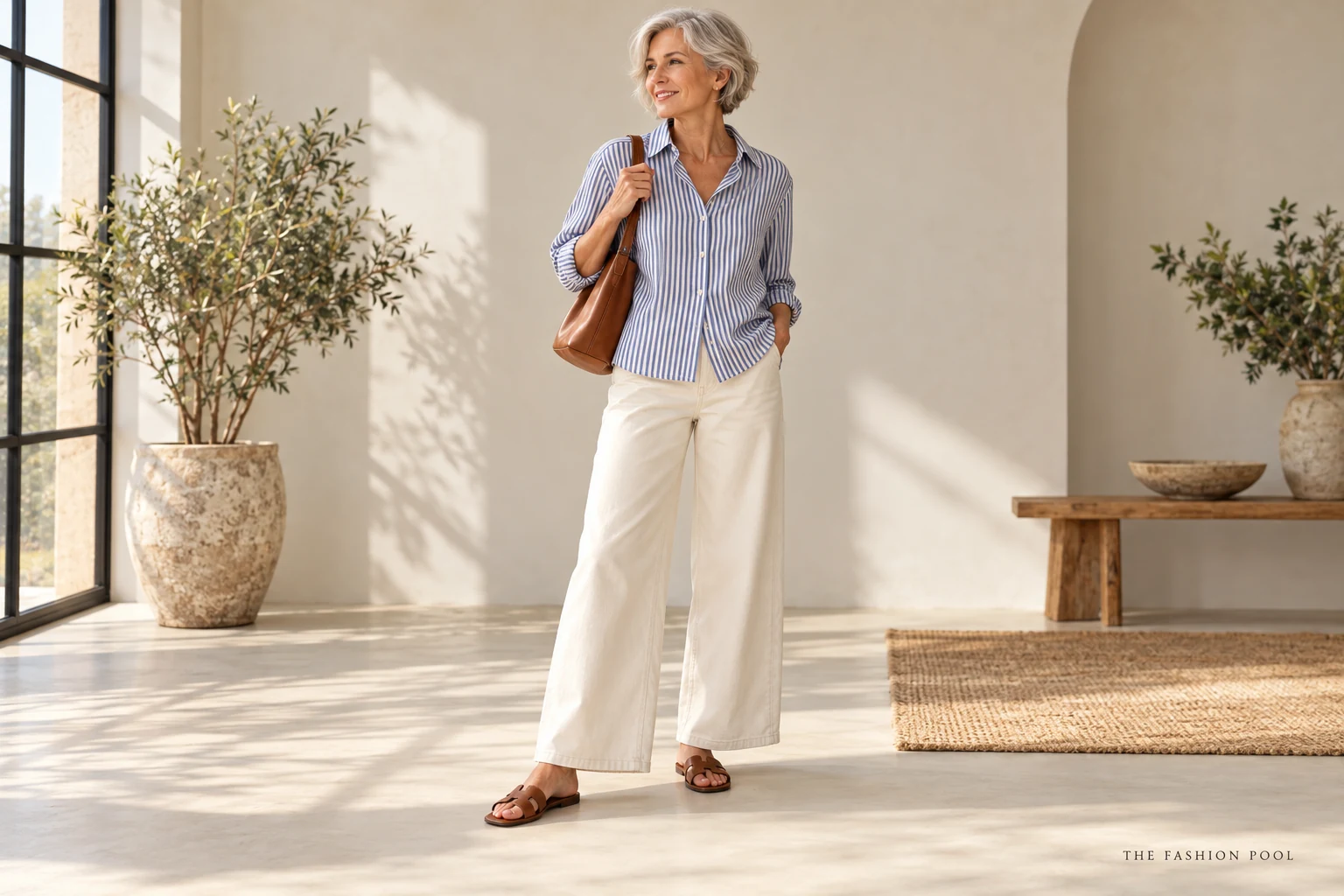
The combination: ecru ankle-length wide-leg jeans, a relaxed blue-and-white striped shirt worn untucked and brown flat sandals. A brown shoulder bag repeats the footwear. The shirt can have long sleeves left down or comfortably rolled for warmer conditions.
This look deliberately keeps volume above and below the waist. The ankle-length hem leaves the sandals visible, while the stripes give the loose shirt a defined pattern. You do not need to reveal the waistband for the outfit to feel intentional. Try a shirt ending around the upper hip before testing a much longer one.
Check light denim in daylight with the undergarments you plan to wear; opacity varies by garment. If sandals are unsuitable for your weather or mobility needs, use comfortable closed-toe shoes and make sure the ankle-length hem sits where you like it. Treat this as a warm-weather option whenever warm weather occurs locally, including spring and summer in Australia and New Zealand.
Match the hem to the shoes you wear most
There is no single correct inseam for every shoe. Full-length jeans can overlap the upper part of a shoe, while ankle-length jeans expose more of it. For everyday practicality, avoid a hem you step on or drag across the ground. Check the back as well as the front: a heel can catch fabric that looked clear while you stood still.
| Footwear | What to check | Possible adjustment |
|---|---|---|
| Sneakers | The back hem clears the sole and ground during a stride. | Try the shoes you use most before choosing an alteration length. |
| Loafers or flats | The opening does not fold under the foot or hide a fit problem. | Compare a shorter inseam or ask about hemming this particular pair. |
| Ankle boots | The jeans fall over the shaft without catching when you walk. | Try a different shaft shape or a roomier leg opening. |
If you alternate between flats and heels, decide which matters most for that pair before making a permanent alteration. Take the intended shoes to a tailor. A pair hemmed for one heel height may drag with a lower shoe; a second length is an option only if your wardrobe needs and budget justify it.
Adjust a combination that feels awkward
If the outfit feels bulky: change one element at a time. Remove an unnecessary layer, try a less bulky tuck or switch a thick sweater for a lighter top. A loose outfit is not a mistake; the question is whether the layers move and sit the way you want.
If the top and jeans seem disconnected: repeat one color in two places, such as brown shoes and a brown bag, or compare a shorter top with your current one. You may find a deliberate contrast more interesting than matching everything. Avoid adding accessories simply to rescue an outfit you do not enjoy wearing.
If the jeans feel difficult on a shorter frame: check the inseam and rise before changing shoe height. Compare garment measurements with a pair that feels comfortable. A shorter cut may solve dragging fabric, but you do not need to create the illusion of being taller to wear wide-leg denim.
If movement is uncomfortable: prioritize the waistband, seat and shoes. Styling cannot fix a fit that restricts sitting or walking. Try a different rise, size or cut, and reassess whether the fabric has the amount of give you prefer. Comfort is a useful selection criterion, not a compromise to apologize for.
Frequently Asked Questions
Can I wear wide-leg jeans without tucking in my top?
Yes. Try a waist-length knit, an upper-hip shirt or an open jacket over an untucked tee. You can also choose a deliberately loose silhouette from top to bottom. Check how the garments overlap when you sit and move. Tucking is an optional way to show the waistband, not a requirement.
Do wide-leg jeans need a belt?
No. A belt can repeat a shoe color or add a detail when the waistband is visible. If the jeans already stay comfortably in place, it serves a styling purpose. If the waist needs constant tightening while the hips fit, compare another cut or discuss an alteration rather than relying on a restrictive belt.
What if I prefer a lower rise?
Choose the rise that feels comfortable, then adjust the top length around it. A waist-length cardigan may expose more skin with lower-rise jeans, so try a longer knit or a base layer if you want coverage. Judge the full combination while sitting and reaching, rather than copying the proportions of a higher-rise example.
Are wide-leg jeans and flared jeans the same?
They are different silhouettes, although retailer labels can overlap. Flared jeans typically become wider below the knee, while wide-leg jeans generally have more room through a larger part of the leg. Look at the garment and its measurements instead of relying on the name alone. Both can use similar outfits with separate hem checks.
How can I make wide-leg jeans work in cold weather?
Use layers suited to your actual conditions, such as a comfortable base layer, sweater, coat and weather-appropriate boots. Check that the jeans move over the boots without catching and do not drag through wet ground. Denim alone is not a promise of warmth. Keep enough room through the waistband and seat if adding a layer underneath.
Should I buy new shoes before trying this style?
Start with comfortable shoes you already wear. Test the hem with those shoes and take a few steps before deciding what is missing. You may need a different inseam rather than another purchase. Buy footwear only when it fills a real use case, and assess fit, traction and return terms for the specific pair.
Conclusion
Learning how to style wide-leg jeans comes down to a few useful decisions: comfortable fit, a hem that works with your shoes and a top length you enjoy. Choose one of the five formulas, build it from pieces you own and change a single element if it feels awkward. The aim is an outfit you can move through your day in, with proportions and details that reflect your preferences.