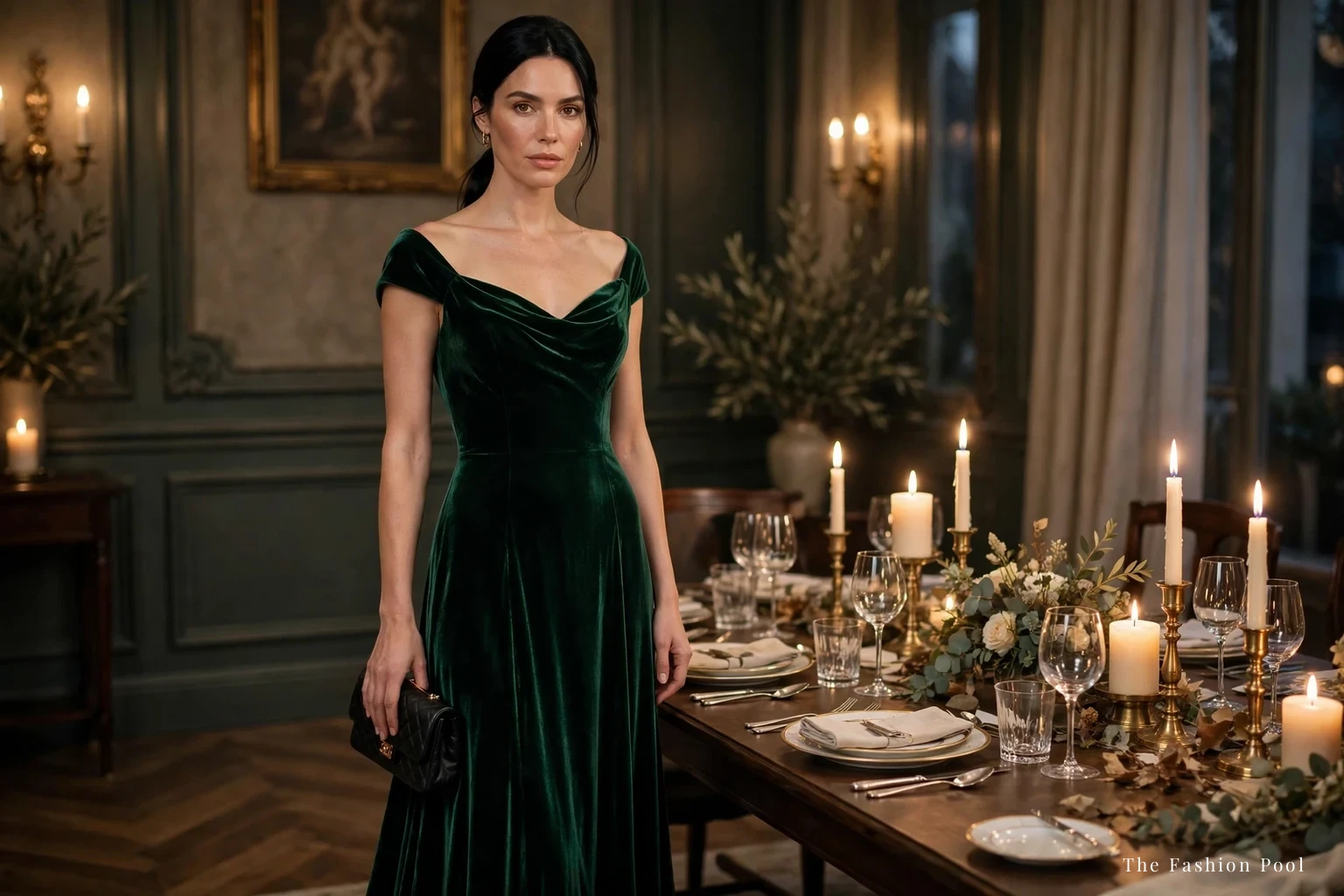
A formal dress outfit starts with a question most guides skip: how formal is the evening, really? A floor-length velvet gown at a drinks party is as wrong as a knit midi at a black-tie gala, and both mistakes come from the same place — choosing the dress before reading the formality of the room. This guide ranks ten formal dress outfits from the most formal to the least formal, each one teaching you how to read a dress before you wear it.
The list works as a ladder. Entry 1 is the most formal dress a holiday season holds; entry 10 is the least formal dress that still counts as formal. The top three rungs are all black-tie level, ordered by fabric rather than by event — velvet reads the most formal, then crepe, then satin — and the event steps down from rung 4. Find the rung your event sits on, and wear the dress on that rung — not two above it, which reads as overdressed, and not two below it, which reads as underdressed. If the question is which moment of Christmas Day needs which dress, our Christmas dress chart works through five moments instead.
How to read a formal dress
Four signals decide where a dress sits on the ladder, before the colour or the price ever matter. Learn them once and you can place any formal dress outfit in ten seconds.
Fabric first. Matte, heavy fabrics read as more formal: velvet, crepe, wool crepe. Light, thin fabrics read as less formal: chiffon, jersey, cotton. A velvet midi outranks a chiffon maxi, because fabric outranks length. Satin is the exception: it is a heavy fabric that shines, and shine is judged on its own — see the third signal.
Length second. Floor length is the most formal; midi is the middle; knee length is the least. Length alone does not settle it — a floor-length jersey dress is less formal than a midi velvet dress — but it is the signal most people read first.
Shine third. Shine raises the risk, not the formality: sequins, beading, metallic thread and satin all shine, and a dress with shine needs everything around it to stay quiet. Shine on its own does not make a dress more formal — a floor-length satin gown is formal because of its length and cut, not because it shines. Our Christmas party guide works through the one-shine rule in full.
Structure fourth. A dress that holds its own shape — a column, a structured bodice, a defined waist — reads as more formal than a dress that drapes and moves. Drape is comfortable; structure is formal. The ten dresses below are ordered by these four signals together, not by any one.
1. The floor-length velvet gown: black tie
The top of the ladder is a floor-length velvet gown, earning the top rung on all four signals at once: velvet is heavy and matte, the length is floor, the shine is almost none, and the cut holds its shape. This is the dress for a black-tie gala, a charity ball, or a New Year’s Eve dinner with a black-tie code. Wear it in a deep colour — burgundy, emerald, navy, or black — because a pale gown reads as bridal at a distance. The finish is quiet by design: a small clutch, one piece of jewellery, closed-toe heels, hair up so the neckline shows. Walk the stairs in it at home before the evening — a floor-length hem behaves differently on stairs than on flat floor, and the staircase is where a gown trips you.
2. The crepe column gown: the formal gala
The crepe column gown is the formal gala dress for a woman who does not want velvet. Crepe is matte and structured, the column cut holds a straight line from shoulder to floor, and the absence of shine keeps it formal rather than flashy. The event is the same black-tie level as entry 1 — a charity ball, a formal reception, a black-tie dinner — but the mood differs: velvet warm and soft, crepe sharp and architectural. Wear it in black or navy for the sharpest version, or a deep jewel tone for a celebration. The finish is minimal: a small bag, a single bracelet or stud earrings, closed-toe heels in dark suede. The one mistake is a belt: a column dress does not need one.
3. The floor-length satin gown: the formal dinner
The floor-length satin gown sits one rung below the crepe column, ordered by fabric, not by event: a floor-length satin gown is entirely right for black tie, but it is the least forgiving of the three gowns, showing every crease and needing everything around it to stay matte and plain. The event is a black-tie dinner, a formal dinner, a New Year’s Eve party with a dress code, or a hotel ballroom evening. Wear it in a deep colour — burgundy, forest green, navy — because pale satin shows every crease and reads as bridal. Around it, everything stays matte and plain: a small clutch, no sparkling jewellery, shoes that catch no light.
4. The sequin midi: New Year’s Eve
The sequin midi is the most festive dress on this list and the most misunderstood. Sequins are maximum shine, which makes this the most festive dress on the list — but shine is not formality, and the midi length and the straight cut keep it a formal party dress, not a black-tie gown. The event is New Year’s Eve, or a formal party where the evening itself is the celebration. A full sequin outfit belongs to New Year’s Eve, not to a family Christmas dinner; our Christmas party guide draws that line. The finish is the simplest on this list: plain black opaque tights, plain black heels, a plain black clutch, no other shine anywhere. Hair is simple and held back. Sit in it for ten minutes: sequins that feel fine standing up can dig in at the waist when you sit.
5. The beaded midi: the formal dinner party
The beaded midi is the formal dinner party dress — for a dinner where the table is dressed and the evening is long. Beading is sparkle rather than shine: small beads catch the light in points, where sequins catch it in sheets — and that makes this dress the quieter of the two: the sequin midi is built for a standing party, this one for a long evening at the table. The base fabric should be matte — crepe is the safest choice — so the beads are the only light. Wear it in a dark colour, because beading on a pale dress reads as bridal, and keep the neckline simple: a beaded bodice with a plain skirt is the safest balance, and a beaded skirt with a plain bodice works too, but the beads add weight to the skirt, so check that it still hangs straight when you move. The finish is quiet: a small clutch, closed-toe heels, and one piece of jewellery worn where the beads are not — earrings with a beaded bodice, a bracelet with a beaded skirt. The coat is tailored wool, checked over the dress at home — beading catches on wool.
6. The long-sleeved velvet midi: the formal family dinner
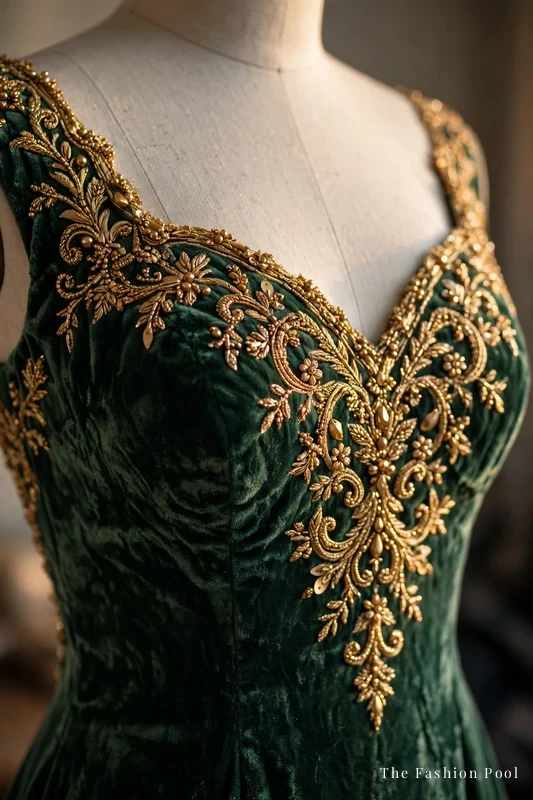
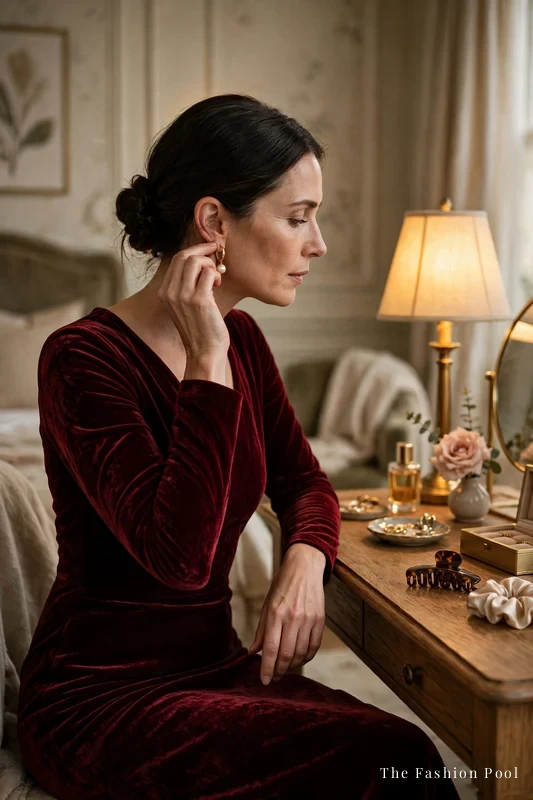
The long-sleeved velvet midi is the formal family dinner dress — for a Christmas dinner, a hotel dinner, or a formal family evening, where the evening is long. Velvet is the most formal fabric in a midi length, and the long sleeves are what make it work for a long evening at the table: they keep the outfit warm and covered where a sleeveless party dress would leave you cold. Wear it in deep emerald or navy, with black opaque tights and low block heels. Our velvet dress guide works through velvet as a fabric in full; the point here is the rung — velvet in a midi is formal, but it is not black tie. The finish is a small bag and a single pair of stud earrings, hair up or half-up so sleeves and neckline show. The coat is tailored wool, tried over the dress at home: velvet crushes under a tight coat, so check the shoulders before you leave — a brush against the nap lifts most crush marks, but a tight coat presses a fresh one in every time you sit.
7. The satin slip midi: cocktail-formal
The satin slip midi is the cocktail-formal dress — for an evening drinks party with a dress code, a hotel bar, or a New Year’s Eve drinks reception. Satin is the shine, the slip cut is the simplicity, and the midi length keeps it formal: a satin slip dress above the knee is a different dress entirely. Wear it in a deep colour, with a structured jacket or wrap over it for arrival — the slip cut on its own is too bare for a winter evening, and the jacket is what makes it a winter outfit, not a summer dress in December. It sits below entry 6 because the velvet midi is formal on its own, while the slip midi needs the layer to reach formal at all. The finish is a small clutch, one piece of jewellery, heeled ankle boots or closed-toe heels. The jacket should be structured, not soft: a velvet blazer, a tailored jacket, or a structured wrap.
8. The heavy-crepe wrap midi: the middle of the ladder
The heavy-crepe wrap midi is the middle of the ladder, where most holiday evenings live. Crepe is matte, the wrap cut defines the waist without structure, and the midi length is the middle length — so this formal dress outfit is semi-formal, for a dinner party, a restaurant evening, or a formal dinner at a friend’s house. It is the dress for an evening that sits between two rungs and cannot be placed exactly: the middle of the ladder is the safest rung, because it is never two rungs wrong in either direction. Wear it in a deep colour — navy, burgundy, forest green — with opaque tights and low block heels. The wrap needs a pin or a stitch at the neckline: a wrap that opens when you sit down is the one failure this dress has — and it happens at the table, in front of everyone.
9. The pleated chiffon midi: daytime formal
The pleated chiffon midi is the daytime formal dress — for a festive lunch or an afternoon reception indoors, where the evening has not started yet. Chiffon is light and matte, the pleats give it movement, and the midi length keeps it formal; but the fabric is thin and the cut is soft, which puts it near the bottom of the ladder. Wear it in a dark print or a deep tone, with opaque tights and low block heels, and a structured jacket over it for arrival — chiffon alone is too light for a cold afternoon, and this is an indoor daytime dress, not an outdoor one. The finish is a small top-handle bag and a single pair of studs, hair down or half-up, because a pleated dress moves and the hair should move with it. The one mistake is a heavy coat: a long wool coat crushes the pleats, so wear a shorter tailored jacket or a cropped wool coat that ends at the waist.
10. The satin shirt dress: smart daytime
The bottom of the ladder is the satin shirt dress — the least formal dress that still counts as formal. Satin gives it shine, but the shirt structure — collar, buttons, belted waist — pulls it back down to smart daytime: a festive lunch, a smart daytime party, or a family gathering dressed up without being formal. Wear it in a deep tone, belt tied rather than buckled, with low block heels or heeled ankle boots. The shirt dress is for the reader who has been invited to something daytime and does not know how formal it is: the bottom of the ladder is the right place to stand when the event is daytime and the invitation is vague — one rung too casual at lunch is easier to forgive than two rungs too formal at dinner. If the event could be an evening formal, the middle of the ladder, entry 8, is the safer bet. The finish is a small bag and a single stud or cuff; a smart blazer works as the coat here. If the evening turns out more formal than the lunch, the satin carries it: swap the daytime bag for a clutch, add one piece of jewellery, and it climbs a rung.
What not to wear to a formal holiday event
Some mistakes fail a formal dress outfit before the evening starts: they misread the ladder by two rungs.
White, ivory, or cream. A pale dress at a formal evening reads as bridal. Our winter wedding guide draws that line for weddings; the rule holds for holiday evenings too.
A floor-length dress at a drinks party. A black-tie gown there is two rungs too formal, and the evening becomes about the dress. The ladder exists so you do not have to guess: find the rung, wear the dress on it.
A dress that needs adjusting. A neckline that slips, a strap that falls, a wrap that opens: a formal evening is the wrong place to spend the night adjusting your dress. If it needs adjusting at home, it will need it all evening.
Frequently asked questions
What is the most formal dress for a holiday event?
A floor-length gown in velvet or crepe, worn to a black-tie gala or a formal dinner — entry 1, the top of the ladder.
Can I wear a midi dress to a formal event?
Yes, if the signals are formal. A velvet, beaded, or heavy-crepe midi is formal; a knit or jersey midi is not. Fabric and shine decide, not length alone — see “How to read a formal dress” above.
What shoes go with a floor-length formal dress?
Closed-toe heels in dark suede, with the hem clearing the shoe. Pack flats for the evening’s end, and check the hem in the heels you will wear, not in bare feet.
Can I wear sequins to a formal Christmas dinner?
A sequin midi belongs to New Year’s Eve and to formal parties, not to a family Christmas dinner — our Christmas party guide draws that line. For a family formal dinner, wear the long-sleeved velvet midi, entry 6.
How do I know if an event is black tie?
The invitation says so; if it does not, ask the host. If you cannot ask, wear the middle of the ladder — a heavy-crepe wrap midi, entry 8 — because it is never two rungs wrong.
What coat goes over a formal dress?
A tailored wool coat, tried over the dress at home — long enough to cover a floor-length hem, shorter over a pleated midi, where a long coat crushes the pleats. Our Christmas party guide works through the coat check. No puffer, and no short jacket over a floor-length gown.
Read the formality first, then choose the dress. Find the rung your evening sits on, wear the dress on that rung, and let everything around it stay quiet. That is what a formal dress outfit does when it works: the dress matches the evening, and the evening takes over.
Keep your style story going.
Find your next outfit idea, styling detail or wardrobe solution.
Explore the latest edit ↗