How to Wear an Overshirt: Fit Checks and 3 Men’s Outfits
An overshirt can finish a T-shirt outfit or add a removable layer over a light sweater. The useful question is how to wear an overshirt with the clothes underneath it, without tight sleeves, a crowded neckline or more warmth than you need.
How to Wear an Overshirt Without Crowding Your Layers
Start with a T-shirt or fine knit that feels comfortable on its own. Add an overshirt with enough room to button without pulling, then check it while reaching and sitting. Wear it open to show the inner layer or buttoned to make the overshirt the main visible layer. Choose pants, shoes and outerwear for your activity and weather.
Key Takeaways
- Check fit over the layer you will actually wear, rather than automatically sizing up.
- Use one clear collar arrangement and keep cuffs away from your hands.
- A structured overshirt can suit relaxed settings, but it does not replace a required blazer or weatherproof coat.
Choose the Overshirt for Its Job
An overshirt is a shirt-shaped layering piece, often with more substance and room than a regular shirt. Names such as shirt jacket and shacket overlap, so inspect the actual garment. Lining, fabric weight, cut and closures tell you more than the label alone.
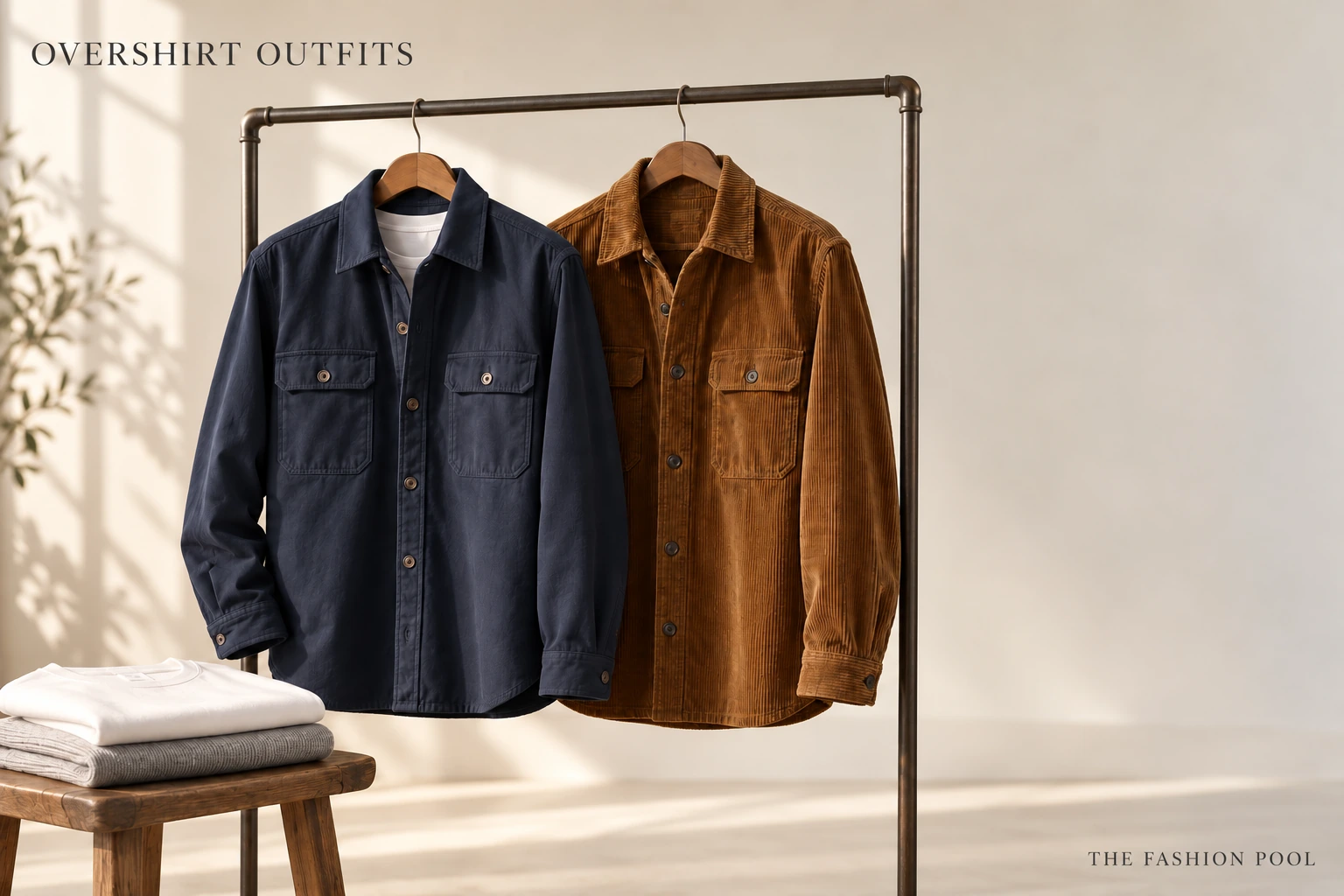
Charles Tyrwhitt’s overshirt guide describes common cotton-twill, flannel and wool-blend versions with room for an inner layer. Treat those as options rather than a warmth ranking: construction and lining also matter. A smooth midweight cotton version is a practical starting point if most outfits involve a tee.
Check your existing pants before choosing a color. Olive with dark denim gives clear contrast; navy with stone chinos looks quieter; tobacco corduroy adds texture against black. These are outfit suggestions, not mandatory combinations. A patterned overshirt works too, with a simple inner layer that lets you see its shape.
Check the Fit Over Your Actual Base Layer
- Button it: fasten the overshirt over your intended tee or knit. Persistent pulling between buttons suggests insufficient room or an unsuitable cut.
- Reach normally: bring your arms forward as though holding a steering wheel. Notice pulling across the back, armholes or elbows.
- Sit down: check whether the hem catches at your hips or the closed front strains.
- Check the sleeves: cuffs should let your hands work freely. A dropped shoulder may be intentional, but sleeves that cover your hands need attention.
Opening a tight overshirt hides the front strain without solving restricted movement. Try a different cut or size, or a thinner inner layer that still suits the weather. Conversely, extra body room does not automatically mean poor fit; relaxed volume can be intentional when the sleeves and movement work for you.
Look at the hem with your pants. A shorter, straighter hem can make the overshirt read like a light jacket; a curved, longer hem feels more shirt-like. Neither has to hit an exact point on every body. Check that it hangs freely rather than bunching over pockets or a bulky waistband.
Three Overshirt Outfits to Build From Your Wardrobe
| Setting | Core combination | Useful check |
|---|---|---|
| Weekend errands | Olive overshirt, white tee, dark jeans, white sneakers | Open front and comfortable reach |
| Relaxed office | Navy overshirt, gray fine knit, stone chinos, brown loafers | Workplace rules and sleeve room |
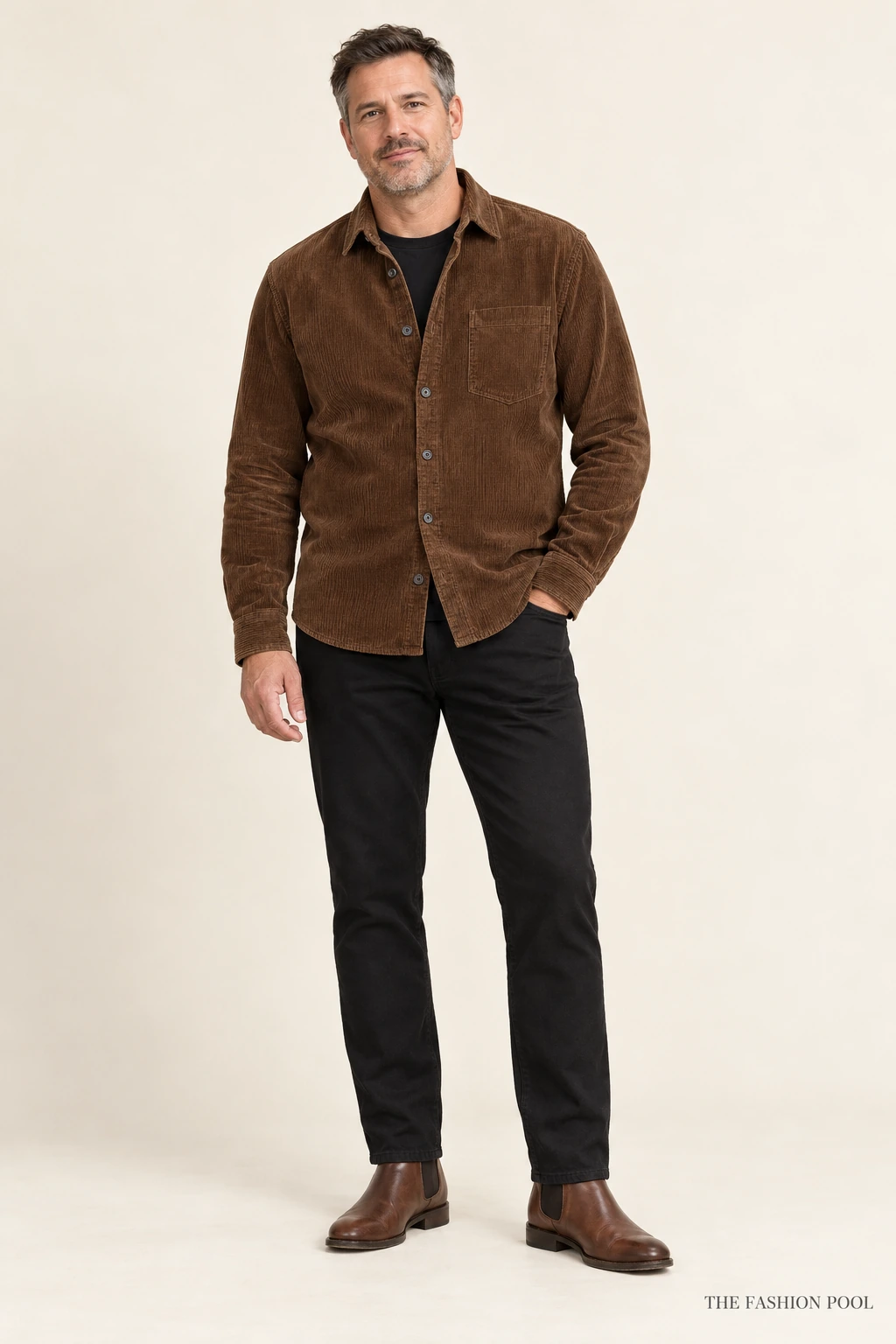
| Casual dinner | Tobacco corduroy overshirt, black tee, black pants, brown boots | Buttoned-front comfort while seated |
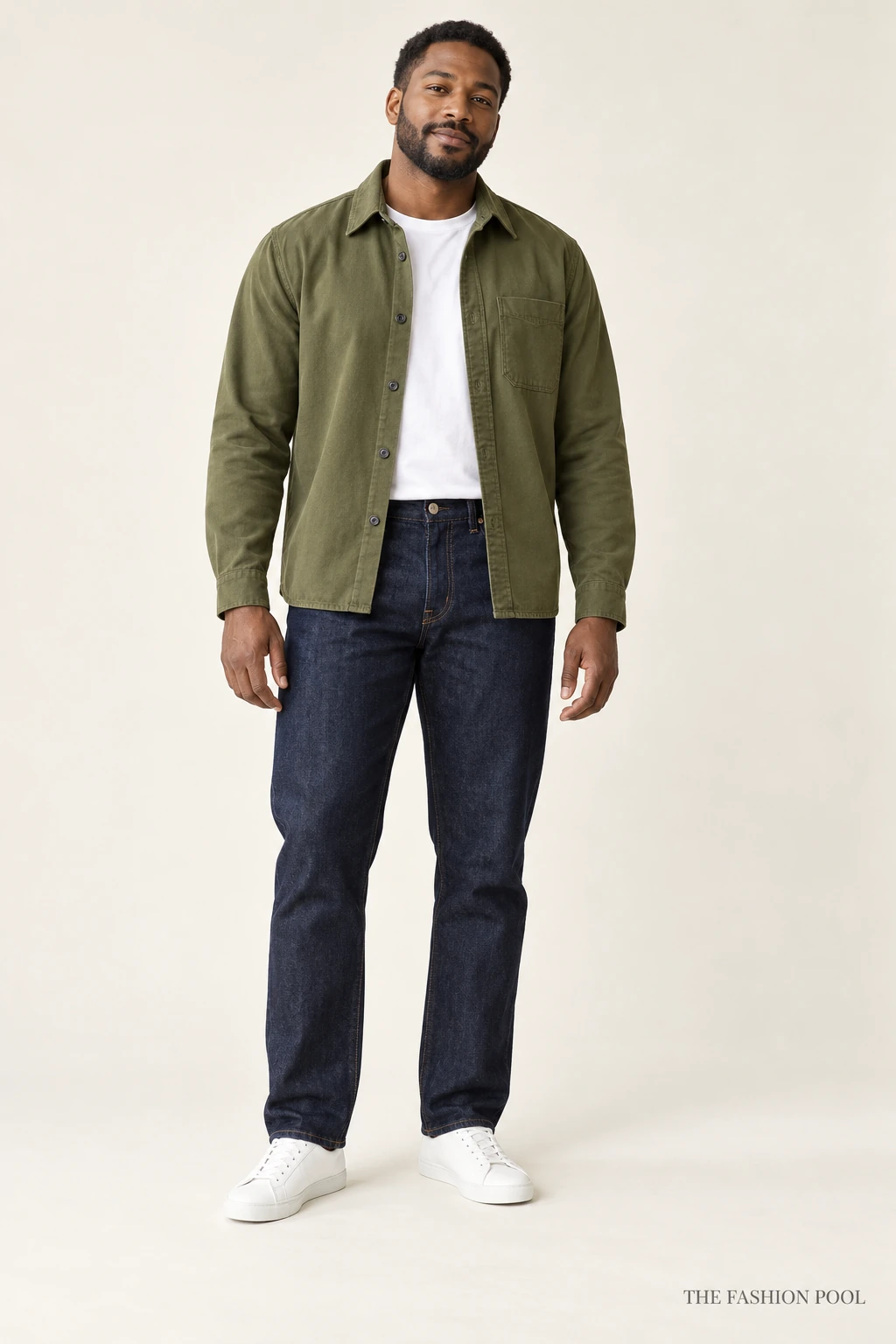
1. Weekend: Olive, White and Dark Denim
Wear an olive cotton overshirt open over a white crew-neck tee, dark indigo straight-leg jeans and white sneakers. The bright tee separates the two darker pieces, while the open front makes the layer easy to remove indoors. Choose a tee hem that stays inside the overshirt if you want one clean outer edge.
A longer tee showing below can be deliberate too; compare it in a full-length mirror. If you add a chain, check that it clears the collar and buttons. Our necklace and neckline placement guide explains visible positions on skin or fabric.
2. Relaxed Office: Navy, Gray and Stone
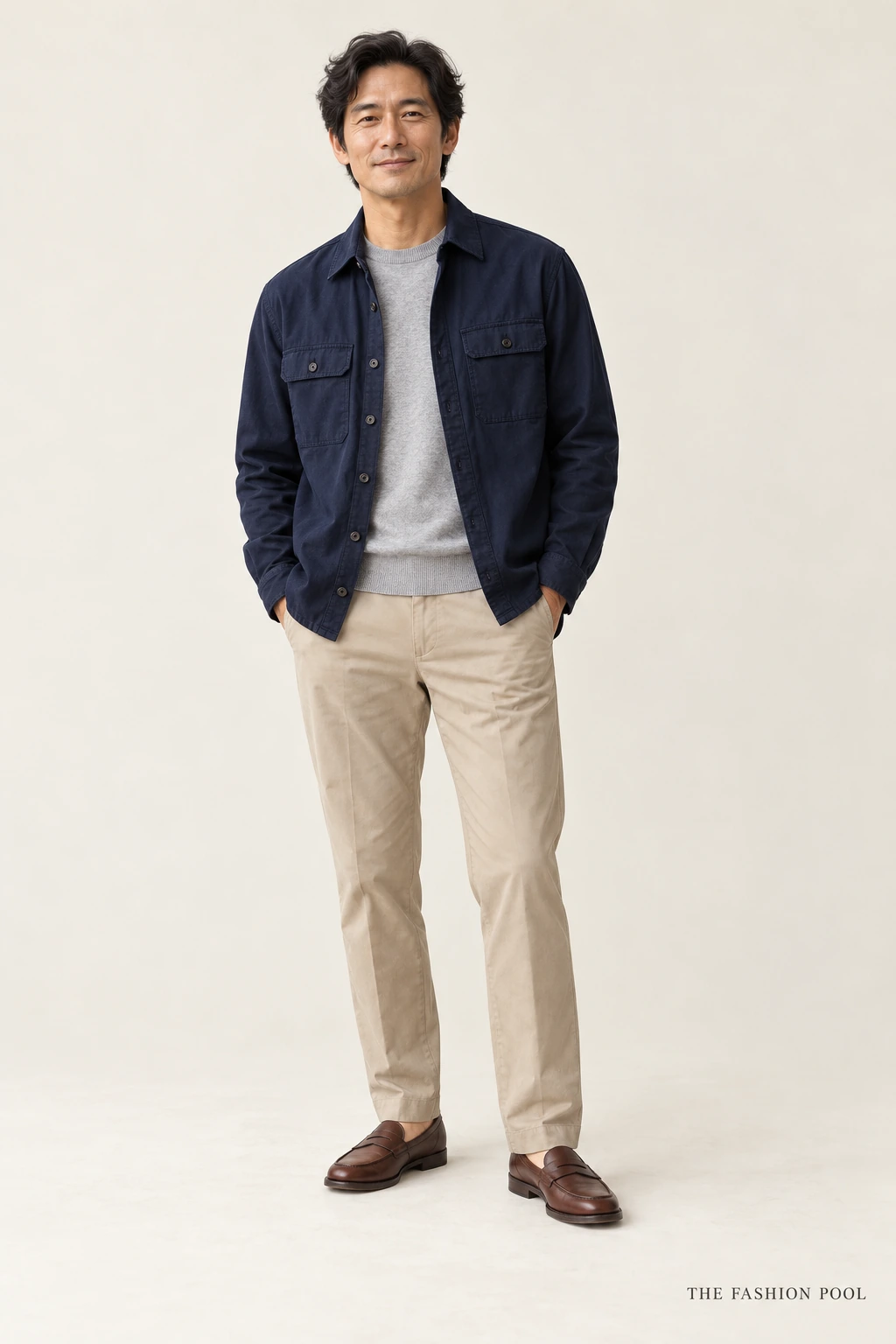
Try a navy twill overshirt over a light-gray fine-gauge crew-neck sweater, stone straight-leg chinos and brown leather loafers. The smooth knit avoids stacking two shirt collars. Keep its sleeves flat before adding the overshirt, then repeat the reach check; a tee-sized fit may feel different over knitwear.
This formula is for an office that accepts relaxed separates. For a meeting requiring tailoring, choose the expected jacket instead. If the office runs warm, swap the sweater for a neat tee only when your workplace permits it, and judge the outfit with the overshirt removed.
3. Casual Dinner: Tobacco Corduroy and Black
Button a tobacco corduroy overshirt over a black crew-neck tee, leaving the top two buttons open. Add black straight-leg pants and brown Chelsea boots. The closed front shows the corduroy’s texture, while the black base keeps the combination simple. Fasten only as the garment allows; do not force buttons across a tight chest.
Sit before leaving and check that the lower front does not pull. If it does, try the open version or another fit. Let the pants meet the boots without excessive fabric stacking. This is a casual dinner outfit, not a substitute for a venue’s formal dress requirements.
Adjust the Layers for Weather and Daily Use
For a mild day, start with the tee combination. In cooler conditions, add a fine knit only if the overshirt still moves comfortably. For cold or wet weather, choose suitable outerwear over the outfit and check the complete stack. An overshirt is not automatically waterproof or sufficiently warm because its fabric looks heavy.
Put on your bag or backpack too: straps can catch an open collar or bunch the shoulder fabric. Avoid stuffing chest pockets until they distort the front. If rolling the sleeves feels comfortable, unfasten buttoned cuffs and make a loose fold; stop if thick seams or lining resist. Follow the garment’s care label for cleaning rather than assuming every overshirt washes like a tee.
Frequently Asked Questions
Should I buy an overshirt one size larger?
Not automatically. Some overshirts already include room for layering, while others have a closer cut. Try your usual size over the intended inner layer, fasten it and move normally. Compare another size or cut if needed. Extra length or sleeves covering your hands may make sizing up less useful.
Can I use a normal shirt as an overshirt?
Yes, if it has enough room and feels comfortable over the chosen layer. A roomy casual shirt can work over a light tee. A fitted dress shirt may pull across the back or cling to the tee underneath, and it will not provide the structure or coverage of every shirt jacket.
Should an overshirt be tucked in?
For these layered outfits, leave the overshirt untucked so its front and hem can hang freely. Tucking a thick shirt jacket adds waistband bulk and can restrict movement. If you want a tucked look, use an ordinary shirt designed to sit comfortably inside the pants instead of forcing the outer layer.
Can I wear a collared shirt underneath?
Yes. Choose an inner shirt that sits smoothly, then check whether both collars stay where you want them when turning your head. Avoid forcing stiff collars into a crowded neckline. A tee or collarless fine knit is an easier alternative when the two collars keep folding over each other.
Does an overshirt work with wider pants?
It can. Compare the outfit’s overall volume and check that both garments move comfortably. A straight hem and visible inner layer can help distinguish the pieces, but wider pants do not require a fitted top. Adjust length, shoe coverage or fabric weight according to the silhouette you prefer.
How do I choose an overshirt I will wear often?
Start with the outfits and weather you actually encounter. Check the garment over two regular base layers and beside your most-worn pants. Consider care requirements, pockets and sleeve comfort as well as color. A useful purchase fills a repeatable wardrobe gap rather than depending on one carefully arranged outfit.
Conclusion
Learning how to wear an overshirt starts with the layer underneath and the movement you need. Try one of the three formulas with clothes you own, check the complete outfit while sitting, and change the fit or layers before adding more pieces.