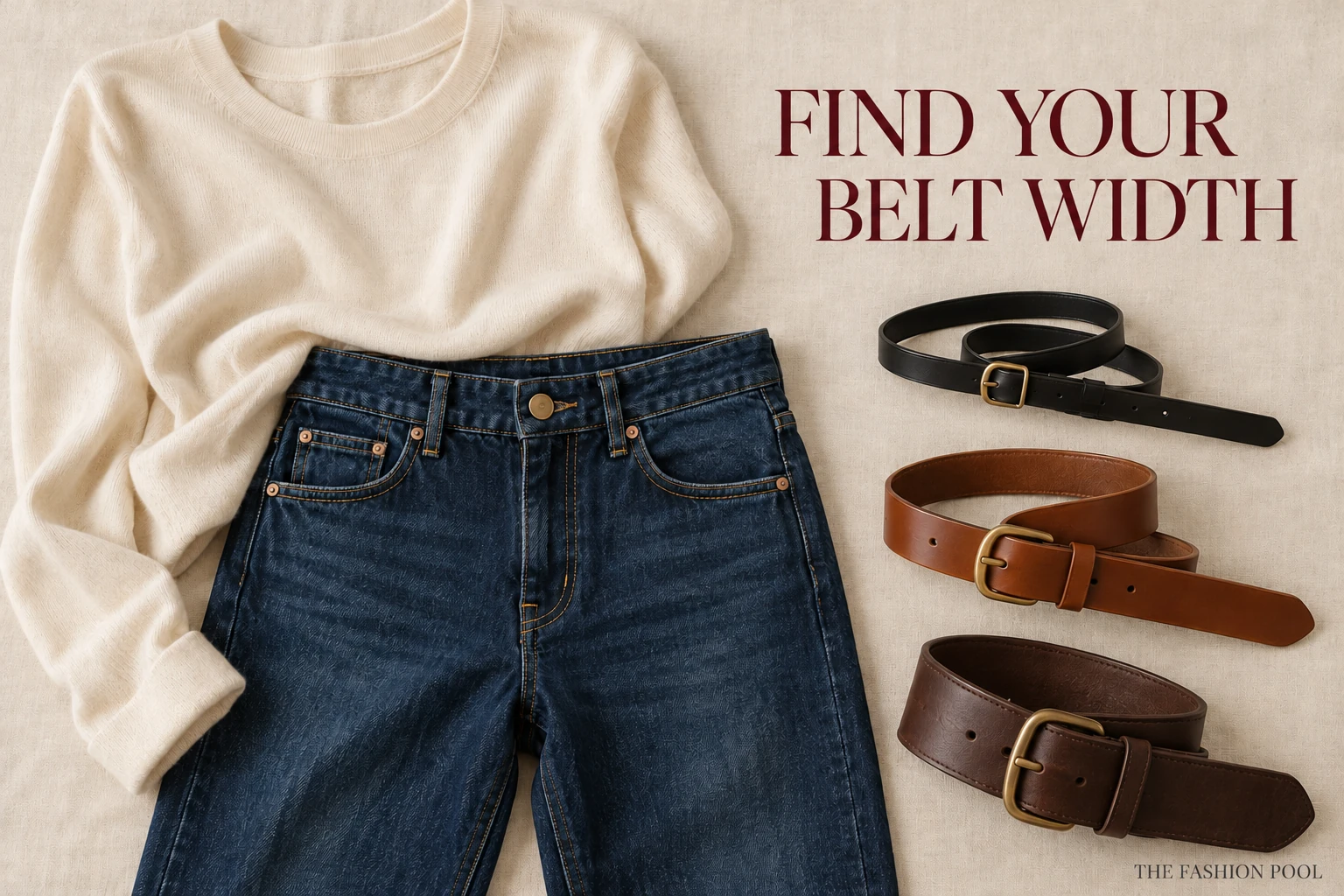
A belt can slide through your jeans yet still feel bulky when you sit down. Another may fit comfortably but disappear beneath a sweater. Choosing a belt width for jeans means checking the loops, the strap and the amount of belt you actually want to see. This guide focuses on women’s everyday denim, with comparisons you can make using clothes already in your closet.
Choose belt width for jeans from the loops outward
Start with a strap that passes easily through every loop without folding or forcing it. Once that practical check passes, compare a narrower and wider option with your actual top and shoes. A middle-width belt can be a useful starting point, but there is no compulsory width for a particular jean cut or body shape. Check belt length separately: a wider strap does not solve an incorrectly sized waistband.
Key Takeaways
- The smallest usable loop sets the practical limit, not the silhouette printed on the jean label.
- Strap thickness and buckle depth can change comfort even when two belts have the same width.
- A tucked top reveals the whole belt; a partial tuck may expose only the buckle.
- Use width to choose the amount of visible detail, rather than to follow a body-size rule.
Check the narrowest loop before comparing styles
Lay the jeans flat and look at the front, side and back loops. Compare the usable opening inside each one, allowing for bulky stitching and overlapping seams. If measuring with a ruler, measure the opening the strap travels through, not the outside length of the fabric tab. Compare that space with the belt’s stated width; leave enough clearance to thread it comfortably.
Measurements help narrow the options, but trying the actual strap is more informative. A thick, stiff edge can catch where a thinner strap of the same width passes easily. Thread the tip gently through every loop before fastening. Stop if the belt curls lengthwise, stretches a loop or needs tugging. Choosing a narrower option is simpler than trying to force the wider one through.
Fasten at a comfortable hole, sit and bend forward slightly. Look for a buckle pressing into your abdomen, a strap tipping away from the waistband or denim gathering sharply underneath. These observations help separate belt discomfort from the fit of the jeans. If the waistband itself is too loose, use the separate guide to jeans that gap at the waist before expecting a belt to handle the whole problem.
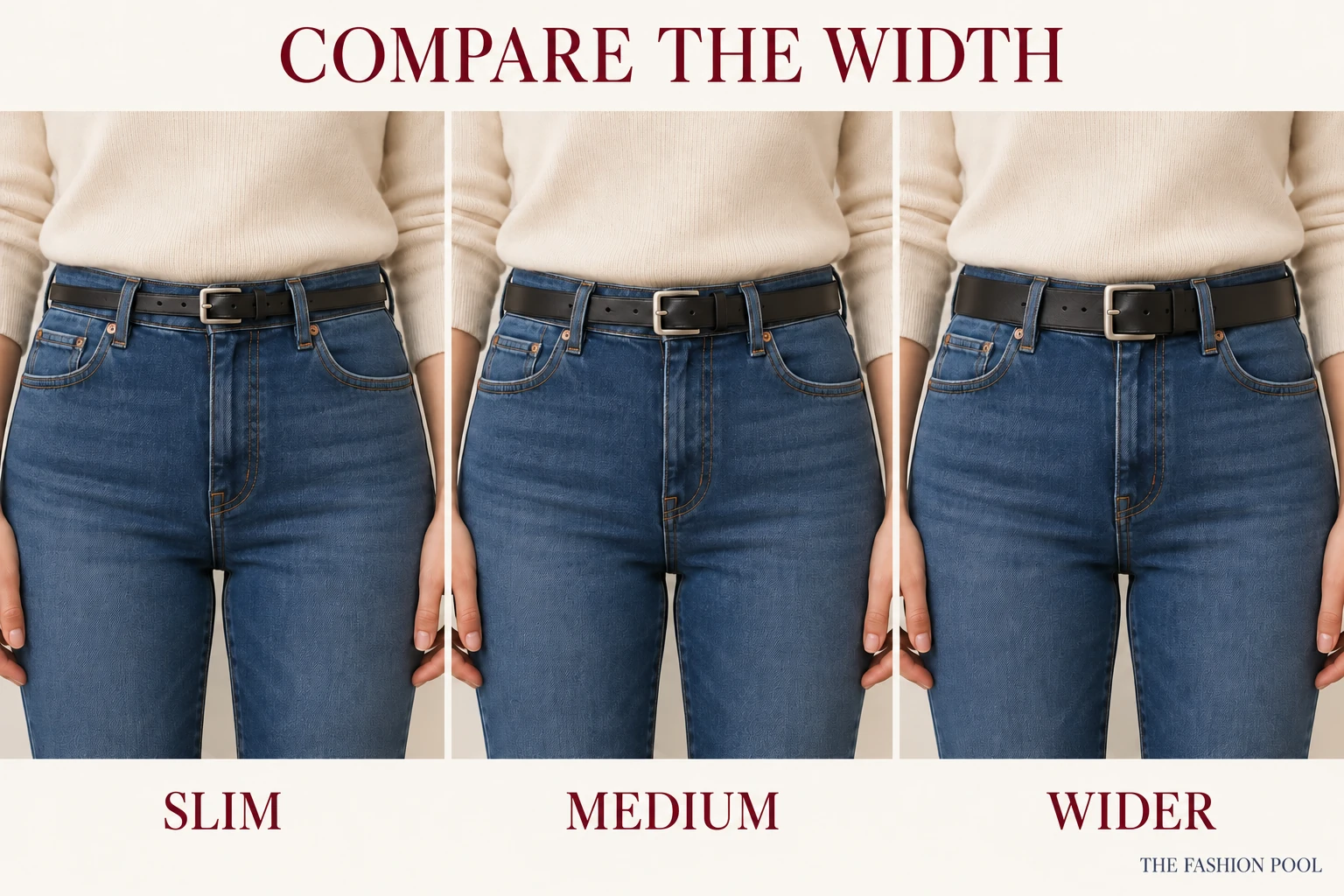
Compare slim, middle and wider straps
Retail labels such as slim and wide are relative. Use the actual measurement when comparing listings. Elliot Rhodes’ belt-width guide distinguishes several widths, including 25, 30 and 40 millimeters, and shows different ways to wear them. Those are examples from one maker, not standards that every pair of jeans can accommodate.
| Option | What to look for | Useful adjustment |
|---|---|---|
| Slim strap | A small line of color against the waistband | Check that the buckle and tail stay where you want them |
| Middle-width strap | A clear belt detail without covering much denim | Try it with both a fully tucked and partially tucked top |
| Wider strap | A stronger horizontal accent and more visible surface | Check every loop, then sit to assess the edges and buckle |
For a useful comparison, keep the belt color, buckle style, jeans and top as similar as possible. Otherwise, a shiny buckle or contrasting color may attract your attention more than width does. Take a front and side look in the mirror at ordinary viewing distance. Choose the version whose visibility you prefer, then check comfort again.
Two outfit examples using the same jeans
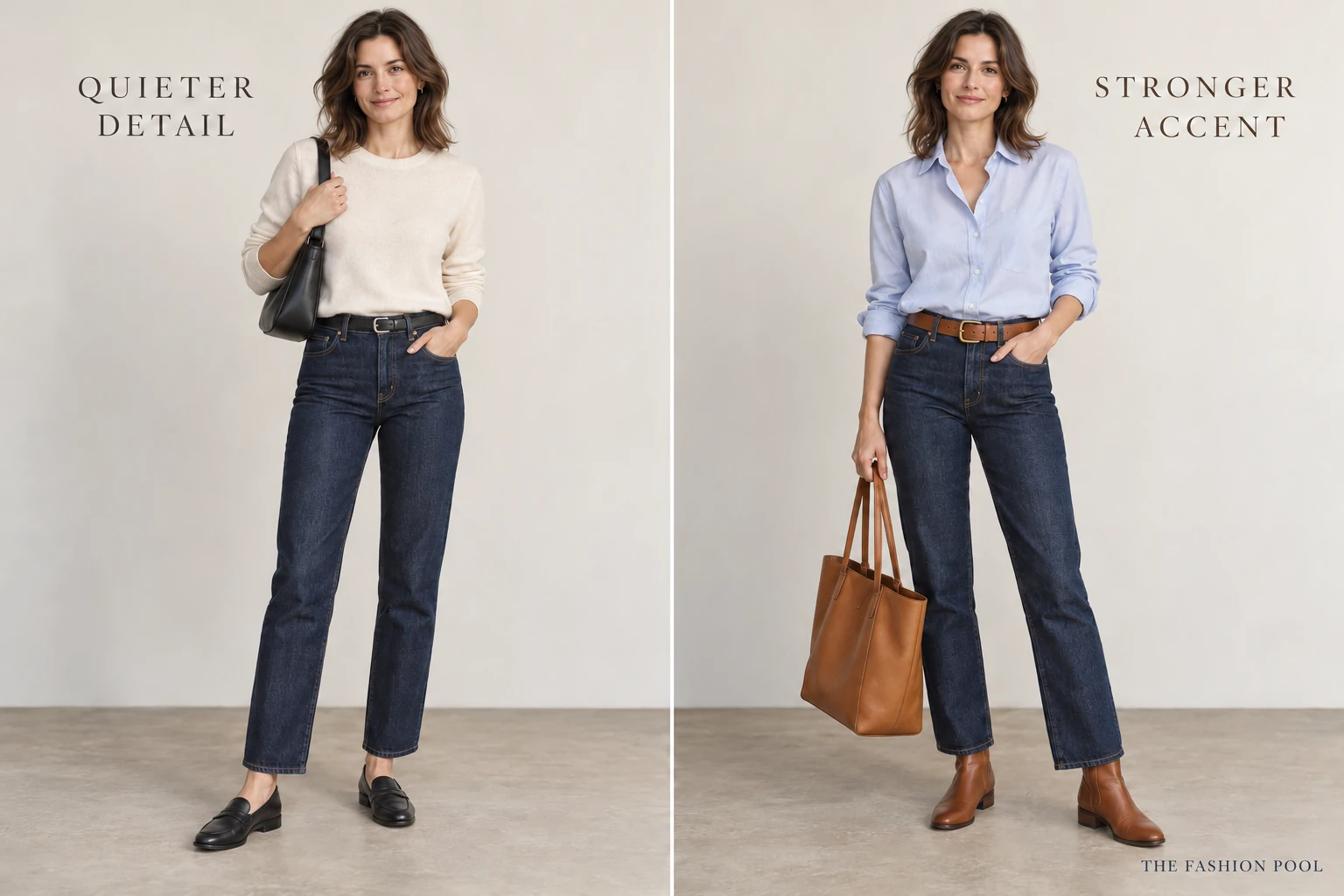
A quieter detail with a cream knit
Try dark indigo straight-leg jeans, a cream fine-gauge sweater, a slim black belt and black loafers. A compact black shoulder bag repeats the darker accents without requiring every piece to match exactly. Tuck enough knit to expose the belt, then release a little fabric above the waistband so it does not pull when you sit.
The slim strap leaves more denim visible and creates a smaller interruption between the cream top and dark jeans. If the knit keeps swallowing the buckle, adjust the tuck before buying another belt. A heavy sweater may work better with a different hem arrangement; the sweater-tucking guide explains that separate decision.
A stronger accent with a blue shirt
Keep the same jeans and replace the sweater with a tucked pale blue Oxford shirt. Try a slightly wider cognac belt, a simple brass buckle, cognac flat ankle boots and a tan tote. The warm brown creates a deliberate contrast with the blue shirt and denim; the larger visible strap makes that contrast more noticeable.
This is a styling option, not a requirement for straight-leg jeans. If the buckle feels prominent, first try a flatter or smaller buckle while keeping the strap width unchanged. Check your moving jean hem with the boots on. For wider denim, the existing wide-leg jeans outfit guide provides broader outfit context.
Do a final buckle-and-layer check
Put on the jacket or cardigan you will actually wear. An open layer can frame the buckle while hiding most of the strap, so your first comparison may change. Walk, sit and reach forward. Keep the belt tail supported by its keeper and loops without forcing it into a fold. Before ordering, confirm both the strap width and the seller’s length-sizing method; they describe different measurements.
Frequently Asked Questions
Do wide-leg jeans need a wide belt?
No. Wide-leg jeans describe the leg silhouette, not the dimensions of their belt loops. A narrow belt can provide a restrained detail, while a wider one can create a stronger accent. Check the actual loops, rise, top and buckle together rather than assigning one width to every wide-leg cut.
Should my belt match my shoes exactly?
Exact matching is optional for these casual outfits. Repeating black or a related brown can make a combination feel connected, but identical leather texture and hardware are unnecessary. Consider the whole outfit before replacing an accessory. If the belt feels distracting, compare its contrast and buckle finish as well as its width.
Can I use the same belt with high-rise and low-rise jeans?
Possibly, if both the loops and the usable length work. Jeans sitting at different positions can require different fastening points, even on the same person. Try the belt with each pair while standing and sitting. Follow the maker’s sizing instructions instead of assuming your jean label translates directly to belt size.
Why does my belt feel uncomfortable only when I sit?
The buckle depth, strap stiffness, edge position or fastening tension may be contributing. Try a looser comfortable hole, then compare a flatter buckle or a more flexible strap. Also assess the jeans without the belt. If the waistband already presses uncomfortably, changing belt width alone may not address the cause.
Should a belt fill the entire loop opening?
It does not need to occupy every bit of space. The strap should pass through easily and sit without folding or straining the loops. A visible gap can be part of a slimmer look. If the belt shifts more than you like, compare its length, keeper and fastening before assuming the only answer is extra width.
Conclusion
Choose a belt your jeans can accommodate comfortably, then decide how much visual emphasis you want. Compare widths while keeping other details steady. Finish with a seated check and your real outer layer: a useful belt should work through your day, not only in a mirror.