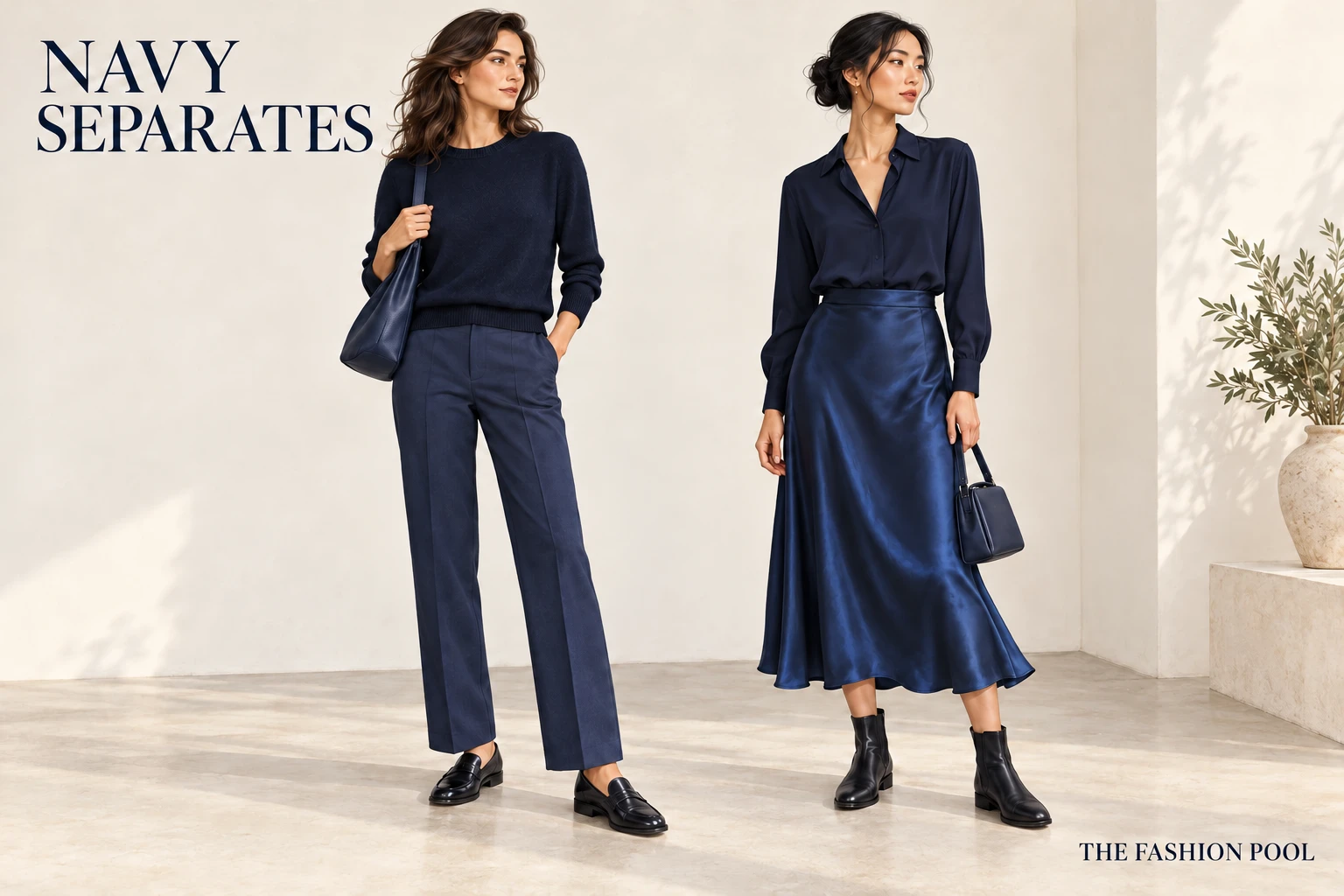
Two garments labeled navy can look surprisingly different together. A sweater may read almost black beside a brighter blue trouser, while a glossy skirt changes as you move. Building a navy monochrome outfit from separates starts with deciding whether you want a close match or a visibly tonal combination. You can make that decision with clothes already in your wardrobe before ordering another piece.
Start a navy monochrome outfit with two anchor pieces
Choose a comfortable navy top and bottom, place them together in the same light, and compare the shades and surfaces. For a tonal outfit, let a visible difference in shade or texture be part of the design rather than trying to disguise it. Then add shoes, a bag and an outer layer that suit the day. Monochrome here means a blue-centered clothing palette, not a requirement that every accessory share an identical dye.
Key Takeaways
- A matching set and a tonal outfit solve different visual problems.
- Compare actual garments together; separate product pictures cannot establish a match.
- Texture can make two navy pieces easier to distinguish.
- Keep comfort and occasion requirements in the decision alongside color.
Compare navy pieces in the same light
Pick the bottom first if it is the harder piece to fit or the garment you most want to wear. Bring two possible tops to it. Lay each beside the trousers or skirt, then hold the pieces in their approximate wearing positions. This reveals the relationship across a larger area than a tiny cuff or folded corner. Check them indoors and near natural daylight when possible.
Look for the difference you actually see: one piece may appear deeper, brighter, grayer or more purple than the other. Decide whether that difference looks deliberate to you. If you want a uniform suit-like match, a coordinated set is a more direct starting point; separately purchased navy items do not become identical because the labels agree.
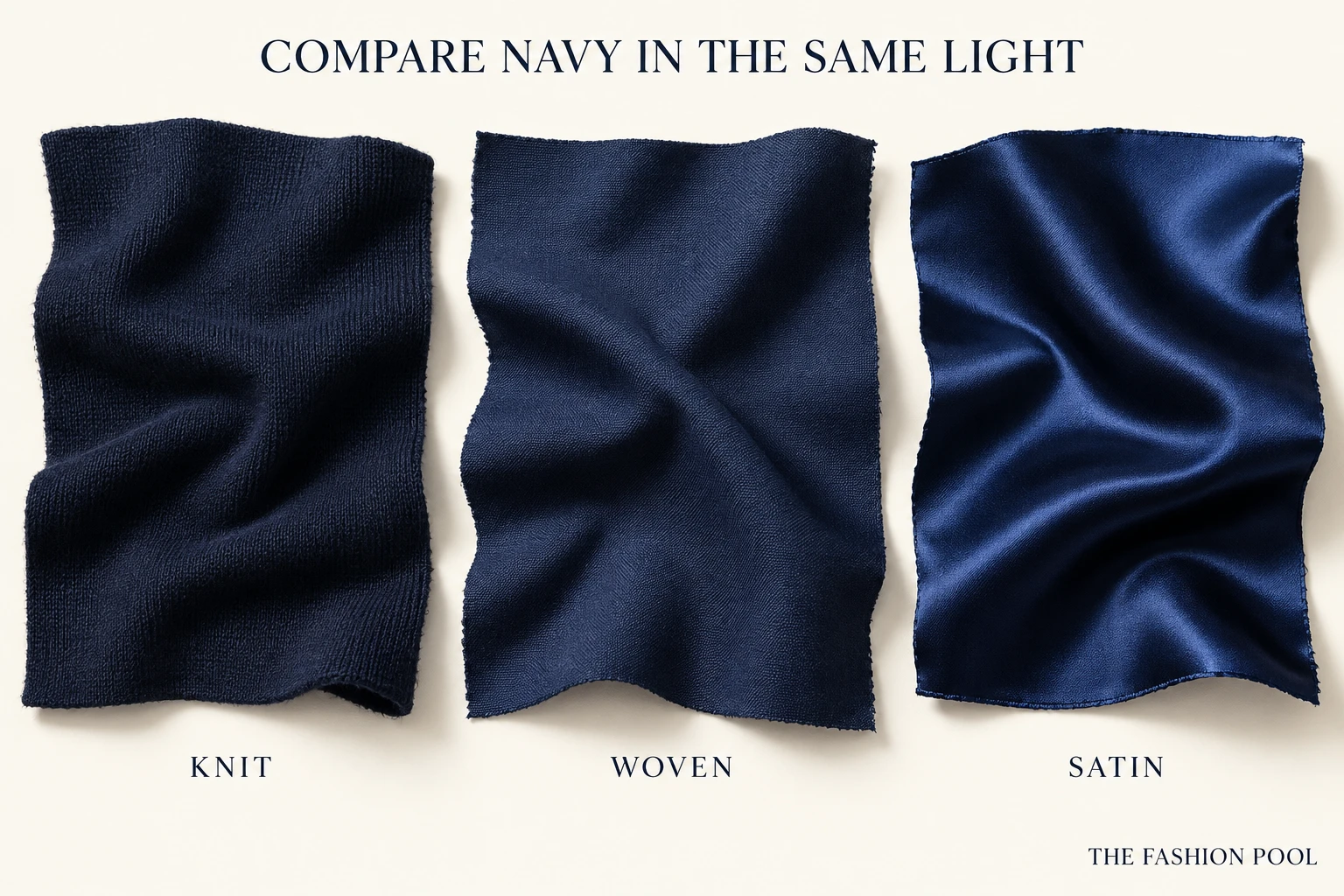
The supporting illustration compares navy knit, smooth woven fabric and satin in one composition. It shows surface relationships, not calibrated fabric samples. A screen illustration cannot confirm the shade of a garment in your closet or an online listing. For shopping, examine the seller’s description and return terms, and use an available physical swatch when the exact match is essential.
| What you want | Starting point | What to compare |
|---|---|---|
| A close, uniform match | A coordinated set or actual pieces viewed together | Shade and surface across both garments |
| A tonal combination | Two navy pieces with a noticeable difference | Whether the difference feels intentional |
| A stronger texture contrast | Matte knit beside glossy satin or smooth cloth | The effect while standing and moving |
Use texture to give the palette definition
Try changing the top’s surface before introducing another color. A fine knit beside smooth tailored trousers creates a different relationship from a plain blouse beside a glossy skirt. The point is to choose the amount of contrast you enjoy, not to follow a compulsory formula. Two similar matte fabrics can also work if you prefer a quieter result.
Gabrielle Arruda’s monochromatic-dressing guide discusses tonal variation and texture as styling options. For a useful comparison at home, hold the bottom steady and swap only the top. Otherwise, a change in neckline, trouser shape and shoe color can make it difficult to identify which part of the outfit you prefer.
Check the surfaces in motion. Satin highlights can make a fold look brighter than the flatter fabric beside it; knit has its own visible structure. These differences do not automatically indicate a poor match. If you want to emphasize them, keep the rest of the clothing relatively plain. If they distract you, try a less glossy piece instead of buying more navy accessories.
Build a knit-and-trouser version
Try a deep navy fine-gauge crewneck with slightly lighter navy straight tailored trousers. Finish with black loafers and a navy shoulder bag. The cover illustrates this combination with the knit sitting outside the waistband. The shade difference separates the garments, while the familiar shoe shape keeps the outfit usable for errands, lunch or a workplace that permits these pieces.
Choose the trouser fit before adjusting the sweater hem. Sit, bend and walk with the actual shoes on. If you prefer a small front tuck, check that there is comfortable room for the knit. An untucked hem or shorter sweater may be simpler with a thick waistband. Avoid changing trouser size solely to accommodate an optional tuck.
Add your intended jacket and assess its length against the sweater. The blazer-fit guide covers shoulder, sleeve and length decisions for readers who need that context. Color coordination does not remove the need for movement room.
Build a blouse-and-satin-skirt version
For a different surface relationship, pair a plain dark navy blouse with a fluid navy satin midi skirt. Use black flat ankle boots and a compact navy bag. Tuck the blouse if the skirt’s waistband has comfortable room, then release enough fabric to sit without pulling. The brighter sheen on the skirt creates definition without adding a printed pattern or another clothing color.
Check the skirt lining and closure as well as its outer surface. A fluid-looking fabric can still have a restrictive waistband or lining. Walk normally, sit and use a step before deciding on the hem. If the boots catch the skirt or feel uncomfortable, compare another shoe you already know works. A glossy finish does not require heels.
The midi-skirt guide for petites offers more hem and flat-shoe options where relevant. For this outfit, keep the color decision separate from the length decision: you can like the navy combination while needing a different skirt cut. Add a coat suited to the weather, then view the complete arrangement again.
Finish with accessories and a departure check
Black shoes give both illustrated outfits a darker endpoint. Brown, metallic or contrasting footwear can be another preference; the outfit simply becomes less strictly single-color. You do not need a navy shoe purchase to make the idea usable. Compare your actual choices against the clothing, including the visible socks or tights you plan to wear.
Choose outerwear for the conditions rather than the photograph. In warmer weather, substitute a lighter top; in colder weather, add adequate layers. Before leaving, view the combination from ordinary distance, check movement and confirm that pockets and bag work for your day.
Frequently Asked Questions
Can I wear black with navy?
Yes. Black shoes are used in both examples, and a black bag or outer layer can also be a deliberate choice. Decide how closely you want to keep the clothing palette centered on navy. A contrasting accessory does not invalidate the outfit, and you do not need to replace comfortable pieces to satisfy a label.
Does dark denim count as part of the palette?
It can, if you like how its shade and surface relate to the other pieces. View the actual jeans beside the top, including any faded areas or contrasting stitching. This guide’s tailored-trouser example is one option rather than a requirement to avoid denim. Repeat the shoe and hem checks with your chosen jeans.
Should my navy bag match the trousers exactly?
Exact matching is optional for these tonal combinations. A different surface or shade can be part of the arrangement. If the bag feels distracting, compare it with another you own before buying a replacement. Judge the complete outfit from ordinary distance rather than assuming two navy labels describe the same color.
What if the pieces match indoors but differ outside?
Decide whether you still enjoy the relationship in the places you will wear it. Check the pieces together in more than one lighting condition before an important occasion or purchase decision. If an exact uniform match matters to you, compare coordinated pieces directly rather than relying on separate photographs or a color name.
Do all-navy outfits need bright jewelry?
No. Jewelry can be subtle, noticeable or absent according to your preference and plans. Try the clothing first, then add a piece you enjoy. If you want more definition, texture or silhouette can provide it without bright jewelry. Avoid adding an accessory simply because you assume a restrained palette must be corrected.
Conclusion
Choose two anchor pieces, compare them together and decide whether you want matching or tonal navy. Use texture when you enjoy the contrast, then finish with comfortable shoes and appropriate layers. The resulting outfit should suit your wardrobe and day, not depend on an exact match claimed by a screen.