How to Stop a Button-Down Shirt Gaping at the Bust
A button-down shirt gaping at the bust can sit neatly at the shoulders yet open between two buttons when you sit or reach. Before adding another fastener, work out whether the shirt lacks room or simply needs its overlapping front edges held together. Those problems need different solutions.
How to stop a button-down shirt gaping at the bust
If the shirt feels tight and has pulling lines across the chest, try a roomier cut or a design with more bust shaping. If the fabric hangs comfortably and only one short section opens, a carefully positioned hidden fastening may help. For today, wearing the shirt open over an opaque top avoids forcing the closure.
Key Takeaways
- A fastening holds overlapping fabric together; it cannot create missing room.
- Check the shirt while seated and reaching, not just standing at a mirror.
- Judge the actual garment, not the size label or a promise of stretch.
Check the gap before choosing a fix
Wear the undergarments you normally choose with the shirt. Button it without pulling the edges across your body, then look at the front and side in a mirror. The placket is the reinforced strip carrying the buttons and buttonholes. Notice whether it hangs vertically or bends outward around the gap.
Sit, breathe normally and reach forward as you would at a desk. Then release a tight tuck and repeat. If untucking makes a clear difference, the waistband may have been holding the shirt down too firmly. Leave enough fabric above the waistband for movement instead of stretching it smooth.
| What you notice | What to try | What it will not do |
|---|---|---|
| Pulling lines, tight upper arms or several openings | Compare another size or a differently shaped shirt | An extra snap will not add fabric |
| One small opening, with comfortable fabric around it | Ask about a hidden fastening or suitable temporary tape | It is not a guaranteed all-day hold |
| Gap appears mainly with a tight tuck | Release the tuck and retest seated | This cannot correct an undersized chest |
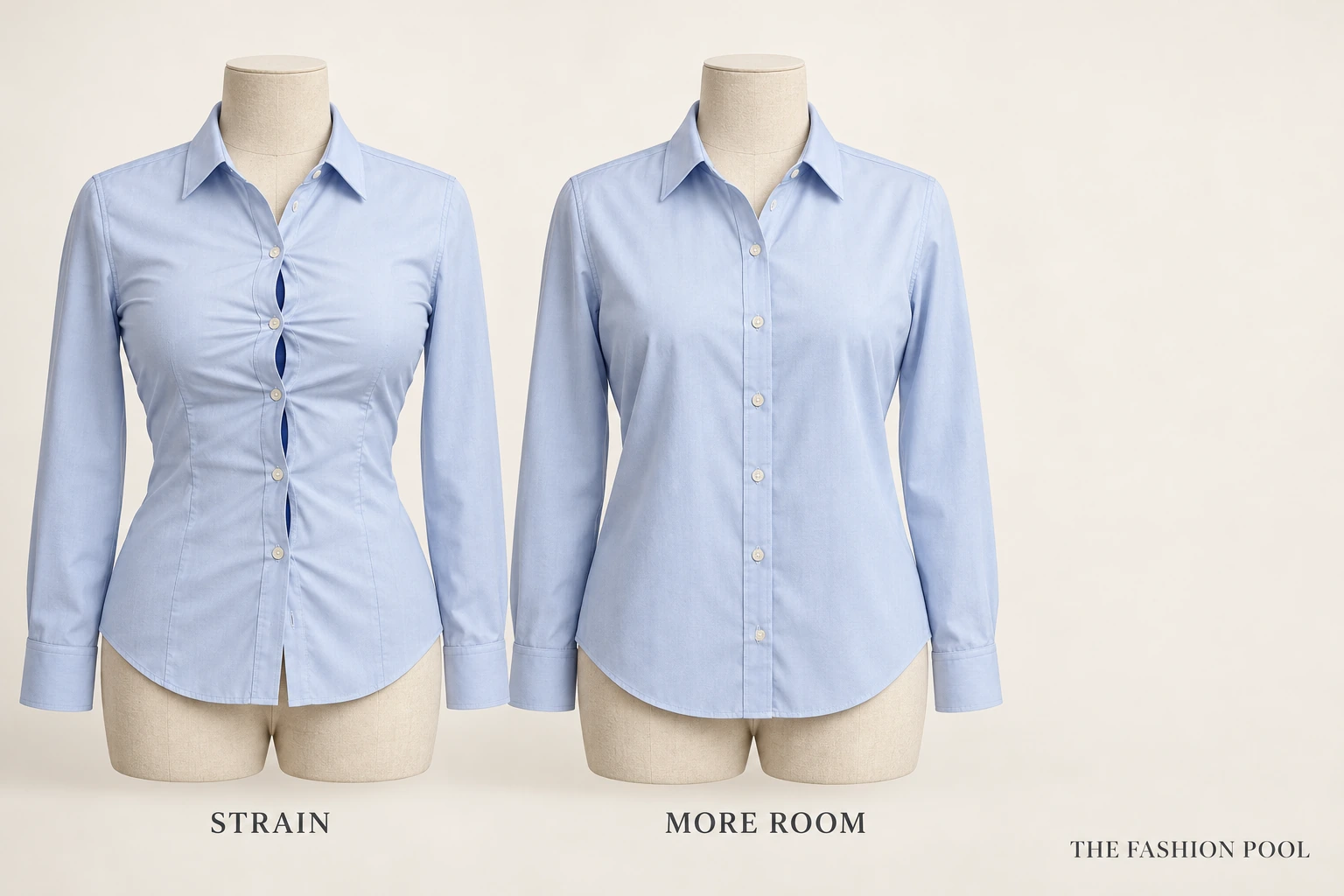
Choose more room without losing the whole fit
Compare both a larger size and another cut. A larger shirt may solve the chest problem but leave sleeves or shoulders less comfortable. A design shaped for a fuller bust may distribute room differently without making every other area larger. Neither option is automatically right; use the movement check again.
Darts are stitched folds that shape fabric, while princess seams shape it through joined panels. Look at where that shaping sits on you. Cashmerette’s Vernon fitting guide identifies a flat placket as a bust-fit check and suggests additional bust room for a gaping sewing pattern. That is pattern guidance, not proof that a finished shirt can be enlarged.
For ready-to-wear clothing, ask an alterations professional what the existing construction allows before paying for changes. Do not assume opening darts or moving every button will preserve the fit. If you also struggle with denim sizing, our jeans waistband-gap guide explains another case where changing the cut can matter more than changing the label size.
When tape or a hidden fastening makes sense
For a small localized opening, first bring the placket edges together gently. They should overlap naturally without pulling the shirt tight. If holding that spot creates new creases or restricts breathing and reaching, stop: securing it would hide the symptom, not solve the fit.
Garment-appropriate double-sided fashion tape can be a temporary fabric-to-fabric option between buttons. Follow the particular product instructions and test an inconspicuous area first. Hollywood Fashion Secrets’ instructions require fabric pretesting and removal before washing, cleaning or ironing. Do not treat that as permission for every delicate fabric or substitute household glue. If you prefer not to use adhesive, choose the open-shirt option below.
For repeat wear, ask a tailor whether a small concealed snap or additional hidden button suits the placket. Have the placement checked on the actual wearer; it should hold the opening without making the outer fabric pucker. Thin, delicate or sheer shirts may show hardware or stitching. Discuss reversibility before altering a valued garment.
Two ways to wear the shirt without forcing it closed
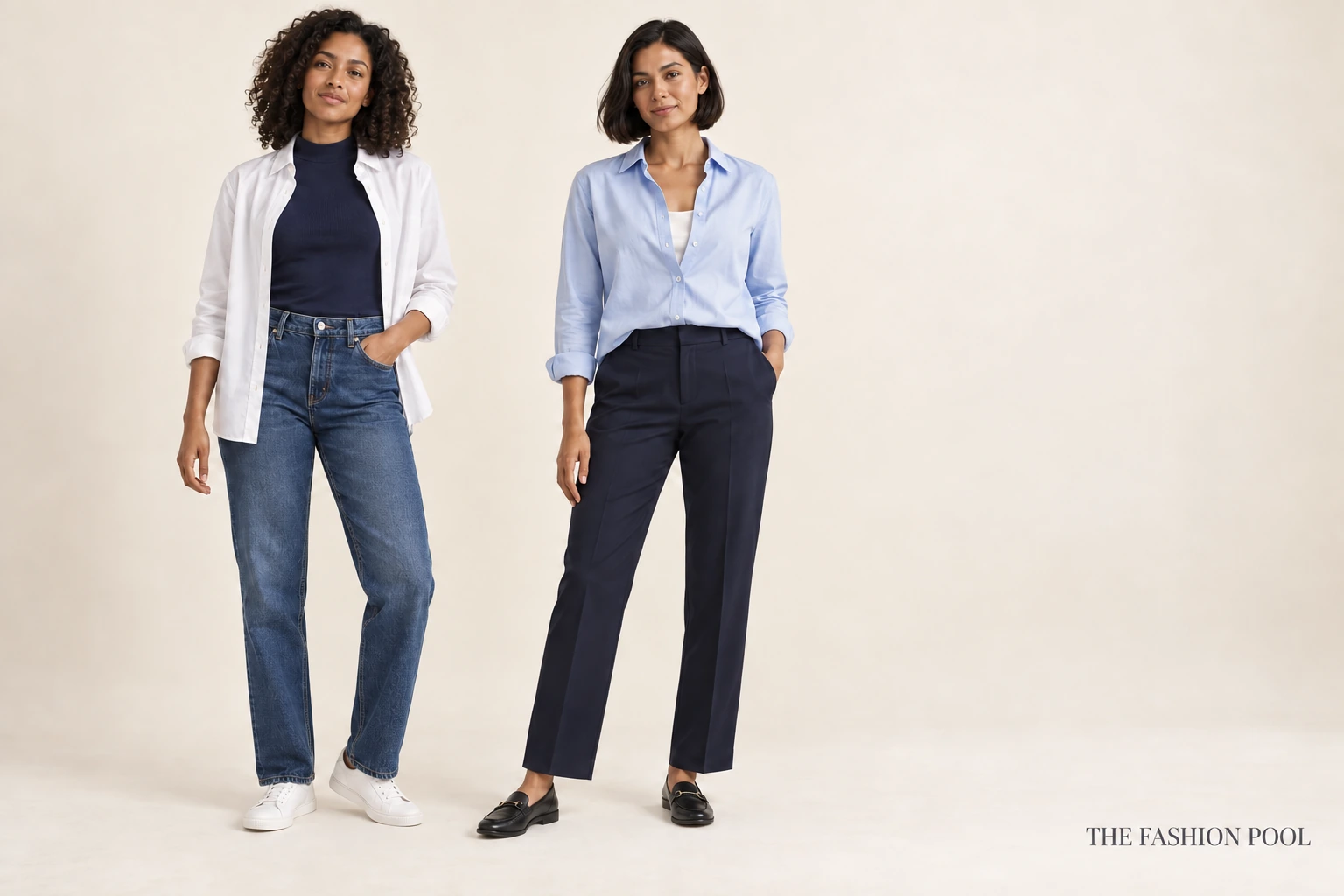
Open white shirt, navy tank and straight jeans
Leave an opaque white button-up fully open over a navy high-neck tank, with indigo straight-leg jeans and white low-profile sneakers. The tank supplies coverage independently; the shirt becomes a light outer layer. Keep its hem untucked and check that the sleeves allow movement. The denim can stay simple because the open front already creates a clear layered shape.
Open neckline, camisole and tailored trousers
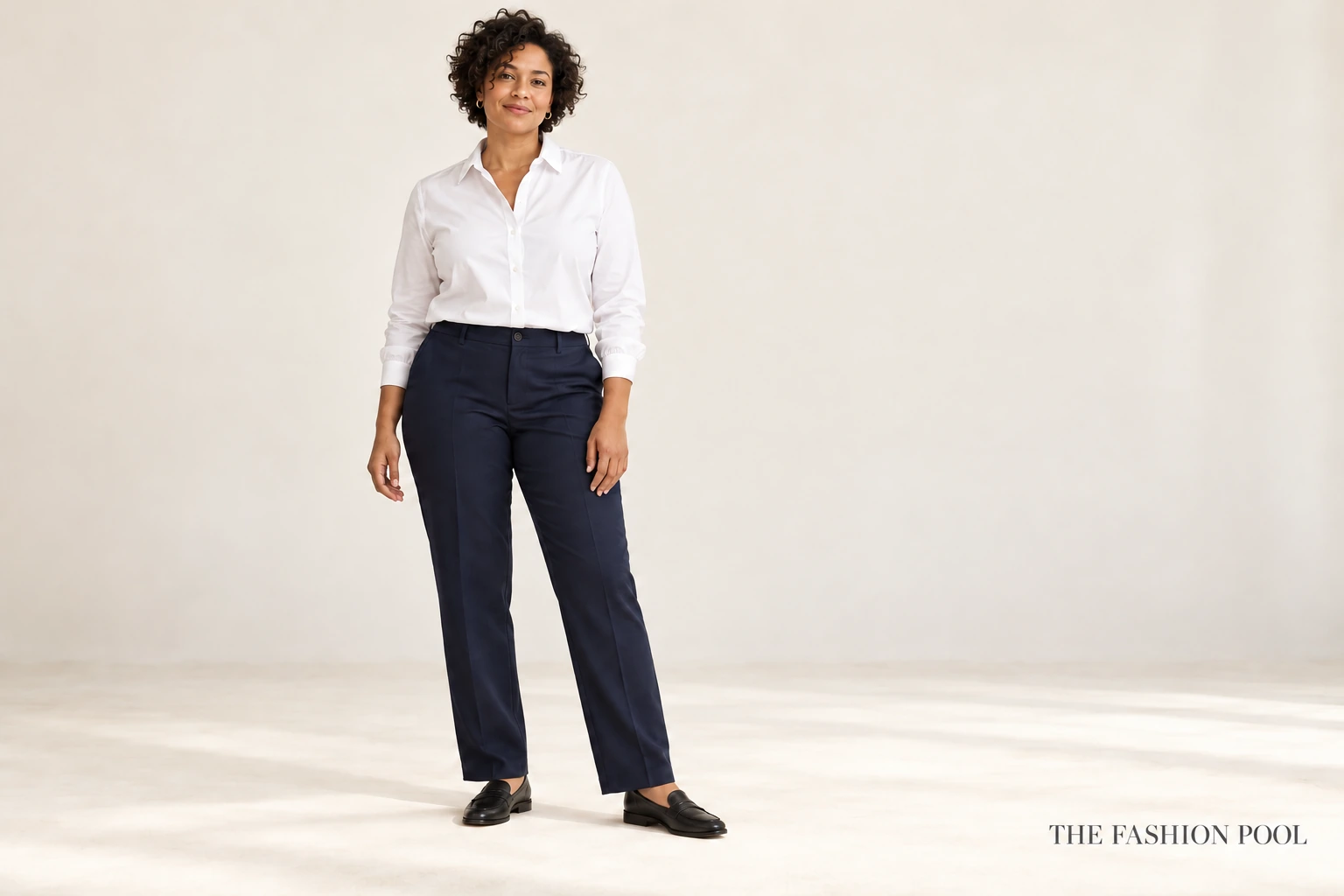
If releasing an upper button removes the tension while the lower front remains comfortable, try a pale-blue shirt over an ivory camisole with navy straight-leg trousers and black loafers. Choose the camisole’s neckline for the coverage you want. Leave a little ease in a loose front tuck, or wear the hem untucked. This option depends on your dress code and actual fit; it is not a fix for pulling lower buttons.
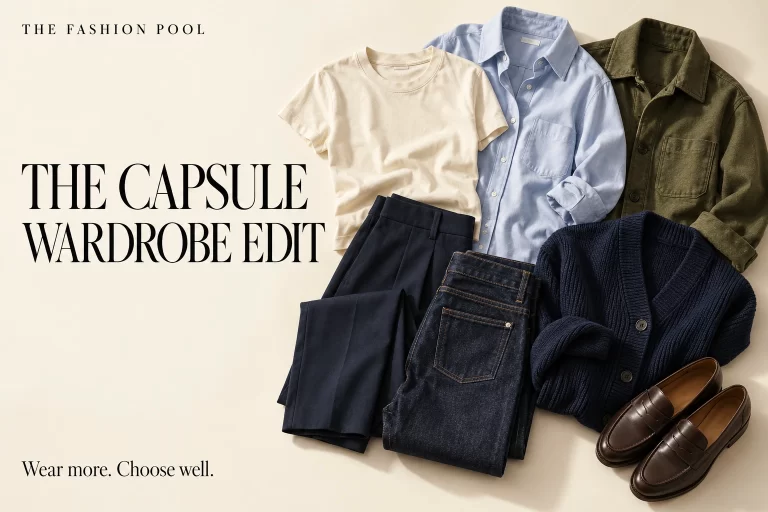
For a cold office, add a roomy cardigan rather than squeezing the layers into a close-fitting jacket. Our cold-weather work capsule guide offers broader layer planning. In warm weather, skip the extra layer and choose a comfortable opaque underlayer rather than adding bulk you do not need.
Frequently Asked Questions
Should I size up every time a shirt gaps?
Not automatically. Compare the next size, but check the shoulders, sleeves and seated comfort as well as the chest. If more room solves the gap but creates other fit problems, a different cut may work better. There is no need to keep buying larger versions of the same unsuitable shape.
Will a stretchy shirt solve the problem?
Stretch can make movement easier, but a shirt can still pull open if its front is too narrow or its buttons are poorly positioned for you. Try the actual garment seated and reaching. Do not size down on the assumption that stretch fabric will compensate for missing room.
Can I just cover the gap with a blazer?
A blazer may hide the opening in one position, but it can move when you sit or lift an arm. It also leaves the underlying tension unchanged. Use an opaque underlayer if you want independent coverage, and choose a shirt arrangement you feel comfortable wearing when the jacket comes off.
What if the shirt gaps only after washing?
Compare its fit with how it felt before laundering and check the care label. Shrinkage or distortion may be involved, but do not assume heat or aggressive stretching will restore it safely. Reassess its usable fit before adding closures. For a valuable shirt, ask a garment-care or alterations professional first.
Is a safety pin a good permanent solution?
It is not a substitute for a considered alteration. A pin may become visible, pull at a small area or damage delicate fabric. For regular wear, discuss a suitable concealed closure with a tailor. If the shirt is strained across the chest, change the fit rather than adding more fastening points.
Does a gaping shirt mean my body is the problem?
No. Ready-made shirts use standardized proportions, and those proportions do not match every person. A garment can suit one area and need different shaping elsewhere. Treat the gap as information about the shirt’s fit, not a judgment about your body or a reason to change the coverage you prefer.
Conclusion
Start with room and movement, then consider a fastening. Try one shirt seated, release a restrictive tuck and compare another cut if needed. When the fit cannot be changed today, an intentional open-shirt outfit is a practical alternative to spending the day monitoring a gap.