How to Build a Capsule Wardrobe for Women
A capsule wardrobe for women starts with clothes that work together and fit the life you actually lead. The aim is to make getting dressed easier, whether your week includes an office, school runs, remote work, social plans or some combination of them.
You do not need to replace your closet, follow a strict item count or wear only neutrals. Start with pieces you already reach for, identify a few dependable outfit combinations, and add something only when it solves a specific gap. This guide walks through that process, with a small starter wardrobe you can adapt to your own style.
On this page
- A capsule wardrobe for women starts with complete outfits
- What belongs in a capsule wardrobe?
- Start with your week, then sort your closet
- Choose colors you enjoy repeating
- Build around outfit formulas that fit your routine
- A seven-piece starter wardrobe and five outfit ideas
- Adjust the capsule for weather and washing
- Buy for an outfit gap, then reassess
- Further reading and editorial context
- Frequently Asked Questions
- Conclusion
A capsule wardrobe for women starts with complete outfits
Choose clothing for your regular activities, select a compatible color palette, and check that your tops, bottoms, layers and shoes work together in complete outfits. Test those combinations before buying more. Keep the pieces comfortable, suitable for your local weather and realistic for your laundry routine.
Key takeaways
- Begin with your existing favorites, rather than a shopping list of supposedly essential pieces.
- Use outfit combinations to decide what earns a place in your capsule.
- Match the wardrobe to your actual dress codes, weather and activity level.
- Leave enough clothes available between washes; a smaller wardrobe should still be practical.
- Keep color, prints and personal details when they help the clothes feel like yours.
What belongs in a capsule wardrobe?
A capsule wardrobe is a manageable group of clothes, shoes and layers chosen to combine easily. Some people use it for their entire closet; others create a capsule for work, travel or one season. Either approach can be useful. Clothes for workouts, formal events or a different climate can sit outside your everyday capsule.
There is no item count that automatically makes a wardrobe successful. A seven-piece example can demonstrate combinations, but it cannot account for every weather change, dress code or wash cycle. Judge your capsule by how reliably it supplies the outfits you need, rather than how small you can make it.
Start with your week, then sort your closet
Write down the situations you dress for in a typical week. Make the list specific: three office days, two days working at home, a weekend walk and an occasional dinner, for example. Note when you need polished shoes, layers for air conditioning, clothing for a commute or something that lets you move easily.
Compare that list with the clothes you already own. An abundance of dressy tops will not solve a shortage of everyday bottoms. Equally, a capsule full of relaxed basics will struggle if your workplace regularly expects formal tailoring.
Sort clothing into pieces you wear now, pieces that need an adjustment, and pieces that do not belong in the current capsule. Try on uncertain items rather than relying on a label size. Check sitting, walking, bending and reaching. A waistband that digs in or a sleeve that restricts movement may need attention even when the garment looks good standing still.
Put aside clothing you are undecided about before donating or replacing it. That gives you room to test a smaller working wardrobe without treating every unworn item as a mistake.
Choose colors you enjoy repeating
Pick a small group of colors already present in your favorite clothes. If you want a starting point, choose two base colors and one or two accents. Navy and cream with olive and pale blue is one example; charcoal and burgundy with patterned tops is another.
A palette should help you make outfits, not restrict you to beige. If you love a floral skirt, use colors from its print to choose coordinating tops. If black makes most of your existing outfits easier to assemble, keep it. You can also organize separate color groups when trying to make every piece match everything else feels limiting.
Check the combinations in daylight. Shades described as cream, white or navy can differ between garments. Put the actual pieces together and decide whether the contrast looks intentional to you.
Build around outfit formulas that fit your routine
An outfit formula is a repeatable combination, such as straight-leg pants, a tucked shirt and loafers. Its usefulness comes from knowing how the pieces fit together, not from following one silhouette every day.
Choose two or three formulas you already enjoy. A dress with a cardigan and walking shoes may suit one reader; a soft top with relaxed pants and a jacket may suit another. Then test variations using your existing clothes.
- Check lengths: Try your pants with the shoes you plan to wear. Hems should let you walk without catching or dragging. If one pair only works with a heel you seldom wear, it may be less useful for your everyday capsule.
- Check layers: Put the shirt under the cardigan or jacket. Look for room at the shoulders and sleeves, and make sure the combination remains comfortable when you move.
- Check volume: When an outfit feels bulky, try a shorter layer, a partial tuck or a different fabric weight. These are options to explore, not rules about which bodies should wear which shapes.
- Check the occasion: Decide whether the outfit meets your real dress code. A polished casual combination and a formal office outfit serve different needs.
Photograph successful outfits for your own reference. A small album can make busy mornings easier and show which pieces repeatedly remain unused.
A seven-piece starter wardrobe and five outfit ideas
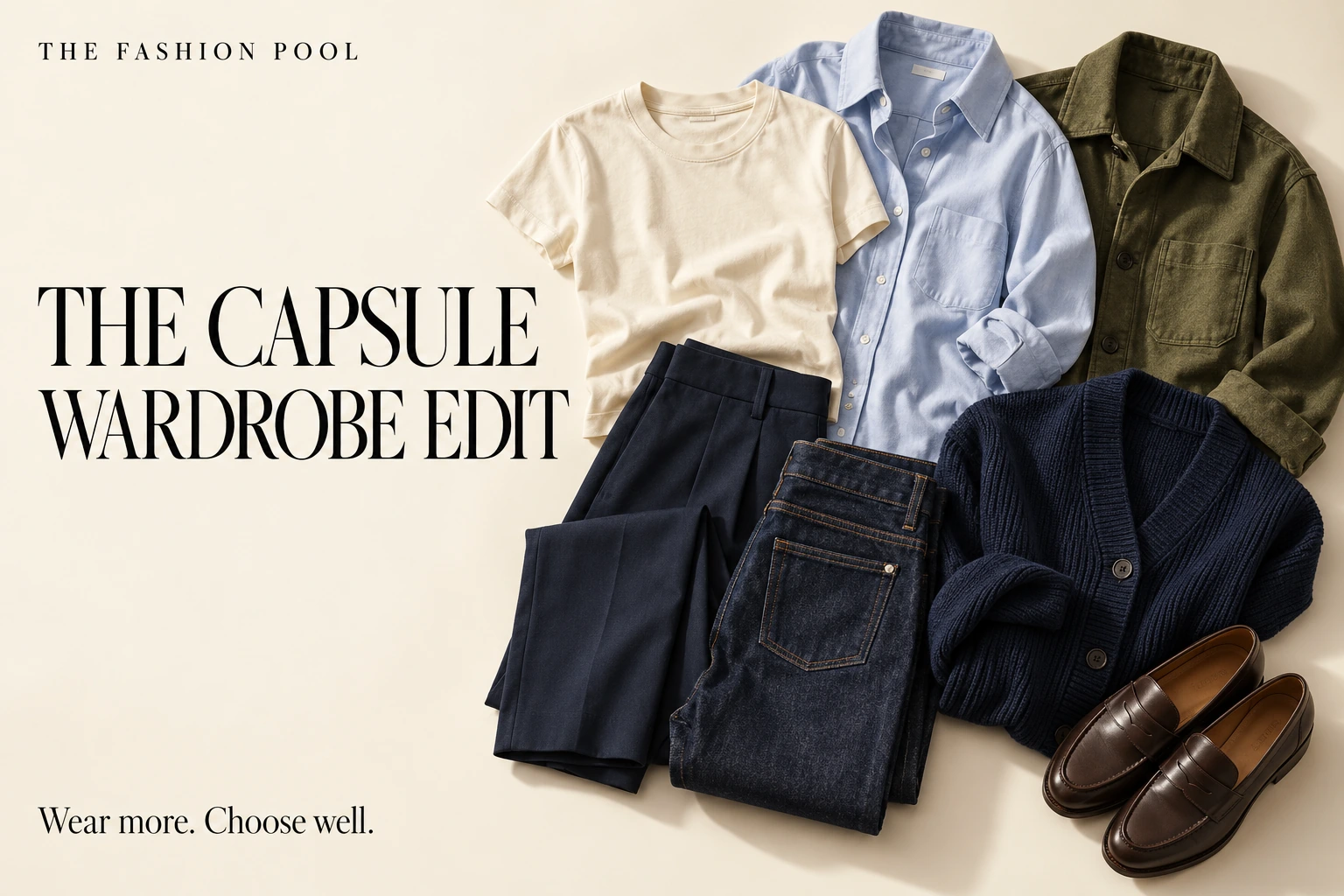
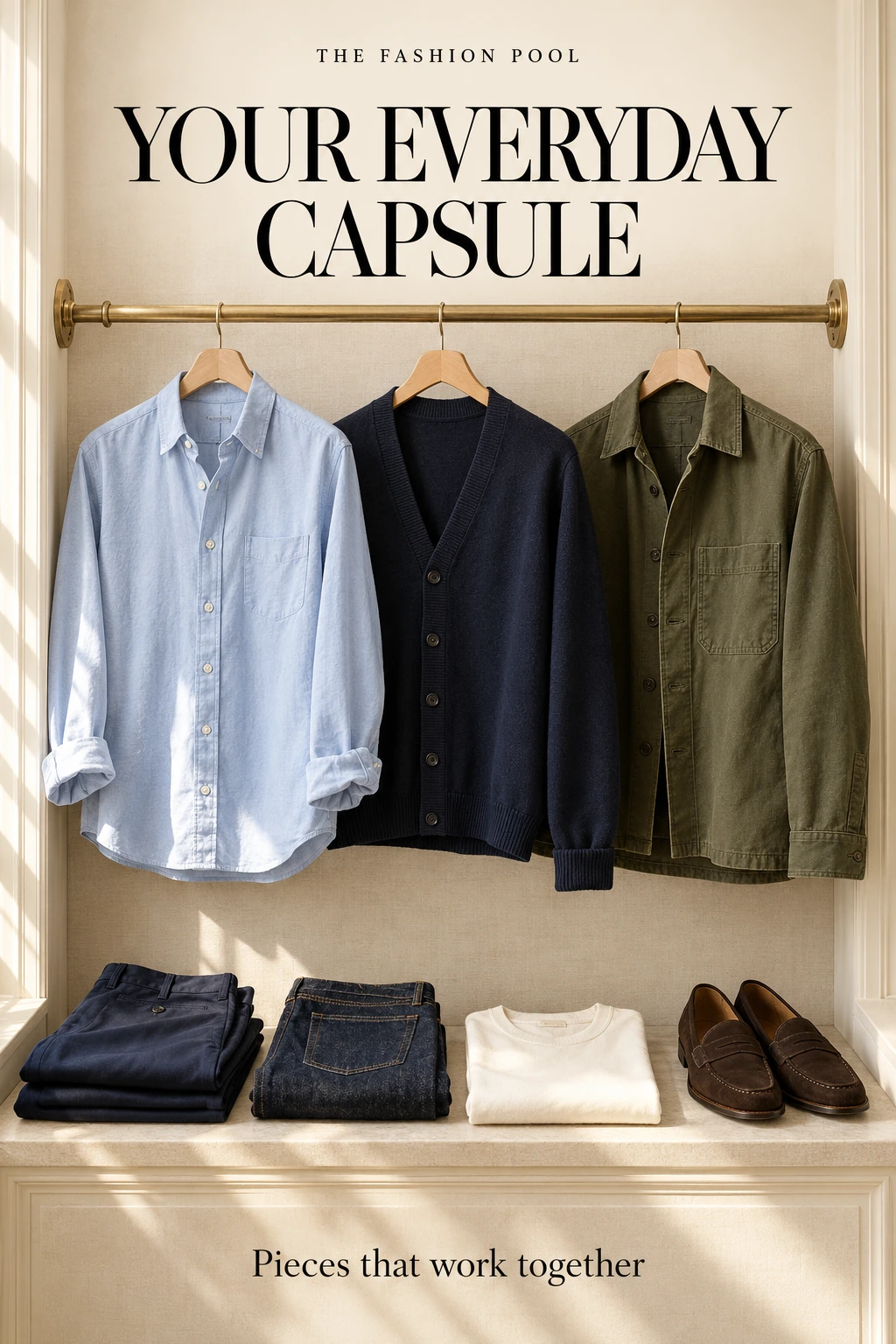
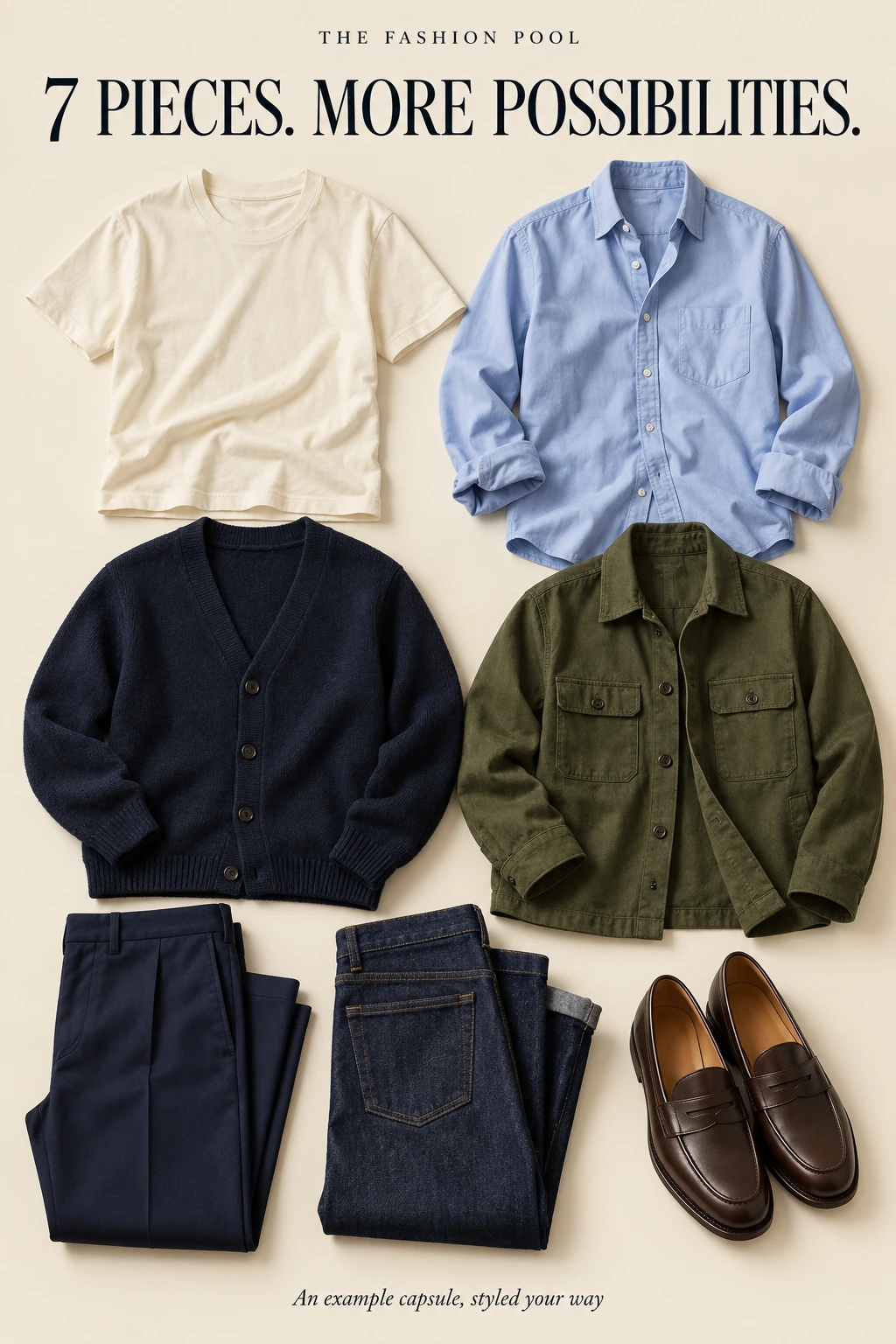
This example shows how a small set can work together. It is an outfit-planning exercise, not a complete wardrobe or a universal shopping list. Use it for a casual or relaxed office setting only when the actual garments meet your dress code.
- Navy straight-leg pants with a comfortable waistband.
- Dark straight-leg jeans in a fit you enjoy.
- A cream crewneck T-shirt with enough coverage for your preferences.
- A light-blue button-down shirt that can be worn closed or open.
- A navy cardigan with room for the shirt underneath.
- An olive shirt jacket that fits comfortably over the T-shirt.
- Dark-brown loafers that suit your walking needs.
1. A simple polished outfit
Wear the light-blue shirt with navy pants and brown loafers. Tuck the shirt fully or partly if that feels comfortable, or choose a shirt length you like worn loose. The contrast between the pale shirt and dark pants defines the two pieces without requiring another accent color. Add the olive jacket for a more relaxed finish when appropriate.
2. An easy weekend combination
Pair the cream T-shirt with dark jeans, the olive jacket and loafers. The open jacket adds a layer around the simple T-shirt and jeans; the cream top keeps some contrast inside the darker outfit. If loafers are unsuitable for a long walk, use supportive walking shoes you already own and check how the jeans sit over them.
3. A softer layered look
Wear the blue shirt under the navy cardigan with dark jeans and loafers. Leave the collar outside the cardigan if you like that detail, or wear the cardigan open. Check that the shirt sleeves do not bunch under the knit. This combination gives the same jeans a different feel from the T-shirt and jacket outfit.
4. Relaxed pants for a quieter day
Combine the cream T-shirt, navy pants and cardigan. Matching the cardigan and pants creates a coordinated outfit; they do not need to be exactly the same shade. Choose this for a casual day or an office that permits T-shirts, rather than assuming it meets every workplace standard.
5. A light shirt layer
Wear the blue shirt open over the cream T-shirt with jeans. Keep the sleeves down, roll them if comfortable, or leave the shirt open to show the base layer. This replaces the heavier shirt jacket when you want a lighter layer. The cardigan can stay in your bag for a temperature change.
If you prefer skirts or dresses, substitute those pieces and rebuild the combinations around them. The useful lesson is to test full outfits, including layers and shoes, rather than collecting isolated basics.
Adjust the capsule for weather and washing
Your everyday capsule should reflect the temperatures you actually encounter. A commute in cold rain, a warm car journey and an air-conditioned office call for different choices. Keep appropriate outerwear and footwear available rather than forcing the same outfit into every setting.
In warm weather, you might replace a heavier layer with a loose shirt or choose lighter garments that feel comfortable to you. In colder weather, add layers with enough room to move and outerwear that fits over them. Test the whole combination; warm individual pieces can still feel awkward when layered together.
Adapt by local conditions rather than a US seasonal calendar. October may call for extra layers in one Northern Hemisphere location while an Australian reader needs a different setup. Climate, indoor temperatures and daily activities are more useful guides than the month alone.
Plan around how often you wash clothes and how long they take to dry. If you cannot reliably wash midweek, include enough frequently changed items to bridge that gap. Underwear, sleepwear and activity-specific clothing do not need to be squeezed into an arbitrary capsule total.
Buy for an outfit gap, then reassess
After testing your combinations, write down what is missing. Make each entry specific: comfortable dark shoes that work with both pairs of pants, or a top that layers without pulling at the sleeves. A clear job description helps you compare a purchase with clothes you already own.
Before adding a piece, identify at least two outfits you would actually wear with it. Check fit, care requirements and whether it duplicates something that already does the job. Do not buy another neutral top simply because a checklist calls it essential.
Revisit the capsule after using it in your normal routine. Keep the combinations that made dressing easier, adjust the ones that did not, and let rarely used pieces sit outside the working set. A wardrobe can change with a job, a body, a climate or a new preference; it does not need to become a permanent uniform.
Further reading and editorial context
- FTC guidance on clothing care labels — Background on garment care instructions in the US; check each piece’s label when planning your washing routine.
- The Fashion Pool editorial policy — How we approach sources, AI-created styling illustrations and corrections in our fashion guides.
Frequently Asked Questions
Can I build a capsule wardrobe if my clothing size changes?
Yes. Start with pieces that fit comfortably now and keep useful alternatives available as your needs change. Adjustable details or cuts with more room may help, depending on the garment and your preferences. Avoid removing every size variation just to reduce the item count. Your capsule should support your comfort, rather than require your body to stay the same.
Do I have to stop wearing prints or bright colors?
No. A printed piece can anchor a capsule when you choose other clothes that work with it. Repeat a color from the print, try a contrast you enjoy, or group colorful pieces into a few dependable outfits. The goal is to make combinations easier. A neutral palette is one option, not a condition for having a capsule wardrobe.
How can I keep a small wardrobe from feeling repetitive?
Change a detail that affects the outfit: wear a shirt open instead of closed, swap a cardigan for a jacket, or choose different shoes for the occasion. Keep a few accessories you enjoy and use them when practical. Some repetition is part of the idea; if you value more variety, leave additional choices in your working wardrobe instead of forcing a smaller count.
Should work clothes and weekend clothes be in one capsule?
Combine them when your dress codes and preferences overlap. Separate them when the difference is substantial, such as formal office tailoring and clothing for active weekends. Shared items can still connect the two groups. Test whether a piece genuinely works in both settings before expecting it to serve two roles; flexibility should not make either part of your week harder to dress for.
What if my favorite item does not match most of the capsule?
Keep it if you wear and enjoy it. It can sit outside the capsule as an occasional piece, or form the starting point for a second group of outfits. A capsule is an organizing tool, not a requirement that every garment match every other one. Check whether the item has a complete outfit available rather than judging it only by how many combinations it makes.
Conclusion
A useful capsule wardrobe for women begins with real routines, comfortable fit and clothes that make dependable outfits together. Start by assembling three combinations from your own closet, test them through an ordinary week, and note the gaps before shopping. Keep enough variety and practical coverage to make getting dressed easier for you.